
BPOM Emphasises Regulatory Relief to Prevent Drug Price Hikes Amid Rupiah Weakness
The weakening of the rupiah against the US dollar is beginning to put pressure on the national pharmaceutical industry, which remains dependent on imported medicinal raw materials. This situation has the potential to increase production costs and trigger a rise in drug prices on the market.
In response, the Indonesian Food and Drug Monitoring Agency (BPOM) has taken swift steps to help the pharmaceutical industry reduce production costs while ensuring the public continues to have access to safe, high-quality, and affordable medicines.
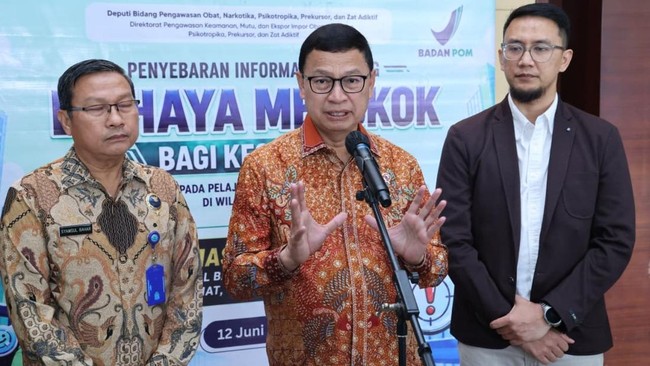
Head of BPOM, Prof. dr. Taruna Ikrar, stressed that the state must not allow the public to become victims of global economic turmoil.
“BPOM cannot control the rupiah exchange rate, but BPOM can take regulatory steps to help the pharmaceutical industry reduce production costs. The ultimate goal is to keep drug prices under control and the public protected,” Taruna said on Friday (12/6/2026).
As a concrete measure, BPOM is providing regulatory relaxation for the transfer of medicinal raw material sources from one country to another. This policy allows the pharmaceutical industry to obtain more competitive raw materials without having to face lengthy licensing processes and large testing costs, provided that quality, safety, and efficacy standards are maintained.
Additionally, BPOM is offering flexibility in product packaging adjustments so that the industry can achieve production cost efficiencies without reducing the quality of products received by the public.
Taruna explained that BPOM has invited and held direct dialogue with national pharmaceutical industry players to hear the various obstacles they face due to the rupiah’s weakening and rising raw material import costs. According to him, a collaborative approach is essential to maintain the sustainability of the national pharmaceutical industry without burdening the public with excessive drug price increases.
“The pharmaceutical industry must remain healthy because it safeguards the availability of medicines for the public. However, the public must also continue to obtain medicines at affordable prices. This is where the state must be present to find a balance,” he stated.
BPOM is also continuously strengthening coordination with various international drug regulatory authorities to ensure that the supply of raw materials and the drug distribution chain continue to function well amid global dynamics.
Taruna believes the current situation should serve as momentum to accelerate national pharmaceutical independence, particularly in the development of the domestic medicinal raw material industry.
“Health resilience must not depend on exchange rates. The stronger the national pharmaceutical industry and the more independent our medicinal raw materials, the more protected the Indonesian public will be from global economic turmoil,” he asserted.
Through these various measures, BPOM hopes that the stability of the national drug supply will be maintained and the potential for drug price increases can be suppressed, so that the public continues to have access to safe, high-quality, and affordable healthcare.