
BPOM: Bio-TCV a Key Solution to Prevent Antimicrobial Resistance Threat
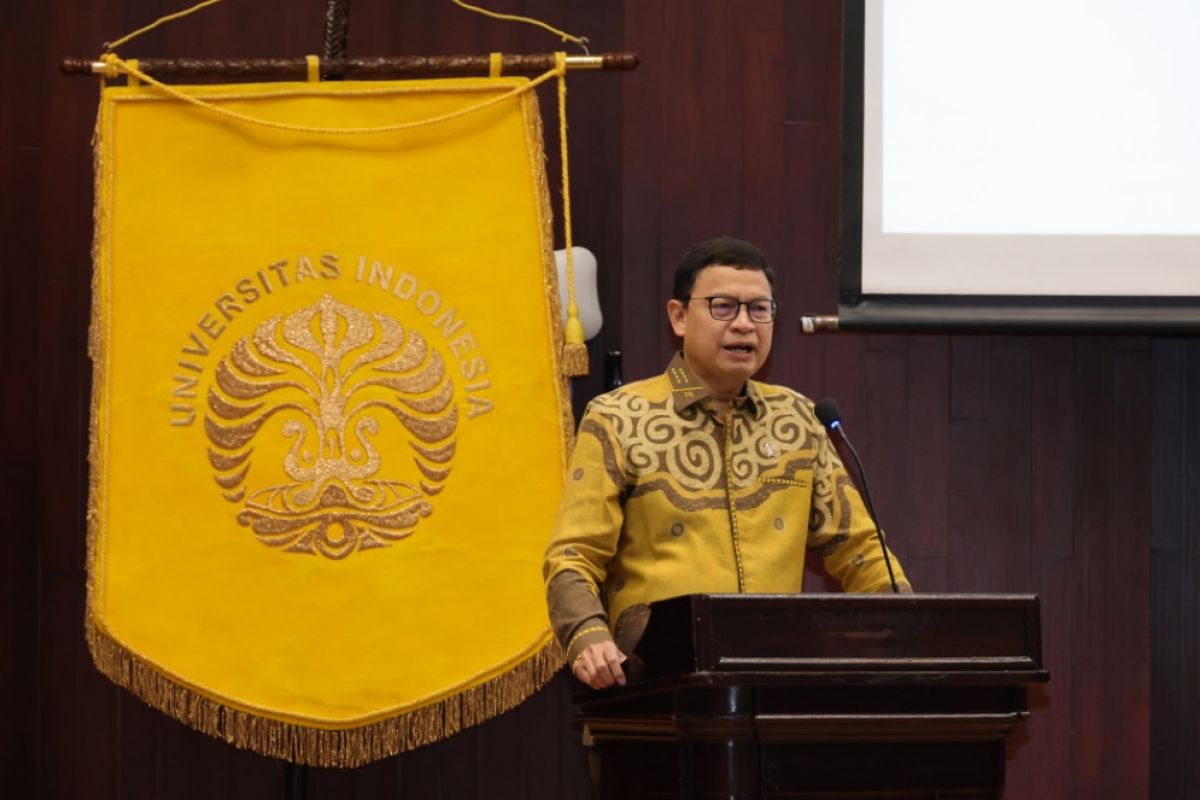
Jakarta (ANTARA) — The Food and Drug Supervisory Agency (BPOM) has said that Bio-TCV, the first domestically produced conjugate typhoid vaccine, developed through a collaboration between the University of Indonesia (UI) and Bio Farma, is an important solution within the One Health ecosystem to curb the threat of antimicrobial resistance.
BPOM Head Taruna Ikrar said in Jakarta on Friday that data from the Ministry of Health’s Early Warning and Response System (SKDR) recorded more than 914,000 suspected typhoid cases throughout 2025, and by week 16 of 2026 the figure had reached 266,869 cases.
“This places typhoid among the five highest-ranking diseases in the SKDR,” he said.
He said the high number of Salmonella typhi bacterial infections has triggered massive antibiotic use in the community. The typhoid vaccine therefore effectively prevents typhoid fever caused by Salmonella typhi infection from the outset, protecting the public from the risk of drug-resistant bacteria.
“Self-reliance in medicines and vaccines is part of national resilience. That is why we must strengthen research and innovation so that Indonesia can produce health products made by the nation’s own people that meet global standards,” he said.
BPOM is committed to ensuring the product delivers public benefit by closely overseeing the vaccine’s innovation process from upstream to downstream.
BPOM supervised the clinical trials, conducted entirely in Indonesia through a partnership between Bio Farma and the Faculty of Medicine of the University of Indonesia (FKUI). The agency actively ensured compliance with the latest Good Manufacturing Practice (CPOB) standards at the production facility, monitored the reliability of the cold chain in the distribution system, and carried out pharmacovigilance.
According to data from e-was.pom.go.id covering January 2025 to July 2026, the typhoid vaccine has been produced in two batches totalling 84,719 vials. Meanwhile, Bio Farma data as of 13 July 2026 recorded total production equivalent to 208,235 doses, of which 30,875 doses have been distributed.
“To ensure quality consistency in the field, BPOM’s technical implementation units (UPT) also conducted product sampling in 2026 for retesting at the National Centre for Drug and Food Testing Development (PPPOMN) laboratory,” he said.
Echoing this, PT Bio Farma President Director Shadiq Akasya said the innovation demonstrates that cross-sector synergy can produce national health products ready for public use.
“Bio-TCV is not merely a new product, but the result of a long collaboration showing that Indonesia is capable of developing its own vaccines. We hope that going forward this vaccine can support the national immunisation programme,” he said.
Meanwhile, Mohammad Kurniawan, Chairman of the FKUI Medical Expo 2026 organising committee, said the Medical Expo serves as a platform bringing together academics, government, industry and the public to strengthen Indonesia’s health innovation ecosystem.
Through such synergy, he hopes more research outputs can be commercialised into health products, strengthening national health resilience and boosting Indonesia’s competitiveness on the global stage.