
BPKP to Map Development Process of Battery Industry Ecosystem
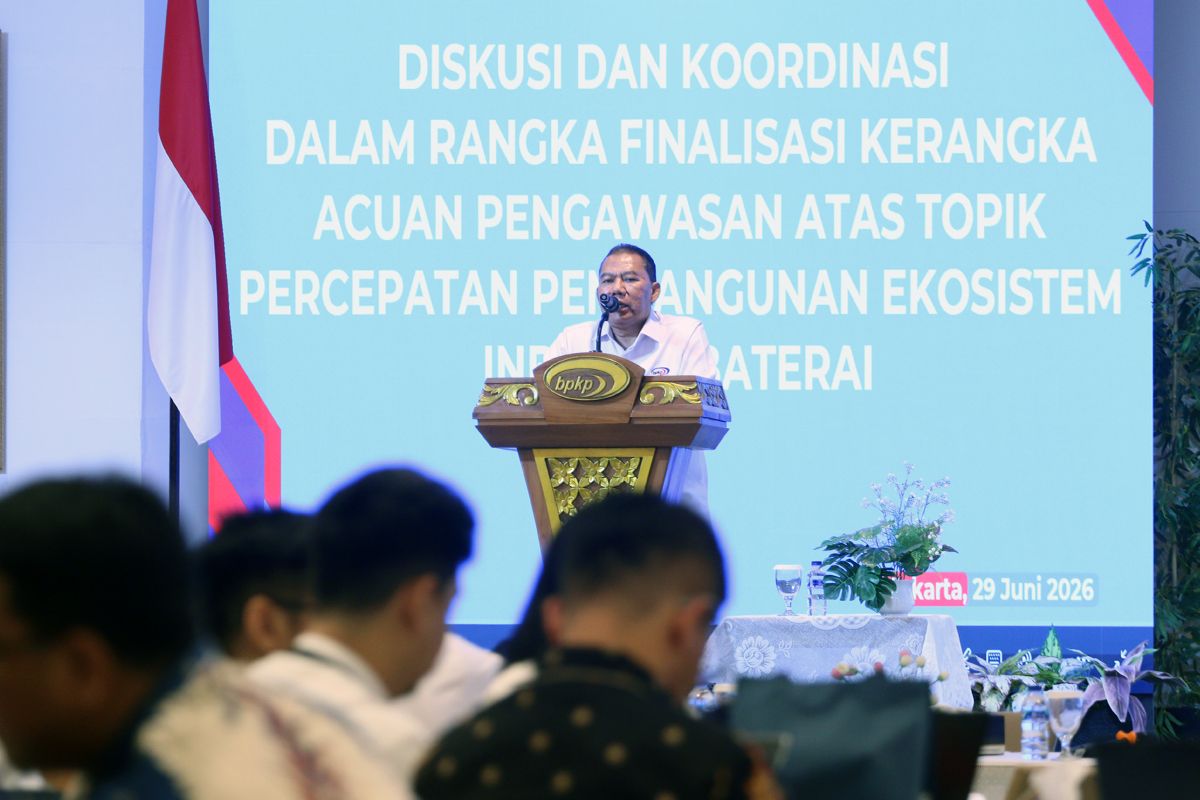
The Development Finance Comptroller (BPKP) will map the entire development process of the battery industry ecosystem in Indonesia to strengthen national industrial independence and realise energy self-sufficiency.
“BPKP will map the entire development process, from the planning, control, investment provision, licensing, and construction stages, to the determination of parties responsible for each stage,” said Aryanto Wibowo, Deputy for Government Institution Supervision in the Economy, Infrastructure, and Regional Development at BPKP, during a coordination meeting to finalise the oversight framework for accelerating battery industry ecosystem development, according to an official statement in Jakarta on Tuesday.
The meeting was attended by ministries, agencies, state-owned enterprises, and relevant stakeholders to align perceptions in designing the oversight framework, map out each institution’s role, and produce constructive recommendations to support the acceleration of nickel downstreaming and the development of the battery industry ecosystem as one of the President’s priority programmes.
Aryanto stated that President Prabowo Subianto has emphasised the importance of nickel downstreaming to drive the clean energy transition, strengthen national industrial independence, and achieve energy self-sufficiency. This directive has been elaborated in the National Long-Term Development Plan, emphasising a shift in orientation from raw material exports to domestic processing.
As the government’s internal auditor, BPKP is tasked with overseeing the implementation of national programmes and ensuring the President’s priority programmes run effectively. He explained that one focus of the oversight is the acceleration of the battery industry ecosystem development, which is expected to contribute to national economic growth, including a target contribution of 21.20 percent to the Gross Domestic Product from the sector.
Indonesia, as the world’s largest nickel producer with approximately 50 percent of global production, is considered to have significant potential to develop a national battery industry. “Through this forum, BPKP is gathering all stakeholders to build a shared perception regarding the development of the battery industry ecosystem from upstream to downstream. The oversight is not intended to find fault, but rather to identify aspects that still need strengthening, such as inter-agency coordination, clarity of task distribution, and policy refinement,” Aryanto said.
He also expressed hope that all participants would share a common view on accelerating the battery industry ecosystem development, actively participate in discussions, strengthen cross-sector commitment, and support the implementation of quality internal oversight to realise the President’s directives. “BPKP is targeting the implementation of oversight in the third quarter of this year to produce constructive recommendations in support of the success of the downstreaming programme and the acceleration of the national battery industry ecosystem development,” he concluded.