
BPKP states there is still room to improve the effectiveness of Regional Transfer Funds
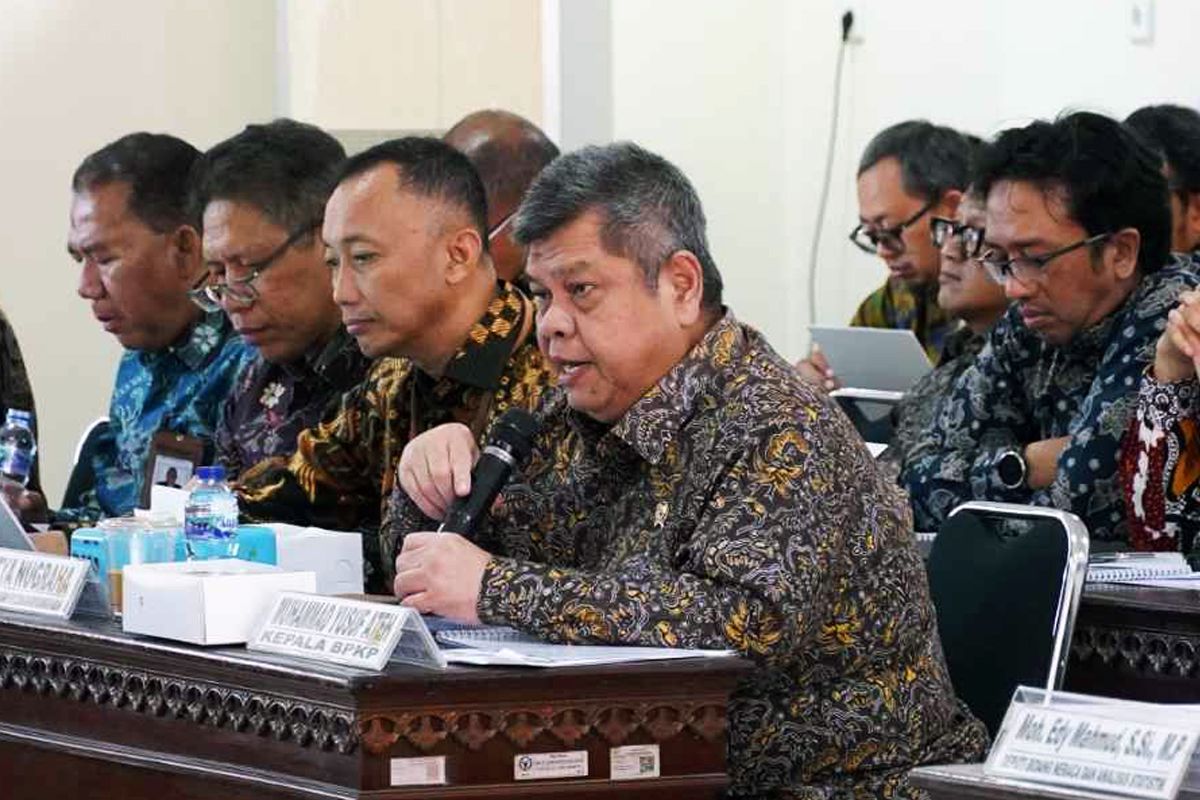
Jakarta (ANTARA) - The Head of the Financial and Development Supervisory Agency (BPKP), Muhammad Yusuf Ateh, revealed that their supervisory findings indicate there is still room to improve the effectiveness of Regional Transfer Funds (TKD) for 2026.
“BPKP’s supervision is conducted comprehensively from upstream to downstream. Supervision does not only look at the allocation, planning, and distribution processes of TKD, but also ensures that the funds distributed produce outputs and provide benefits to the community,” he stated during a Working Meeting of Committee IV of the Regional Representative Council (DPD RI) at the DPD RI Office in Bali Province, as quoted from an official BPKP statement in Jakarta on Wednesday.
On the upstream side, he continued, the use of regional data as a basis for TKD allocation needs to be strengthened. In the planning and distribution stages, more mature planning and early mitigation of obstacles that could affect distribution are required.
Meanwhile, on the downstream side, physical development must be accompanied by utilisation and post-construction supervision to ensure that the infrastructure built can provide optimal benefits and does not become a burden on regional fiscal space.
“Increasing the effectiveness of TKD ultimately requires a comprehensive improvement in fiscal governance. This needs to be supported by synergy between the Ministry of Finance, the Ministry of Home Affairs, the Ministry of National Development Planning/Bappenas, regional governments, and the Government Internal Supervisory Apparatus (APIP) in the regions, so that TKD is not merely absorbed, but truly provides benefits to the community,” said Ateh.
Committee IV of the DPD RI appreciated the BPKP for its role in conducting comprehensive supervision from upstream to downstream to safeguard the effectiveness of TKD, while presenting data-driven findings and concrete directions for improvement to strengthen accountability, spending quality, and the real benefits of development for people in the regions.
During the working meeting, a question was raised by a member of the DPD RI from West Nusa Tenggara (NTB) province, Mirah Midadan Fahmid, regarding the impact of the reduction in TKD for 2026 on the regions, which could lead to fiscal pressure.
She expressed hope that the BPKP could map out regions experiencing fiscal pressure due to the reduction in TKD allocation for 2026, particularly regions with low fiscal capacity, high poverty rates, and those in island, border, underdeveloped, frontier, and outermost areas, including the impact on basic services and the necessary corrective measures.
In addition to fiscal pressure, Committee IV of the DPD RI also highlighted the extent to which the BPKP has measured the effectiveness of the 2026 TKD.
The measurement of effectiveness is expected to go beyond indicators of distribution and budget absorption, but also consider the achievement of development outputs and outcomes.
Source: jawawa.id (https://jawawa.id/newsitem/bpkp-states-there-is-still-room-to-improve-the-effectiveness-of-regional-transfer-funds-1788350851)
Originally published by Antara (Indonesian) (https://www.antaranews.com/berita/5722767/bpkp-sebut-masih-terdapat-ruang-untuk-tingkatkan-efektivitas-dana-tkd), translated from Indonesian