
BPKH Warns of Risks in Subsidising 60 Per Cent of 2027 Hajj Costs, Proposes Solutions
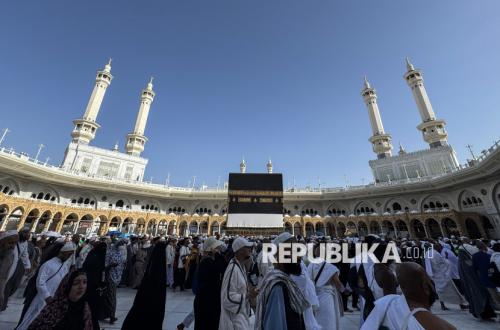
JAKARTA – A member of the Hajj Financial Management Board (BPKH), Indra Gunawan, has reminded stakeholders of the importance of preserving the sustainability of hajj funds if the government and the House of Representatives (DPR RI) adopt a financing scheme for Hajj Organising Costs (BPIH) in which 60 per cent is covered by investment returns. According to him, subsidies for hajj costs must still respect the rights of millions of pilgrims who remain on the waiting list.
Indra said the determination of the BPIH structure should not focus solely on keeping costs low for pilgrims departing in the current year. He said three principles must underpin it: fairness, security and sustainability.
“Costs that appear cheap today could become very expensive in the future if they are paid for by eroding the rights of waiting pilgrims and threatening the sustainability of hajj funds,” said Indra, who is also an Associate Professor at the Faculty of Economics and Business at UIII, when contacted by Republika.co.id on Tuesday (15/9/2026).
The statement came ahead of plans by the Ministry of Hajj and Umrah, together with the DPR’s Hajj Working Committee, to set the 2027 hajj cost in the near future.
Minister of Hajj and Umrah Mochamad Irfan Yusuf previously said discussions on the 2027 BPIH between the DPR’s Hajj Working Committee and the government had reached around 85 per cent. He expressed hope that an agreement on the cost could be reached within a week.
“God willing, within the coming week we will be able to reach an agreement on the figure to be paid by pilgrims, which we will then submit to the President,” Irfan said in Jakarta on Monday (14/9/2026).
The government has previously proposed an average 2027 BPIH of Rp 107,340,172.02 per pilgrim. Of that figure, the BPIH paid by pilgrims is proposed at Rp 42,936,068.81, or 40 per cent, while the remaining 60 per cent, or Rp 64,404,103.21, would come from investment returns.
Indra believes such a structure needs to be examined carefully so as not to sacrifice the rights of pilgrims still queuing.
According to Indra, the principle of fairness in hajj fund management is enshrined in Law Number 34 of 2014 on Hajj Financial Management. He highlighted provisions on the distribution of investment returns to pilgrims’ virtual accounts based on a percentage agreed by the DPR.
As such, he said, investment returns should be viewed as the individual entitlement of each pilgrim, not a collective fund that can be drawn upon without accounting for the rights of other pilgrims.
“Investment returns are an individual entitlement. They are not a collective fund that can be withdrawn at will to cover the departure costs of a particular group,” Indra said.
He argued that hajj fund management must consider intergenerational fairness, especially given that some 5.8 million pilgrims are still awaiting departure.
Indra also cited the outcomes of the Indonesian Ulama Ijtima Fatwa Commission Decree Number 09/Ijtima Ulama/VIII/2024 on the ruling regarding the use of investment returns from prospective pilgrims’ initial BPIH deposits to finance the pilgrimage of other pilgrims.
According to him, that decree affirms the prohibition on using investment returns from waiting pilgrims’ initial deposits to finance departing pilgrims.
He therefore cautioned that a BPIH subsidy policy must not end up taking returns that belong to pilgrims in the queue to finance the departures of others.
Source: jawawa.id (https://jawawa.id/newsitem/bpkh-warns-of-risks-in-subsidising-60-per-cent-of-2027-hajj-costs-proposes-solutions-1789469615)
Originally published by Republika (https://ekonomi.republika.co.id/berita/tlegqc423/bpkh-ingatkan-risiko-subsidi-60-persen-bpih-2027-ini-solusinya), translated from Indonesian