
BPKH Strengthens Investment Strategy for Rp185.73 Trillion Hajj Fund to Maximise Benefits for Pilgrims
Jakarta, 16 October 2026 — The Hajj Fund Management Agency (BPKH) is strengthening its management strategy through investment optimisation, portfolio diversification and the exploration of strategic opportunities within the Hajj and umrah ecosystem. The aim is to increase benefits for pilgrims while safeguarding the funds and ensuring their sustainability for future generations.
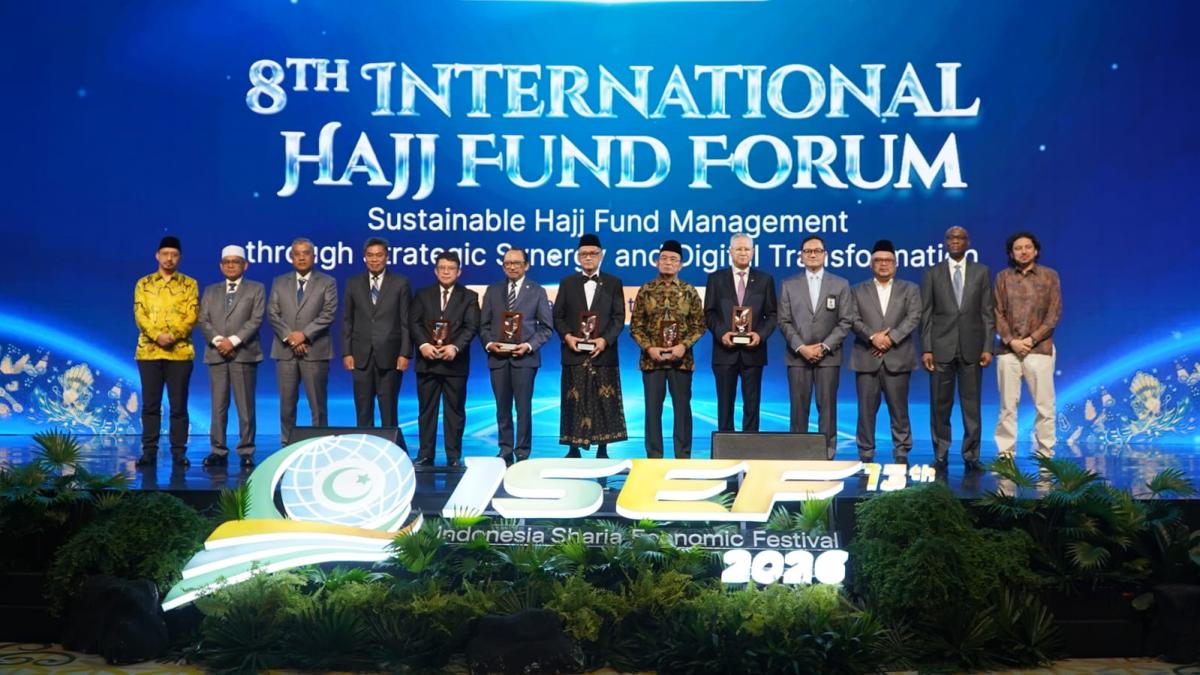
The measures were a key topic at the 8th International Hajj Fund Forum (IHFF) 2026, organised by BPKH on 15 October. The forum was part of the 13th Indonesia Sharia Economic Festival (ISEF), held from 14 to 18 October 2026 at the Jakarta International Convention Center (JICC) in Senayan, Jakarta.
Those attending IHFF 2026 included Presidential Special Adviser for Hajj Affairs Muhadjir Effendy; BPKH Supervisory Board members Rojikin and Dawud Arif Khan; BPKH Executive Board members Amri Yusuf and Arief Mufraini; and Bank Islam Brunei Darussalam (BIBD) chief executive Mohammad Yusri.
As of September 2026, BPKH managed funds totalling Rp185.73 trillion. The figure calls for careful management that balances liquidity needs, prudence, Sharia compliance, risk mitigation and the optimisation of benefits for pilgrims.
Strategic investment to strengthen the Hajj ecosystem
In his opening remarks, BPKH Supervisory Board chairman Firmansyah N. Nazaroedin stressed the importance of taking a broader view of Hajj fund management. He said this involved not only managing financial assets, but also creating opportunities to strengthen Indonesia’s Hajj services ecosystem.
“In line with Saudi Vision 2030, we need to strengthen our role not only as users of Hajj services, but also as strategic investment partners in the Hajj ecosystem—particularly in accommodation, catering and logistics in Makkah and Madinah,” Firmansyah said at IHFF 2026 in Jakarta on Thursday, 15 October.
Firmansyah said strategically planned direct investment could help mitigate exchange-rate and inflation risks. It could also support the provision of better and more reliable services for Indonesian pilgrims.
Such investment opportunities need to be assessed carefully, taking into account commercial viability, risk profiles, compliance with applicable regulations and long-term benefits for pilgrims. Investment decisions should therefore consider not only potential returns, but also the protection of funds and the sustainability of Hajj finance management.
The BPKH Supervisory Board oversees the management of Hajj finances, including approving placements and investments within its remit. Strong oversight is essential to ensure that optimisation strategies are implemented with sound, transparent and accountable governance.
Hajj minister calls for stronger BPKH role
Indonesia’s Minister of Hajj and Umrah, Mochamad Irfan Yusuf, said the management model for Hajj funds should be reviewed so that the funds raised can be used more effectively. He called for BPKH’s role to be strengthened, while emphasising that the funds must continue to serve the interests of Hajj pilgrimage administration.
“Our hope is primarily to strengthen BPKH’s role, while ensuring that the funds remain restricted funds—in other words, Hajj funds are for Hajj and must not be used for anything outside Hajj,” Irfan Yusuf said at the forum.
He also highlighted the importance of diversifying fund management and investments to reduce concentration risk and create opportunities to increase benefits. Diversification should be carried out in a measured way so that better returns remain consistent with the principles of fund security and the purpose for which the funds are intended.
The position is in line with BPKH’s commitment to developing responsible investment strategies based on risk analysis and focused on pilgrims’ interests. Optimisation is not simply about pursuing returns, but also ensuring that investment income can support the sustainable provision of Hajj services.
Deputy finance minister highlights trust and sustainability
Deputy Finance Minister Juda Agung also stressed that public trust is the foundation of Hajj fund management. Money collected from prospective pilgrims is a trust that requires strong accountability, transparency, effective oversight and careful risk management, he said.
“Trust is our greatest asset, and safeguarding it is our primary responsibility,” Juda said at IHFF 2026 at the Jakarta International Convention Center on Thursday, 15 October.
He also encouraged the use of digital technology, data and artificial intelligence (AI) to improve Hajj fund management, strengthen risk mitigation, detect unusual transactions, and enhance transparency and the quality of services for pilgrims.
Juda said there were also opportunities to strengthen the Hajj economy through cooperation between Indonesia, Saudi Arabia and other countries, particularly in accommodation, transport, catering, healthcare, logistics and digital services.
His remarks underlined the importance of cooperation between institutions and international partnerships in developing a productive Hajj ecosystem. The adoption of technology and investment development should also be supported by cybersecurity, data protection, clear governance and adequate accountability mechanisms.
Balancing optimisation with prudence
BPKH Executive Board head Fadlul Imansyah said Hajj finance management was not only about funding the pilgrimage today, but also about ensuring lasting benefits for millions of prospective pilgrims in the future.
“God willing, this can strengthen our ability to manage Hajj finances more optimally, so that they provide greater benefits to pilgrims, both those who are waiting and those who are departing,” Fadlul said during IHFF 2026.
BPKH views stronger investment, governance, risk management and digital transformation as complementary elements in improving the quality of Hajj fund management. Every investment opportunity needs to be assessed comprehensively to ensure it is consistent with the agency’s mandate, Sharia principles, fund security and the financing needs of Hajj administration.
Through IHFF 2026, BPKH is also encouraging the exchange of international experience and best practice to strengthen professional, adaptable and sustainable management of Hajj funds.
BPKH says it will continue to improve the quality of investment decisions, transparency, accountability and cooperation with stakeholders. These efforts are expected to help maximise benefits while safeguarding pilgrims’ funds and supporting the continued provision of Hajj services for present and future generations.