
BPKH Reveals Impact of Unimplemented Hajj Initial Deposit Increase
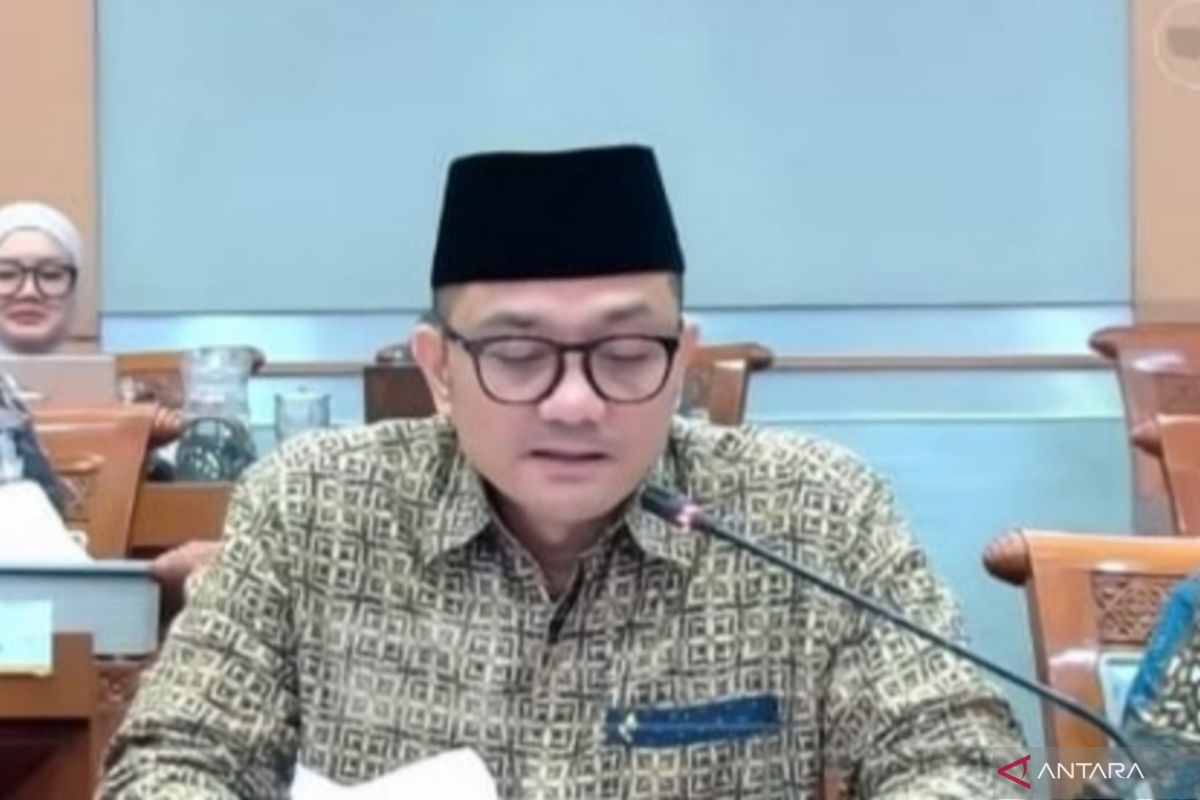
The Hajj Financial Management Agency (BPKH) has revealed that the policy to increase the initial deposit for prospective Hajj pilgrims, which has not yet been implemented, could potentially cause an additional Rp5.65 trillion in managed funds to remain unrealised this year. Head of the BPKH Executive Board, Fadlul Imansyah, stated during a hearing with House of Representatives Commission VIII in Jakarta on Tuesday that this target was originally projected from adjustments to the initial deposit for both regular and special Hajj programmes. “The policy to raise the regular Hajj initial deposit from Rp25 million to Rp35 million, and the special Hajj initial deposit from 4,000 US dollars to 6,000 US dollars, has not yet been implemented,” he said. Fadlul explained that besides the postponement of the deposit policy, the planned instalment scheme for the settlement deposit, which was intended to be managed directly by BPKH, has also not been operationally executed. He added that macroeconomic challenges have become more dynamic following the withdrawal of Hajj Travel Costs (BPIH) from the previous year, known as the T+1 mechanism, such as the transfer of Rp7.8 trillion in 2025 which could recur. Fadlul noted that the 2026 Annual Work Plan and Budget posture was originally formulated using national economic growth targets of 5.22 to 5.3 percent and inflation ranging from 2.54 to 3.4 percent. These basic macroeconomic assumptions also set the rupiah exchange rate at Rp16,500 per US dollar, the Saudi riyal at Rp4,400, the 10-year government bond yield at 6.6 to 7.2 percent, and the deposit insurance rate at 4.25 to 5.5 percent. However, BPKH acknowledged that escalating geopolitical tensions, Middle East conflicts, financial market volatility, and limited direct investment instruments are the main external factors driving the high dynamics of Hajj fund management. “Nevertheless, we can report that BPKH’s performance up to May 2026 remains generally under control. New pilgrim registrations show very good results, community benefit programmes are running close to target, and operational costs remain efficient. However, BPKH continues to monitor key challenges related to managed funds, value of benefits, and yield. We hope for support from House of Representatives Commission VIII in strengthening BPKH’s policies and institutional framework,” he explained.