
BPKH: Proposed 2027 Hajj Cost Scheme Potentially Contradicts Ulama Fatwa
The Ministry of Hajj and Umrah has proposed the 2027 Hajj pilgrimage cost (BPIH) at Rp 107,340,172.02. Under the proposed scheme, pilgrims would directly pay 40 percent (Rp 42,936,068.81) of the travel costs, while the remaining 60 percent (Rp 64,404,103.21) would be covered by benefit funds managed by the Hajj Financial Management Agency (BPKH).
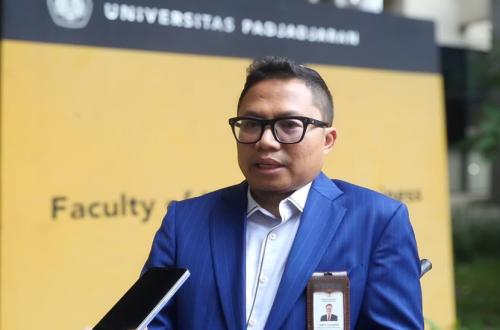
Responding to the proposal, BPKH member Indra Gunawan acknowledged that it appears populist and favourable to pilgrims departing in 2027. However, he stressed that any decision must equally consider the interests of the 5.7 million pilgrims still on the waiting list.
“Intergenerational fairness and the sustainability of hajj funds are foundations that must not be sacrificed. The proposed 40:60 scheme needs to be carefully and comprehensively reviewed together by the government and the House of Representatives’ Hajj Working Committee,” Indra said on Thursday (20/8/2026).
He cautioned that hajj funds concern the rights of millions of families who have been saving and waiting for years. The sharp increase in the use of benefit funds from 38 percent in 2026 to 60 percent in 2027 could potentially erode the space for pilgrims still waiting in the queue.
BPKH supports efforts to ease the burden on departing pilgrims, but emphasises that a balance must be found. Costs should be rational for those departing, fair for those waiting, compliant with sharia principles, and maintain long-term sustainability in accordance with applicable laws and regulations.
Indra referred to Law Number 34 of 2014 on Hajj Financial Management, which explicitly requires management based on sharia principles, prudence, benefit, non-profit, transparency, and accountability. Placement and investment must consider security, prudence, benefit value, and liquidity.
“Hajj funds are entrusted by pilgrims, not owned by the state or the managing institution. Every use of benefit funds must maintain solvency and not create structural risks that endanger future generations,” Indra said.