
BPKH: Indonesia Must Become an Active Player in the Hajj Economic Ecosystem
Jakarta (ANTARA) - The Hajj Financial Management Agency (BPKH) has affirmed that Indonesia needs to take a strategic role as an active player in the global hajj economic ecosystem, given the enormous economic potential accompanying the annual organisation of hajj and umrah pilgrimages.
BPKH Executive Board Member for Direct Investment, M. Arief Mufraini, said that since its establishment in 2023, BPKH Limited was designed as an investment instrument in the hajj and umrah sector.
“The initial orientation behind the formation of BPKH Limited, with the support of other ministries — namely the Ministry of Religious Affairs, the Ministry of Foreign Affairs, and the Ministry of Finance — is direct investment in the hajj and umrah ecosystem,” Arief said in a statement in Jakarta on Monday.
Indonesia is the country with the largest number of hajj pilgrims in the world. Each year, more than 200,000 people depart for the Holy Land, in addition to umrah pilgrims whose numbers are estimated to exceed 1.5 million. These activities form a high-value economic ecosystem encompassing the hospitality, food and beverage, transportation, logistics, and various other supporting service sectors.
According to him, the initiative aims to ensure Indonesia does not merely remain a seasonal buyer through procurement, but holds a strategic position in the hajj economic value chain through investment schemes.
“This represents the first stage of gradually shifting from procurement to investment,” he said.
During the process of market penetration and the learning curve, BPKH Limited still requires regulatory strengthening through a revision of the Hajj Financial Management Law so that the ecosystem investment model can be implemented more comprehensively.
The regulatory revision is currently being processed as part of long-term governance strengthening. During this penetration phase, BPKH Limited has not yet been fully able to perform as a major player in accordance with its original design, and in certain practices still serves as a facilitator.
Meanwhile, BPKH Executive Board Chairman Fadlul Imansyah affirmed that the steps taken by his institution represent an effort to build the foundation of hajj economic sovereignty.
“What is being built is the foundation of hajj economic sovereignty, not intermediary practices,” Fadlul said.
He added that hajj economic sovereignty does not mean commercialising worship, but rather ensuring that its economic governance operates professionally, efficiently, and in the interests of pilgrims.
BPKH also cited the optimisation of commercial areas in hotels used by Indonesian pilgrims as an example. Until now, the economic potential from these facilities has been entirely managed by external parties. Through a strategic investment approach, a portion of that economic value is expected to strengthen hajj funds and provide direct benefits to pilgrims.
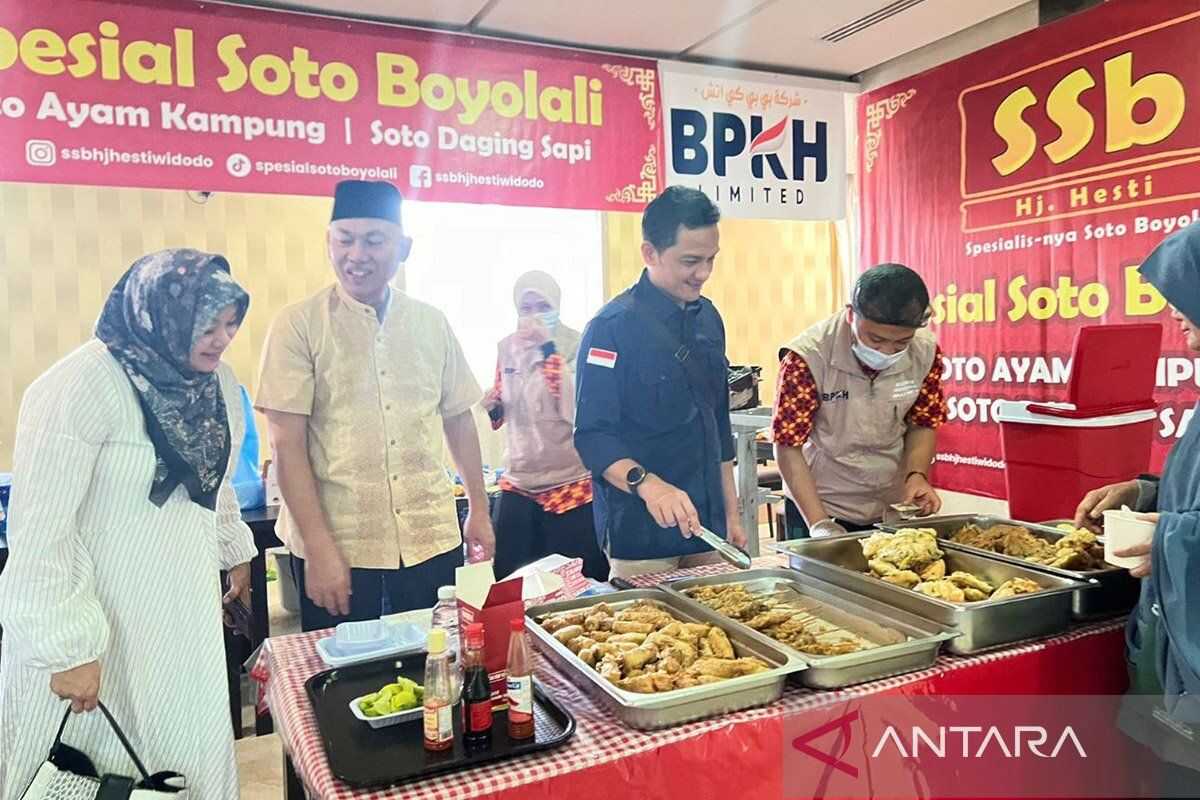
In addition, BPKH has initiated the provision of meals during the pre and post-Armuzna phases. In previous years, Indonesian pilgrims had not received full three-meals-a-day service during these phases.
“Last year we made improvements under very challenging conditions. Many kitchens could not operate optimally, logistics mobilisation was limited, but the needs of pilgrims had to remain the priority,” Arief said.
According to Fadlul, the initiative is expected to become a new standard for Indonesia’s hajj services going forward.
“Our hope is that the system already pioneered can be continued and refined, with or without the involvement of BPKH or BPKH Limited. If the organisers can run it independently, that would in fact be a shared success,” he said.
Within a broader framework, the development of Kampung Haji (Hajj Village) as a strategic government initiative through Danantara as the leading sector forms part of efforts to strengthen Indonesia’s position in the global hajj ecosystem.
“BPKH is ready to collaborate in the development of Kampung Haji. This is not a sectoral agenda, but a national strategic agenda to strengthen Indonesia’s position in the global hajj ecosystem,” Fadlul said.