
BPKH: Hajj Waiting Period Reduced from 43 Years to 26 Years
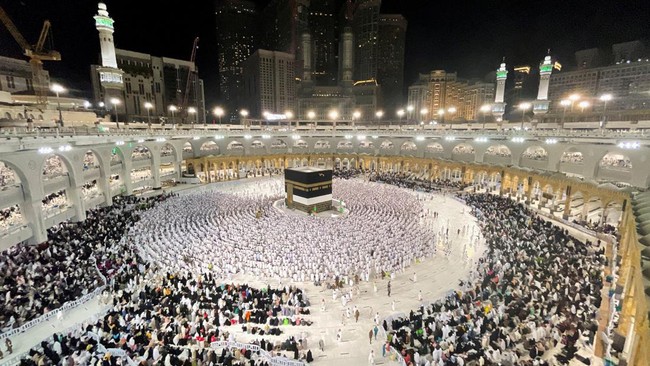
Indonesian Muslims no longer need to wait up to 40 years to perform the Hajj pilgrimage.
The Head of the Hajj Financial Management Agency (BPKH), Fadlul Imansyah, stated that following the formation of the Ministry of Hajj and Umrah, the waiting period for Hajj departures in Indonesia has been standardised to approximately 26 years.
Previously, waiting periods varied significantly by region, with some areas facing delays of 15, 20, 25, or even 30 years. Fadlul noted that some regions had even seen waiting times reach 43 years.
“After the Ministry of Hajj was formed, there has been a significant change. Alhamdulillah, it has decreased to 26 years, but it is now averaged across all locations,” Fadlul told CNBC Indonesia during the Cuap-Cuap Cuan programme, as reported on Wednesday (30/09/2026).
This development is particularly good news for young people or those who have just entered the workforce at age 23. If they register for Hajj immediately, a simple calculation suggests they could depart at around age 49.
“Let’s assume 23 (years old). Add 26, and you are approximately 49. Almost 50. That is sufficient to depart for Hajj at age 50,” he said.
Fadlul emphasised that the mindset regarding when to register or intend to perform the pilgrimage must change. He noted that the current pattern could lead individuals to only register once they reach 50 years of age or older. Given the 26-year waiting period, someone registering at 50 would, quite simply, only get the opportunity to depart at age 76.
“Imagine if you register at 50; 26 years later, you would be 76. Hopefully, you are still healthy by then,” said Fadlul.
Consequently, he believes the public needs to shift their perspective on Hajj preparation. Hajj should not be something only considered once one is financially established or approaching retirement. Instead, due to the long queues, preparation can begin as soon as one enters their productive years.
For workers or young people, preparation will be more mature as the Hajj waiting period and the period for accumulating funds can occur simultaneously. For instance, someone starting their first job at age 22 or 23 can begin setting aside part of their income for Hajj needs, starting from the initial registration fee of Rp25 million.
“Every prospective Hajj pilgrim who has registered does so with 25 million rupiah. That 25 million rupiah sitting in the fund is, automatically, our duty. As Hajj managers, we must manage those funds to generate investment returns,” he said.
Fadul stated that with trustworthy management and well-measured risk, the funds prepared by young people over 26 years are expected to meet all Hajj requirements by the time departure arrives.
“If we use a conservative assumption of just 5%—we don’t even need to assume 7% or 10%—over 26 years, that is approximately 3.5 times the original amount. So, from 25 million, it could become roughly 80 million. This is based on the assumption that the Hajj cost remains the same 26 years from now. However, if costs increase, additional funds will still be necessary,” Fadlul explained.
Source: jawawa.id (https://jawawa.id/newsitem/bpkh-hajj-waiting-period-reduced-from-43-years-to-26-years-1790733308)
Originally published by CNBC Indonesia (https://www.cnbcindonesia.com/syariah/20260930073851-29-771981/bpkh-dulu-masa-tunggu-haji-43-tahun-sekarang-26-tahun), translated from Indonesian