
BPKH: Hajj and Umrah Ecosystem is the Engine of Indonesia's Sharia Economy
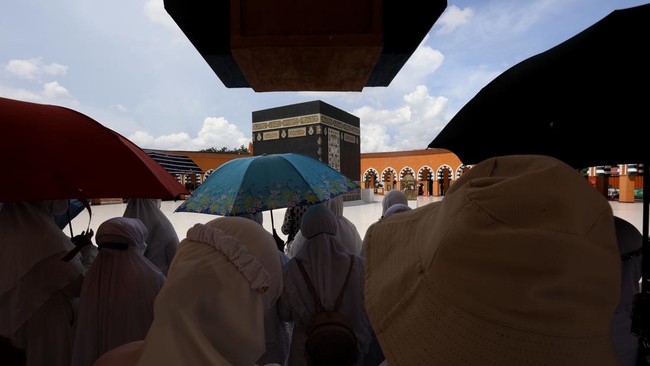
The head of the Hajj Financial Management Agency (BPKH), Fadlul Imansyah, believes the development of the sharia ecosystem can also be pursued through the hajj and umrah ecosystem in Indonesia, as it involves enormous economic activity, ranging from finance, accommodation, transport and catering to the development of the halal industry.
“We must look at how we can shift our perspective from merely recording achievements to developing a policy thesis. The hajj and umrah ecosystem should not be seen merely as an organiser’s annual expenditure, but rather as a captive market whose demand is relatively certain and recurring,” he said at an ISEI Jakarta event on Monday (3/8/2026).
According to him, this hajj and umrah demand needs to be converted into productive investment.
He outlined the pathway for deepening the sharia financial market and strengthening Indonesia’s halal value chain, starting from market demand, followed by the formation of investment vehicles, and then increasing value capture in related sectors, including their supply chains.
This would then be directed towards generating national impact in the form of greater added value, stronger halal small and medium enterprises (SMEs), and the retention of foreign exchange so that it does not flow entirely abroad.
Nevertheless, he acknowledged that several strategic issues need to be resolved, as the synergy between the sharia financial sector, the halal industry and SMEs, and the hajj and umrah ecosystem has not yet run optimally.
On the other hand, Indonesia is a country with a very large Muslim population and very strong demand for its products, particularly halal services, yet its sharia financing capacity still needs strengthening.
“This is reflected in the sharia financial sector score mentioned earlier, where Indonesia’s ranking fell from third to fourth place. It is in this context that hajj financial management becomes a player, playing a strategic role as a catalyst for sharia economic development in support of our efforts,” he explained.
This means, he said, that the challenge is no longer about creating demand, but about building production capacity, financing, innovation and exports, so that such large demand delivers added value to the national economy.
“The key point is that a large market alone is not enough. I want to provoke us all into recognising that Indonesia’s strength indeed lies in its enormous consumption and the potential of the halal sector. But our weakness is the depth of sharia financing,” he said.
Source: jawawa.id (https://jawawa.id/newsitem/bpkh-hajj-and-umrah-ecosystem-is-the-engine-of-indonesias-sharia-economy-1785747105)
Originally published by CNBC Indonesia (https://www.cnbcindonesia.com/market/20260803144146-17-756103/bpkh-ekosistem-haji-umrah-mesin-penggerak-ekonomi-syariah-ri), translated from Indonesian