
BPKH Ensures Haj Funds Are Safe Amid Rupiah Exchange-Rate Fluctuations
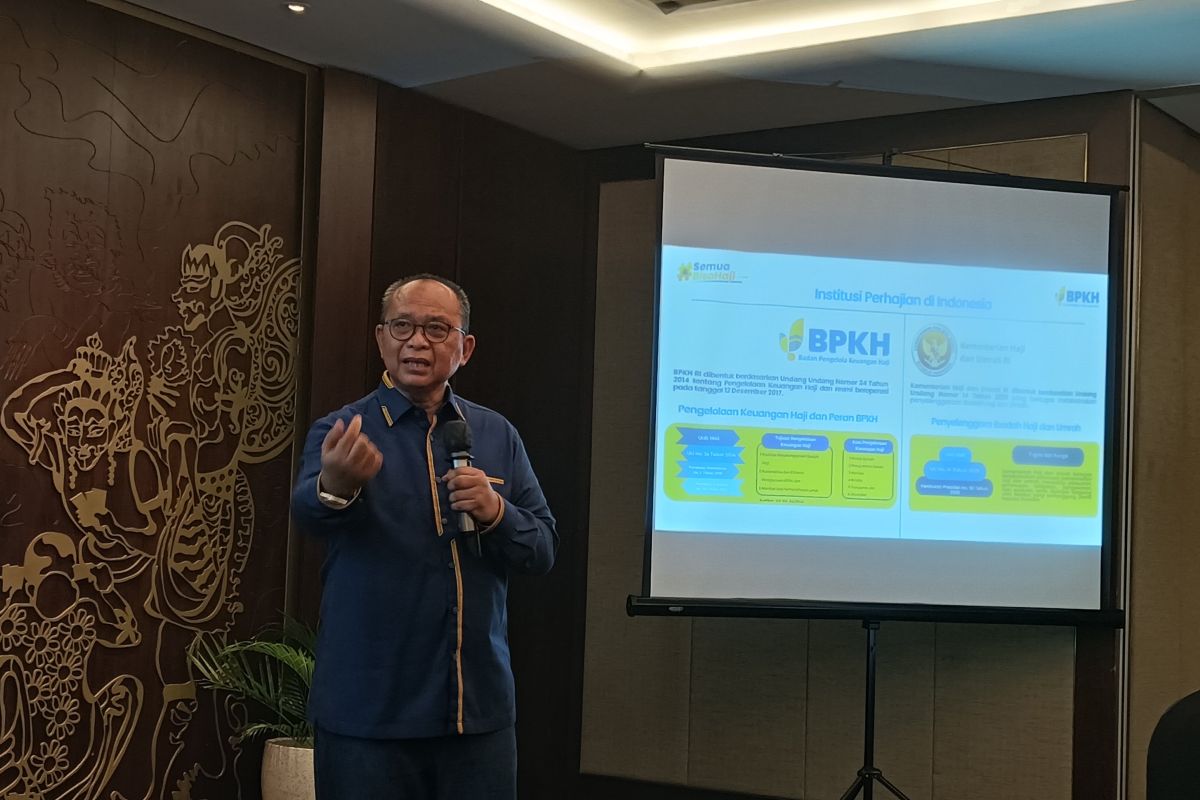
Semarang — The Haj Financial Management Agency (BPKH) has said that haj jamaah funds remain safe and under control amid fluctuations in the rupiah’s exchange rate against the US dollar which has recently weakened.
Acep Riana Jayaprawira, a member of the BPKH Executive Board, in Semarang, Central Java, said on Wednesday that all investment decisions are made through rigorous studies, covering risk, legal, and compliance aspects before being decided jointly by the executive board and the supervisory board.
He said fund management is carried out cautiously through low-risk investments and placements, in line with the mandate of Law No. 34 of 2014 on Haj Finances.
“Those funds are well recorded. In making investments and placements we act with caution. We conduct risk assessments, legal reviews, and compliance checks, and these pass through the committee,” said Acep after the “BPKH Connect” event.
He said all investment decisions involve 14 people, seven from the executive body and seven from the supervisory board of BPKH, to ensure haj funds do not decline.
Currently, he said, BPKH is only allowed to place funds in low-risk instruments since it does not yet have capital or loss reserves, as regulated in the older regulations.
Therefore, he hopes that revisions to the Haj Financial Management Act may later provide room for capital formation and loss reserves so that fund management can be more flexible, yet remain safe.
“Hopefully with changes to the law, once there is capital and permission to form loss reserves, BPKH can move to a slightly higher level of risk than low,” he said.
He acknowledged that the biggest challenge to sustaining haj funds at present comes from fluctuations in the rupiah’s exchange rate against the US dollar and the Saudi riyal, as haj operational needs are largely in foreign currencies.
“If the rate is high, more rupiah is needed to pay for hotels, air travel, and catering in Saudi Arabia,” he said.
Nevertheless, Acep assured that the rupiah’s weakness at present has not affected the cost of organising this year’s haj because foreign currency needs have been purchased earlier when the rate was stable.
“When the dollar rises now, it does not have much effect. Because we bought yesterday when the rupiah exchange rate was still low,” he said.