
BPKH Chief Explains the Benefits of Hajj Fund Management
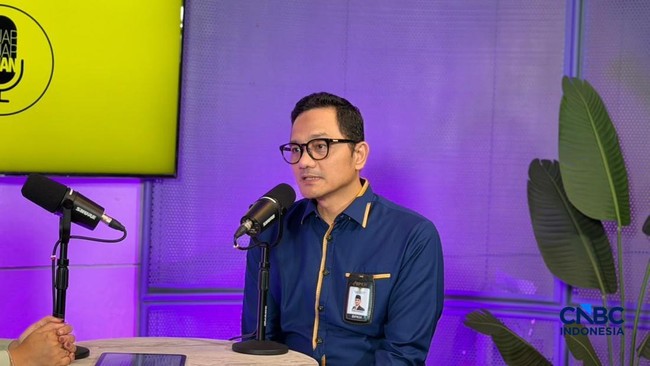
Jakarta, CNBC Indonesia — The head of the Hajj Fund Management Agency (BPKH), Fadlul Imansyah, has outlined how the agency manages Hajj funds. He said it invests the money in a range of instruments to generate substantial benefits for prospective pilgrims.
This is part of BPKH’s role as fund manager, intended to prevent future pilgrims from facing an excessive financial burden, particularly given the 26-year waiting period.
“The money is grown so that, by the time they depart, our aim is for them not to have to pay any more, despite the 26-year wait. Assuming a return of just 5%, over 26 years it would increase by about 3.5 times,” Fadlul told CNBC Indonesia, as quoted on Wednesday (11 November 2026).
The cost of organising the Hajj is around Rp98 million, while the registration payment is Rp25 million. This leaves a substantial shortfall that prospective pilgrims must cover to make the pilgrimage. BPKH therefore plays an important role in bridging the gap and limiting the additional costs pilgrims will face later.
Fadlul said Indonesia’s sovereign sharia securities (SBSN) currently offer the safest risk-free investment. This benefits BPKH and can increase the returns allocated to pilgrims, with yields on managed funds reaching more than 7%.
“When else can you get a yield above 7%? Deposits can also reach 6%. So, in the current conditions, it is quite beneficial for pilgrims: their funds can still grow, and registrations continue, so the pool of funds remains in place. That is advantageous for management,” he said.
Fadlul said 70% of Hajj funds are currently invested in SBSN, while the remaining 30% is placed with Islamic banks across Indonesia, including Islamic business units and full-fledged Islamic commercial banks.
“Some 95% is risk-free, with the risk resting with the state. Five per cent is in Bank Muamalat; we hold an 82% stake in Bank Muamalat, the first fully sharia-compliant bank. There is also BPKH Limited, a subsidiary, and funds in the Islamic Development Bank. The risks are, by and large, measurable,” Fadlul said.
He also explained how investment returns, or ‘benefit value’, are distributed. Returns generated from pilgrims’ initial deposits are divided between the virtual accounts of those waiting to depart and pilgrims travelling in the current year.
“The investment returns we provide are not distributed entirely to the virtual accounts of those waiting; they also go to those departing. For example, from a 7% yield, those waiting do not receive the full 7%; it could be divided 50-50 with those travelling. That may make it less attractive, but this is a mechanism that must be followed. We cannot refuse, because each distribution is set by the House of Representatives together with the government’s working committee,” he said.
Fadlul stressed that BPKH’s investment portfolio is conservative and resilient to economic shocks. He said the agency does not have a strategy but instead “buys on deep” [sic]. BPKH, he added, is managed accountably and with integrity.
BPKH has received an unqualified audit opinion (WTP) for eight consecutive years and is also regularly overseen by Commission VIII of the House of Representatives.
“In today’s social-media era, anyone curious about BPKH can find us on various social-media platforms. If you want information about BPKH, from legal matters to general updates, please visit our social media to get accurate information. God willing, our team is ready to answer questions and consider valuable feedback if anything is wrong,” Fadlul said.
BPKH says it safeguards the interests of pilgrims due to depart soon while ensuring that future applicants have an equal opportunity to fulfil their religious obligation. Since the enactment of Law No. 34/2014 and BPKH’s establishment in 2017, Indonesia has shifted from annual administrative funding to managing pilgrims’ savings as long-term trust funds.
Source: jawawa.id (https://jawawa.id/newsitem/bpkh-chief-explains-the-benefits-of-hajj-fund-management-1794394295)
Originally published by CNBC Indonesia (https://www.cnbcindonesia.com/news/20261111161949-4-784345/buka-bukaan-kepala-bpkh-beberkan-manfaat-pengelolaan-dana-haji), translated from Indonesian