
BPKH and BRIN Launch the Dai Sejuta Mimbar Programme
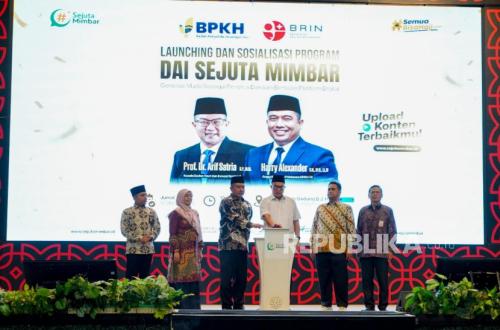
The Hajj Financial Management Agency (BPKH), the National Research and Innovation Agency (BRIN) and Harika Foundation for Humanity launched and introduced the Dai Sejuta Mimbar programme at the B.J. Habibie Building Auditorium at BRIN in Jakarta on Friday (16 October 2026). The programme encourages young people to prepare for the Hajj from an early age while using digital platforms to share creative, inspirational, relevant and responsible Islamic messages.
BPKH Executive Board member Harry Alexander said the Dai Sejuta Mimbar programme complements educational efforts under the Haji Muda programme, which promotes Hajj and financial literacy among young people. Through the two programmes, young people are expected not only to understand the importance of preparing for the pilgrimage to the House of Allah, but also to play an active role in sharing knowledge and positive messages through digital content.
“Preparation for the Hajj should begin at a young age, through spiritual readiness, an understanding of the pilgrimage and sound financial planning. The long waiting period for Hajj departures makes early education important, so that people can plan their pilgrimage in a more focused way,” Harry told Republika on Friday (16 October 2026).
He stressed that preparation for the Hajj should start while people are young. The pilgrimage is not only about travelling to the Holy Land, but also about making a long-term commitment through disciplined financial planning. Young people should therefore prepare early, both spiritually and financially, according to their means.
Through Haji Muda, BPKH encourages the public to understand the importance of financial management, develop saving habits and obtain accurate information about the Hajj as part of their preparations for the pilgrimage. Dai Sejuta Mimbar, meanwhile, gives young people a platform to communicate Islamic values through digital content that relates to everyday life.
“With Dai Sejuta Mimbar, we want to create space for young people to play a role in spreading positive messages through digital platforms. Religious content should not only be creative and engaging, but also have strong substance, be accountable and benefit the public,” Harry said.