
BPK supports strengthening accountable Bulog governance to safeguard self-sufficiency
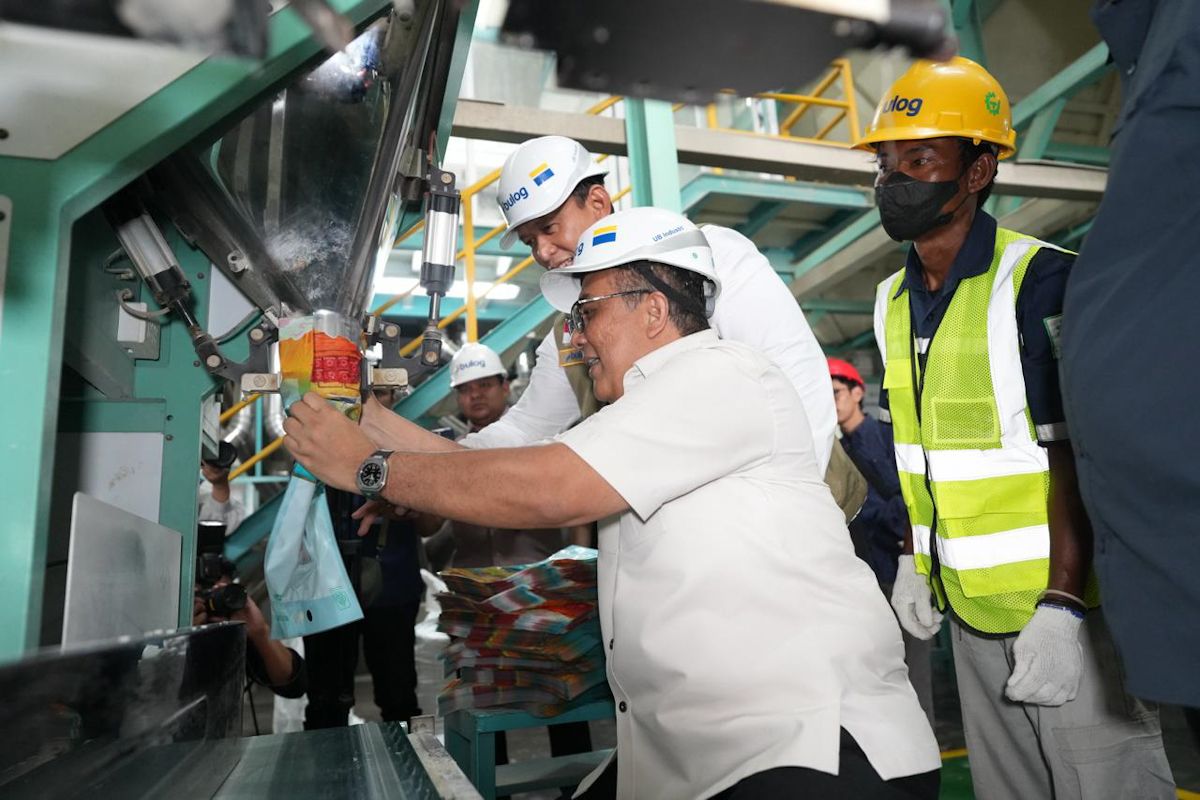
The Audit Board of Indonesia (BPK) fully supports strengthening the role of Perum Bulog in realising national food self-sufficiency through governance that is accountable, transparent, and oriented towards the broader public interest. “BPK fully supports the various government programmes implemented by Bulog in achieving sustainable food self-sufficiency,” said BPK Leadership VII member Slamet Edy Purnomo in a statement in Jakarta on Friday. Slamet emphasised this during a review of harvest activities and Bulog’s infrastructure readiness in Karawang Regency, West Java, on Thursday (11/6), accompanied by Perum Bulog President Director Ahmad Rizal Ramdhani. Slamet stated that the visit was a manifestation of BPK’s support for the government’s programme to achieve sustainable food self-sufficiency, backed by transparent, accountable, and public-oriented governance. “We express our appreciation for Bulog’s achievements in successfully carrying out its strategic role in strengthening national food security,” he said. According to Slamet, Bulog’s success in increasing the absorption of farmers’ unhusked and milled rice is a key indicator of the government’s programme success in maintaining food availability while improving farmers’ welfare. “In addition to the excellent procurement achievements, we also see a strong commitment to building accountable, transparent, and responsible governance,” Slamet remarked. He noted that this serves as an important foundation for national food programmes to run effectively and provide optimal benefits for farmers and the public. He added that BPK will continue to carry out its supervisory and audit functions constructively to ensure that state financial management in the food sector adheres to the principles of good governance and supports the success of national strategic programmes. The activity began with a large-scale harvest with farmers in Mekarjaya Village, Karawang Regency, one of the national rice production centres. During the occasion, the BPK Leadership VII member and the Bulog President Director engaged directly with the Karawang Regional Leadership Coordination Forum and farmers to observe the development of national rice production and the implementation of domestic grain and rice absorption by Bulog. Meanwhile, Bulog President Director Ahmad Rizal Ramdhani stated that the support and oversight from BPK are crucial in strengthening public trust in national food management. Rizal conveyed that Bulog remains committed to carrying out government assignments by prioritising the principles of good, accountable, and professional governance. “We believe that sustainable food self-sufficiency can only be achieved through collaboration among all stakeholders and transparent, responsible management,” said Rizal. After the harvest, the delegation continued their visit to the Purwasari II Bulog Warehouse to inspect the storage and management system for the Government Rice Reserve (CBP). The BPK Leadership VII member directly observed the readiness of Bulog’s warehousing facilities and infrastructure in maintaining the quality, quantity, and security of national food stocks. The visit then proceeded to the Bulog Rice Milling Centre. On that occasion, the delegation reviewed the process of milling grain into rice, the application of quality standards, and the use of technology that supports operational efficiency and strengthens the national food supply chain. “Through this visit, BPK and Bulog affirm the importance of synergy between state institutions in supporting the realisation of sustainable national food self-sufficiency,” Rizal stressed. In addition to ensuring food availability for the public, Rizal added, strengthening accountable governance is also a crucial factor in maintaining public trust and guaranteeing the long-term sustainability of national food programmes.