
BPK Reveals 9 Importers Received State Refunds Despite Rp7 Billion in Bad Debts
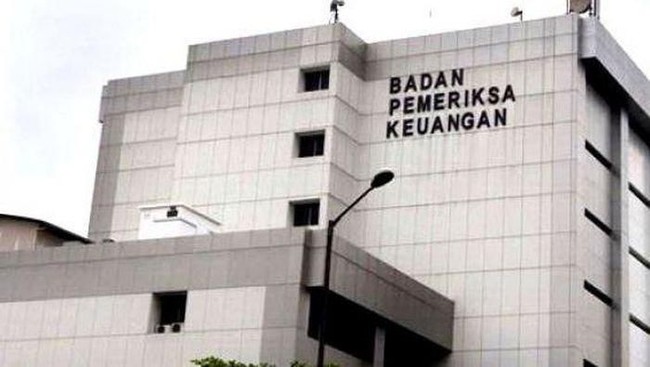
The Audit Board of Indonesia (BPK) has revealed that the Directorate General of Customs and Excise (DJBC) failed to optimally collect receivables totalling Rp33.16 trillion in 2025. Within this amount, there are 3,147 documents representing bad debts worth Rp7.17 billion that have passed their due dates without active collection efforts by the relevant work units. These bad debts originated from the 2016-2021 period and remain unpaid.
The breakdown of the bad debts includes Rp3.34 billion from rush handling application letters, Rp1.10 billion from SPPBMCP for shipped goods, and Rp2.72 billion from special import notifications for courier service companies. The BPK report stated that until the end of the audit, no collection documents had been issued for these overdue payments.
Furthermore, the BPK found that state revenue refunds were granted to nine importers without deducting their outstanding debts to the DJBC. The importers involved include CV CKI, which received refunds of Rp8.74 million and Rp11.85 million while holding an uncollected debt of Rp36.22 million, and CV Ci, which received a refund of Rp151.09 million against a debt of Rp3.12 million. Other importers such as PT Ag, PT BBS, PT CH, PT GBU, PT IBI, PT MRA, and PT OMU also received refunds despite having uncollected debts.
The BPK noted that these importers had debts dating from 2016 to 2020 that were never actively collected, yet in 2025, they applied for and received state refunds. The audit also found that for six of these debtors, the debts were recorded at different work units than those issuing the refunds, highlighting a need for better coordination or an integrated system.
Additionally, the BPK identified a shortage of bailiffs as a constraint on debt collection. In 2025, 19 regional offices and 41 supervisory offices had no bailiffs. Although the number of bailiffs increased to 254 in 2026, nine regional offices and 12 supervisory offices still lacked them. The BPK also noted that not all bailiffs were assigned to the treasury collection sections.