
BPK: Public Resource Accountability Is Key to a Successful Energy Transition
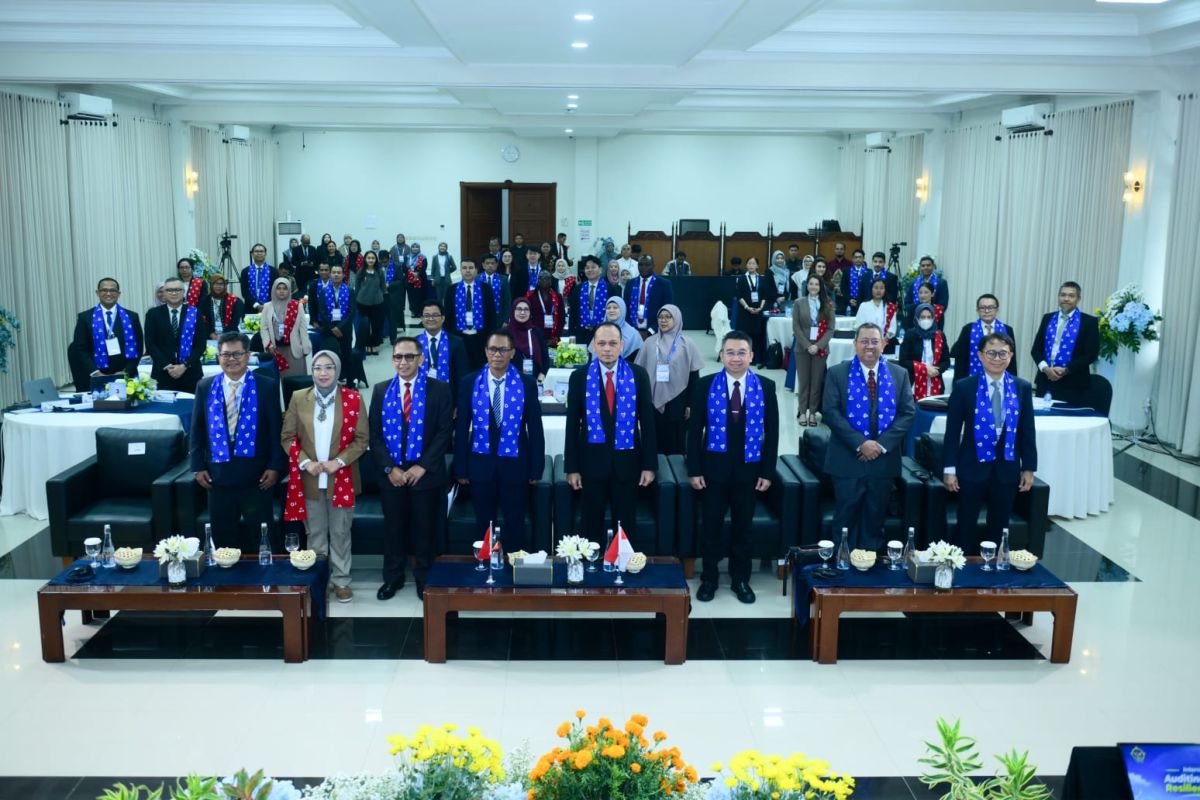
The success of the energy transition depends not only on investment and technological progress, but also on accountability in the management of public resources.
Jakarta (ANTARA) – Khaidir Abdurrahman, a member of Audit Board of the Republic of Indonesia (BPK) IV, said the success of the energy transition depended on accountability in the management of public resources.
“The success of the energy transition depends not only on investment and technological progress, but also on accountability in the management of public resources,” he said when opening the International Training on Auditing Sustainable and Resilient Energy Systems at the State Financial Audit Training Centre (PKN) in Yogyakarta, according to a statement issued in Jakarta on Sunday.
He stressed the importance of improving auditors’ capacity to address the complexities of managing sustainable and resilient energy systems.
Auditors’ expertise, he added, needed to be continually strengthened to support accountability in government policies, programmes and investment in the energy sector, ensuring they deliver tangible benefits to the public.
Khaidir said energy security and public welfare should be central considerations when auditing energy-sector policies and programmes.
“There can be no successful energy transition without accountability. Investment and technology alone are not enough,” he said.
Afonso Carmona, president of the Câmara de Contas at the Tribunal de Recurso of Timor-Leste (SAI Timor-Leste), who also attended the opening, said the programme was strategically important for strengthening auditors’ capacity in his country.
Afonso hoped the training would give participants the opportunity to gain new knowledge, exchange experience and learn auditing practices that could be adapted to the needs of their respective institutions.
The international training was attended by 26 participants from 14 Supreme Audit Institutions (SAIs): Bhutan, Brazil, Egypt, The Gambia, Guyana, India, Indonesia, Kenya, Kuwait, Malaysia, the Philippines, the Republic of Korea, Thailand and Timor-Leste.
The programme aims to strengthen SAIs’ capacity to plan audits of sustainable and resilient energy systems, while encouraging the exchange of knowledge and experience between audit institutions.
It began with self-paced and remote learning, followed by in-person sessions in Yogyakarta.
In addition to discussions and exercises on performance-audit planning, participants visited the Kedungrong and Blumbang micro-hydropower plants in Kulon Progo Regency, as well as the Desa Energi Baik in Karangrejo, Magelang Regency, to study community-based renewable energy management practices.
Khaidir said BPK continued to promote stronger auditor capacity, cooperation and knowledge-sharing among SAIs. The collaboration is expected to support higher-quality audits and contribute to accountable, sustainable and resilient energy governance.
Source: jawawa.id (https://jawawa.id/newsitem/bpk-public-resource-accountability-is-key-to-a-successful-energy-transition-1795917050)
Originally published by Antara (Indonesian) (https://www.antaranews.com/berita/5885767/bpk-akuntabilitas-sumber-daya-publik-kunci-sukses-transisi-energi), translated from Indonesian