
BPK Member Stresses Immigration's Role in Screening Foreigners, Not Just Non-Tax Revenue
The Supreme Audit Agency (BPK) of the Republic of Indonesia has stressed the role of the Directorate General of Immigration under the Ministry of Immigration and Corrections (Kemenimipas) as a filter for foreign nationals entering the country. He stated that immigration’s duties are not solely related to generating non-tax state revenue (PNBP) from immigration document services.
“Kemenimipas has demonstrated how immigration’s role filters tourists entering our country. This is not only about PNBP, but also about our national sovereignty, which is far more important than mere revenue,” said BPK Member I, Nyoman Adhi Suryadnyana, as quoted from a press release on Thursday (6/8/2026).
Nyoman made the remarks during the handover of the Audit Report on the Financial Statements of the Ministry of Immigration and Corrections for the 2025 Fiscal Year on Monday (3/8).
The Directorate General of Immigration has indeed implemented a selective visa issuance policy. Despite being selective, Immigration stated that its spirit remains supportive of tourism growth, investment, and international mobility.
The selective policy in question involves considering the principle of reciprocity, economic benefits, security risks, and the quality of foreigners entering Indonesia. In line with this, the BPK also provided recommendations regarding the arrangement of the Visa-Free Visit (BVK) policy, as the broad application of visa-free entry to 169 countries has the potential to reduce state revenue by up to Rp 3.02 trillion annually.
Nyoman further stated that, based on BPK monitoring results, the temporary suspension of the BVK policy has had a positive impact on state revenue. In 2023, immigration sector PNBP reached Rp 7.61 trillion, or 327.03 percent of the set target.
Based on this data, the number of foreign national visits to Indonesia continued to increase to more than 10.6 million people. Nyoman said this figure serves as evidence that the selective visa policy does not necessarily hinder international mobility or tourism sector growth.
He even recommended that plans to broadly reinstate the BVK policy be thoroughly reviewed with the involvement of relevant ministries and agencies. Nyoman explained that an evaluation is needed to ensure that facilities are granted to countries that provide tangible benefits, apply the principle of reciprocity, and have manageable immigration risk levels.
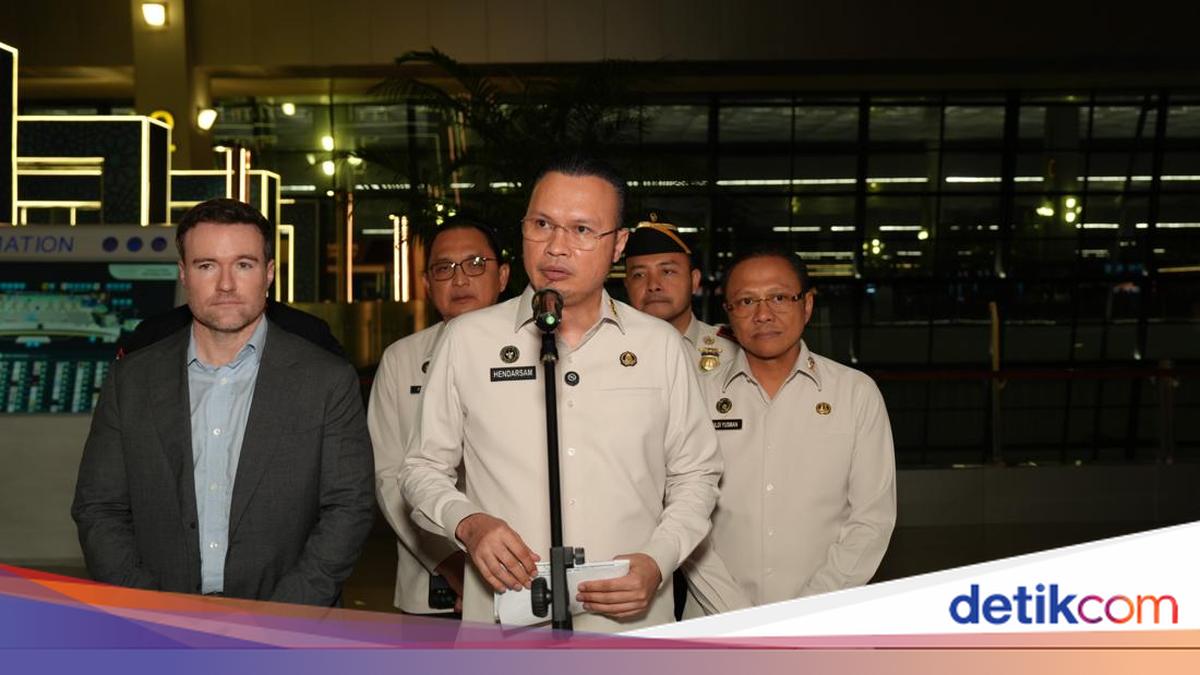
On the same occasion, Director General of Immigration Hendarsam Marantoko affirmed that increased PNBP is one of the benefits of the visa policy, but is not the sole measure of success. Immigration policy, Hendarsam stressed, must ensure that the state has control over every foreigner entering, residing, and conducting activities within Indonesian territory.
“With the support and oversight of the BPK, the Directorate General of Immigration will continue to evaluate and improve visa policies, border crossing inspections, foreign national supervision, and cross-ministerial and institutional data integration,” said Hendarsam.
“These measures are taken to ensure that immigration facilitation continues to run in tandem with the protection of national interests, security, and Indonesia’s sovereignty,” he concluded.
Source: jawawa.id (https://jawawa.id/newsitem/bpk-member-stresses-immigrations-role-in-screening-foreigners-not-just-non-tax-revenue-1785995797)
Originally published by detikcom (https://news.detik.com/berita/d-8606542/anggota-bpk-tegaskan-peran-imigrasi-seleksi-wna-masuk-ri-tak-cuma-soal-pnbp), translated from Indonesian