
BPK Launches Thematic Audit to Strengthen National Energy Security
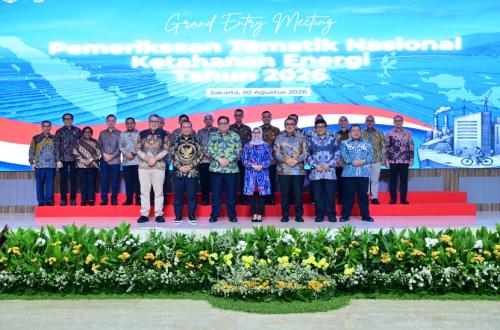
The Audit Board of Indonesia (BPK) has officially commenced a national thematic audit of the energy security programme. The audit aims to assess whether policies, governance, programmes, and activities related to national energy security across central government, regional governments, and state-owned enterprises have been designed and implemented effectively, efficiently, and in compliance with laws and regulations, in support of national energy security under the 2025-2029 National Medium-Term Development Plan (RPJMN).
BPK Chair Isma Yatun explained that amid rising energy demand and increasingly complex global dynamics, achieving energy security is no longer a sectoral challenge but a national objective requiring synergy across policies, resources, and programme implementation. ‘BPK is conducting the National Thematic Audit on Energy Security as part of its constitutional mandate to audit the management and accountability of state finances. This audit is designed to view energy security holistically as an ecosystem connecting policy, programmes, resource utilisation, and governance. This approach continues the good practice implemented by BPK in the 2025 National Thematic Audit on Food Security,’ she said at the Entry Meeting for the 2026 National Thematic Audit on Energy Security in Jakarta on Thursday (20/8/2026).
The thematic audit on energy security is carried out using an ecosystem approach aimed at identifying cross-cutting issues, requiring an integrated, collaborative approach oriented towards resolving root causes. The audit is conducted on 59 entities comprising ministries and agencies, regional governments, and state-owned enterprises. The energy security pillars and sectors to be audited include the primary energy sector (oil, natural gas, coal, and new and renewable energy), the energy transformation sector (electricity and energy processing), the final energy use sector (transport, industry, households, commercial), and the mineral sector (nickel, copper, bauxite, and other critical minerals). The national thematic audit on energy security will also evaluate the effectiveness of follow-up on BPK recommendations regarding recurring issues, such as governance of energy subsidies and compensation, upstream oil and gas lifting and cost recovery, and compliance with the coal Domestic Market Obligation (DMO).
During the entry meeting, BPK Member VII Slamet Edy Purnomo explained that energy security is important to guarantee basic needs and public welfare, drive economic growth, safeguard national sovereignty and security, maintain fiscal and macroeconomic stability, and ensure equitable development and justice. ‘BPK must conduct a thematic audit on energy security to fulfil its constitutional mandate. The energy sector manages very large state resources and finances, carries high risks and broad impacts, and provides added value and tangible benefits,’ said BPK Member VII.
The national thematic audit on energy security involves many sectors and stakeholders. Its success therefore depends heavily on openness, effective communication, and strong collaboration from all parties. The audit process is expected to serve as a shared space to build a comprehensive understanding of achievements, challenges, risks, and good practices, thereby producing relevant, implementable recommendations with real impact. The audit assignment letter was symbolically handed over by the BPK Chair, accompanied by BPK Member VII, to the Coordinating Minister for Economic Affairs. The audit will be conducted from August to November 2026, with reporting of audit results from December 2026 to January 2027.