
BPK Launches SPKN 2026, Transforming Indonesia's Public Sector Auditing Standards
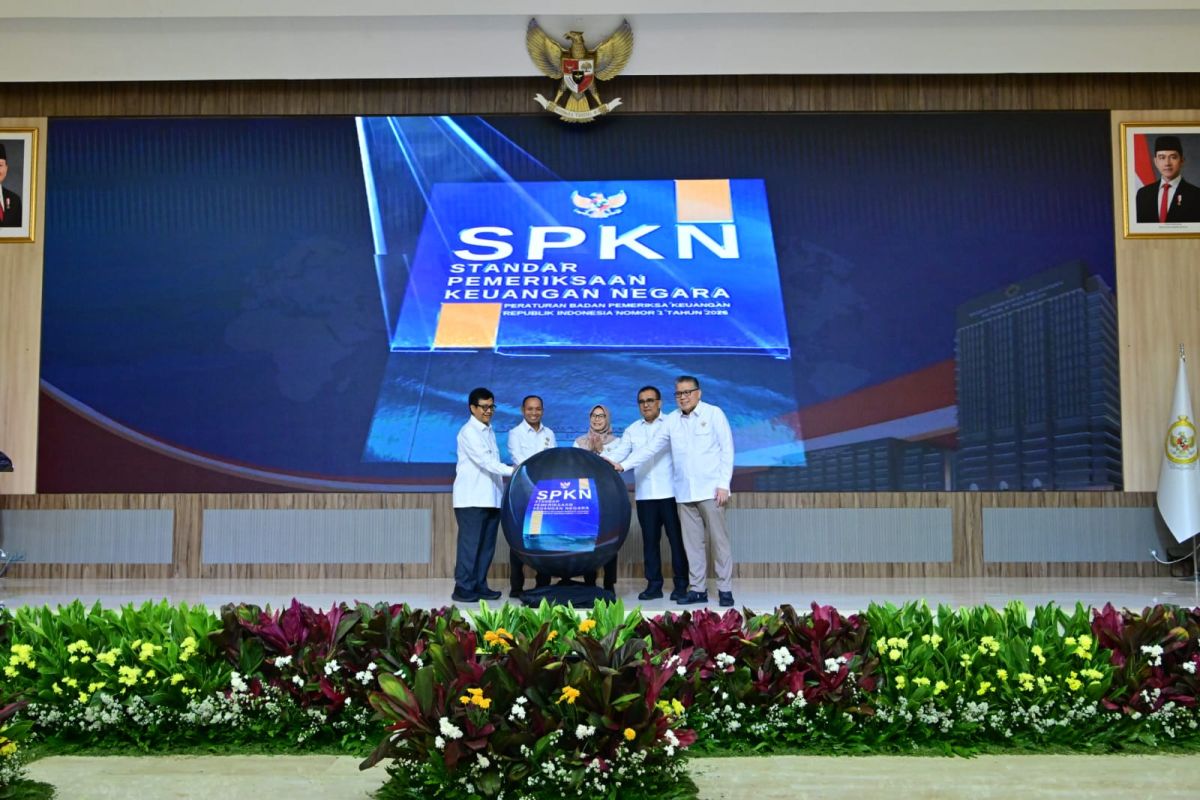
Jakarta (ANTARA) - Deputy Chairman of the Audit Board of Indonesia (BPK) Budi Prijono stated that the 2026 State Finance Audit Standards (SPKN) represent a transformation of Indonesia’s public sector audit standards.
The transformation is expected to produce audits that are increasingly dignified, professional, and beneficial for strengthening governance, transparency, accountability, and public welfare.
“SPKN 2026 is a transformation of Indonesia’s public sector audit standards, developed with reference to developments in the International Framework of Public Sector Pronouncements (IFPP), International Standards on Auditing (ISA), and the Public Accountant Professional Standards (SPAP),” he said in an official statement in Jakarta on Tuesday.
SPKN 2026 introduces standard arrangements based on audit type, expands utilisation for Internal Audit Apparatus (API), and regulates significant substance that strengthens audit implementation to address current and future audit challenges.
The implementation of SPKN 2026 is expected to strengthen the quality of state financial audits to a global standard, dignified, and beneficial for public welfare.
Furthermore, SPKN 2026 is built on three main pillars: alignment with global standards, strengthening audit quality through the application of quality management, and enhancing the benefits of audit results.
In addition, SPKN 2026 also introduces a number of fundamental reinforcements, including expanding the scope of users from Government Internal Audit Apparatus (APIP) to Internal Audit Apparatus (API), and regulating combined audits and cross-cutting audit strategies.
“I expect BPK auditors to encourage Internal Audit Apparatus to use SPKN 2026 in the interest of institutional and audit quality,” Budi said at the official launch of SPKN 2026.
On the same occasion, BPK Member III Akhsanul Khaq explained the urgency of API’s use of SPKN 2026.
According to him, expanding the scope of SPKN users is a strategic step to reach Internal Audit Units (SPI) in State-Owned Enterprises (BUMN), Bank Indonesia (BI), the Financial Services Authority (OJK), and various other sui generis institutions, thereby creating harmonisation of state financial audit standards.
SPKN 2026 is also expected to improve audit quality, strengthen institutional quality management, and enhance the professionalism of human resources within the API environment.
Meanwhile, BPK Member VII Slamet Edy Purnomo highlighted the importance of consistent application of SPAP and SPKN in strengthening the accountability ecosystem of BUMN and other entities.
Developments in the management structure of BUMN, including the establishment of the Investment Management Agency (BPI) Danantara and regulatory changes in financial reporting, are considered to require strengthened audit standards to address governance complexity and improve the quality of state financial management accountability.
Through this activity, BPK hopes that the implementation of SPKN 2026 can be comprehensively understood by BPK auditors, API, and public accountants during the transition period before it takes effect.
After being stipulated through BPK Regulation Number 1 of 2026, SPKN was officially launched by BPK leadership. This activity marks the initial step for the implementation of SPKN 2026, which was promulgated on 10 April 2026 and will take effect two years from the date of promulgation.
Source: jawawa.id (https://jawawa.id/newsitem/bpk-launches-spkn-2026-transforming-indonesias-public-sector-auditing-standards-1786456511)
Originally published by Antara (Indonesian) (https://www.antaranews.com/berita/5689832/bpk-spkn-2026-jadi-transformasi-standar-pemeriksaan-sektor-publik-ri), translated from Indonesian