
BPK: Immigration Ministry Strengthens State Sovereignty Function
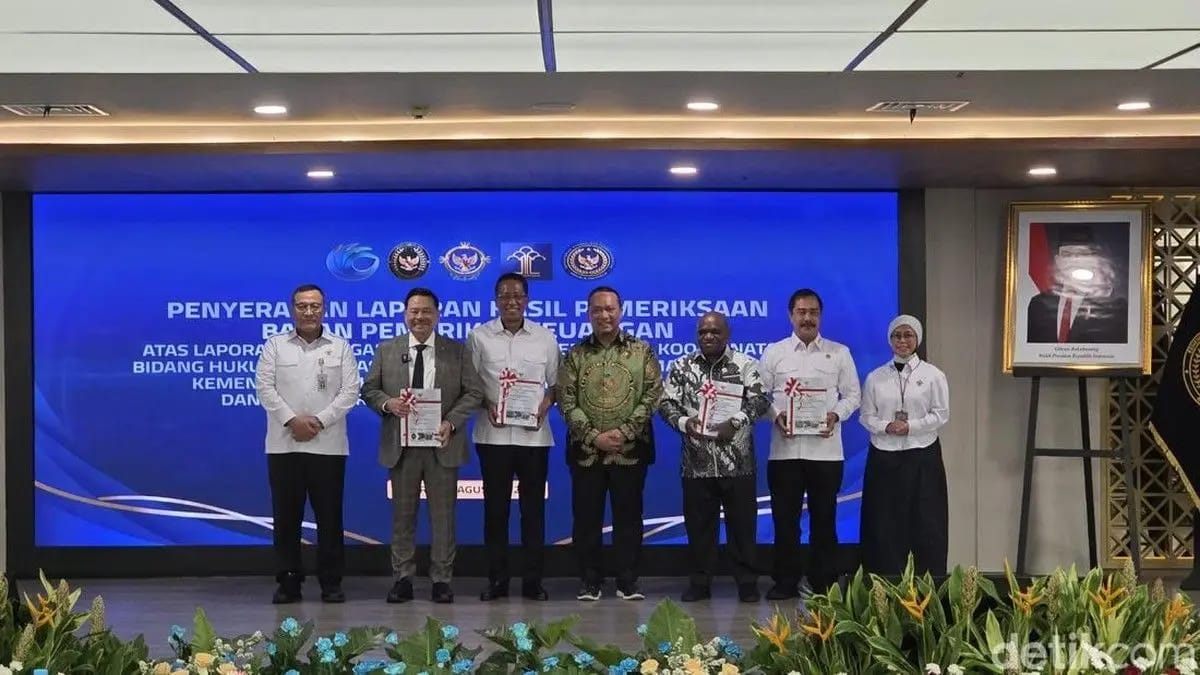
The Audit Board of Indonesia (BPK) has assessed the performance of the Ministry of Immigration and Corrections (Kemenimipas) positively. The ministry, led by Agus Andrianto, has not only succeeded in maintaining accountability in state financial management but has also delivered tangible impacts for the public, from strengthening immigration functions to providing guidance for inmates. Pimpinan I BPK, Nyoman Adhi Suryadnyana, stated that Kemenimipas has enhanced the role of immigration in screening foreign nationals entering Indonesia. He noted that this function is not solely about non-tax state revenue (PNBP), but also concerns state sovereignty. BPK previously delivered the results of its audits on ministries under the coordination of the Coordinating Ministry for Law, Human Rights, Immigration, and Corrections (Kemenko Kumham Imipas). The results showed that Kemenko Kumham Imipas, the Ministry of Law, the Ministry of Human Rights, and Kemenimipas all received an Unqualified Opinion (WTP). Nyoman stated that the four ministries have demonstrated increasingly better governance year after year and have built institutional reputations that provide direct benefits to the public. Kemenimipas was also noted for starting to build the One Data Indonesia initiative while strengthening synergy with the Ministry of Law to resolve the citizenship status of Indonesian nationals abroad who lack legal certainty. Nyoman expressed hope that the good practices established by the four ministries could serve as an example for other ministries and agencies. On the same occasion, Deputy Coordinating Minister for Law, Human Rights, Immigration, and Corrections, Otto Hasibuan, stated that his party openly accepts the BPK’s audit results and will follow up on all recommendations provided. He views the BPK’s opinion as a form of appreciation for the work of all ranks in managing the state budget accountably, while the recommendations and notes serve as a roadmap for improvement to address administrative weaknesses, strengthen internal control systems, and increase the efficiency of state spending. Otto requested that all ministries under his coordination immediately prepare an action plan to resolve all BPK recommendations with clear targets and complete them within the 60-day deadline mandated by law. He also emphasised the importance of strengthening the Government Internal Control System (SPIP) by optimising the role of the inspectorate as an early warning system in every stage of budget management.