
BPK holds ARISE 2026 training programme with five countries
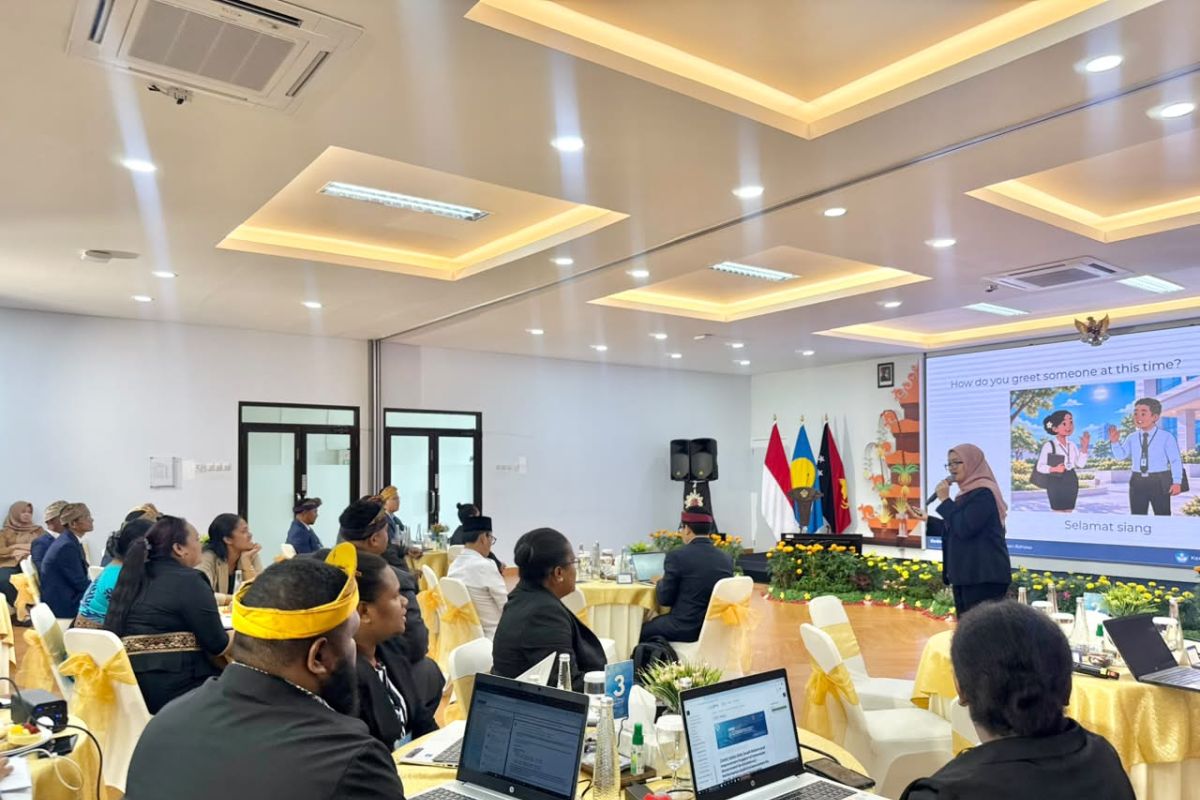
The training aims to improve the quality of auditors and strengthen the organisational capacity of five supreme audit institutions (SAIs) from the Pacific region and Timor-Leste in conducting performance audits.
Jakarta (ANTARA) – Indonesia, through its Audit Board (BPK), is holding the 2026 international training programme Audit Reform and Improvement Support of the Indonesian Government for Excellence in Public Sector Oversight (ARISE), involving four Pacific countries—Palau, Papua New Guinea, Tuvalu and Vanuatu—as well as Timor-Leste.
“ARISE 2026 represents the Indonesian Government’s commitment to supporting capacity development and strengthening cooperation between BPK and SAIs in the Pacific region and Timor-Leste. Globally, this training helps enhance Indonesia’s role in sharing knowledge, promoting global economic development and strengthening the country’s position on the international stage,” said Yudi Ramdan Budiman, head of BPK’s Financial Audit Training and Education Centre, at the opening of ARISE 2026, according to an official statement issued in Jakarta on Tuesday.
The programme is organised by BPK with support from the Indonesian Agency for International Development (Indonesian AID), also known as the Indonesian International Development Cooperation Fund (LDKPI), and the Ministry of Foreign Affairs.
The training is intended to help improve auditors’ skills and the organisational capacity of the five SAIs from the Pacific region and Timor-Leste in carrying out performance audits.
ARISE 2026 is one of 40 programmes involving partner countries under the Indonesian AID framework in 2026.
The programme runs from 5 to 16 October 2026 using a blended-learning approach that combines self-study and distance learning. It will conclude with in-person classes from 19 to 30 October at BPK’s State Financial Audit Training Centre in Bali.
The training focuses on performance audits of blue-economy issues and is supported by the Ministry of Marine Affairs and Fisheries. Its two main areas are developing performance audit designs, and applying audit tools and techniques through to preparing audit reports.
The programme also includes field visits covering fisheries, aquaculture business processes and the practical application of performance-audit techniques.
Yudi said the combination of theory and practice would equip participants to identify governance problems, analyse their root causes, design audits and prepare high-quality, evidence-based reports on blue-economy issues and progress towards the Sustainable Development Goals (SDGs), taking into account each participating country’s needs and challenges.
“Through ARISE 2026, BPK—which will chair the International Organization of Supreme Audit Institutions (INTOSAI) from 2028 to 2031—reaffirms that relevant audit findings with tangible impact, where it matters, can be achieved through cross-border collaboration,” he said.
“BPK is not merely facilitating knowledge transfer; it is also actively helping to build a more transparent, resilient and competitive governance framework for the Pacific region,” Yudi said.