
BPK grants unqualified opinion on 2025 Central Government Financial Report
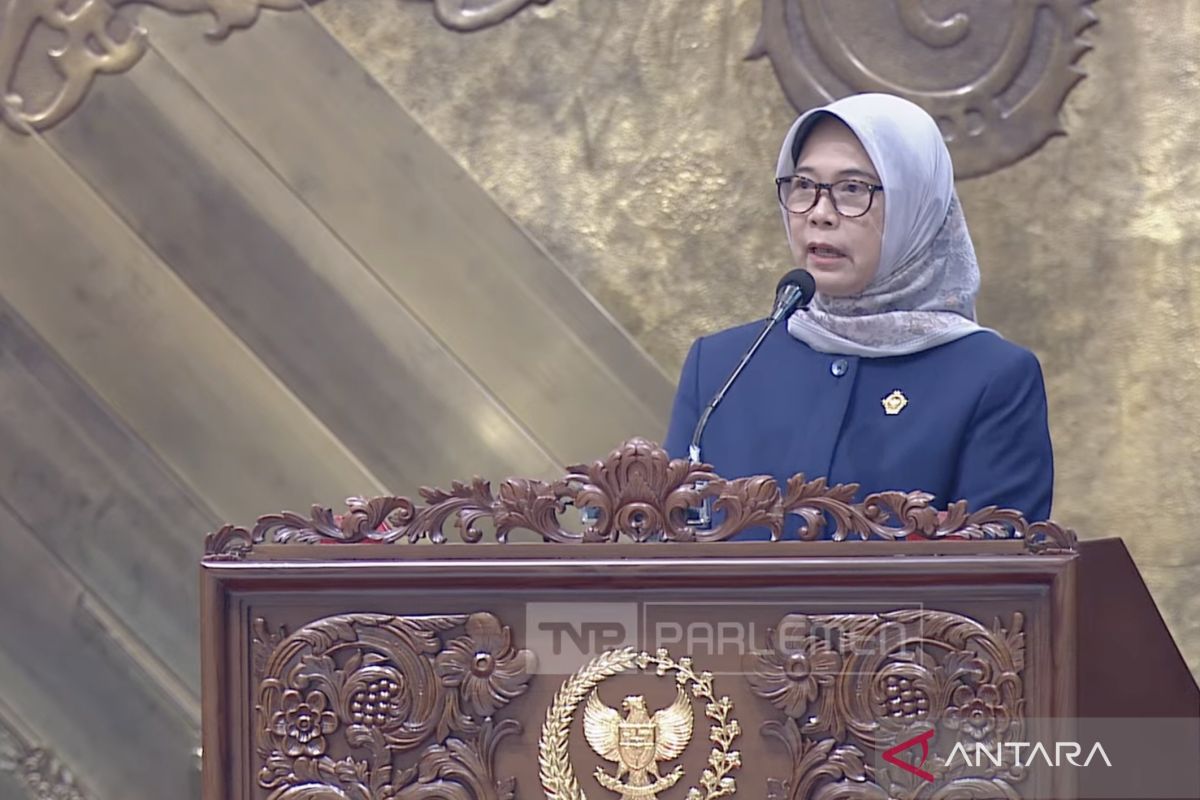
Jakarta (ANTARA) - The Audit Board of Indonesia (BPK) has granted an unqualified opinion on the 2025 Central Government Financial Statements (LKPP).
BPK Chairperson Isma Yatun stated that the result was based on an audit of 97 financial reports from ministries/agencies and one financial report from the State General Treasurer.
“Based on the audit results of the 2025 LKPP, the BPK has provided an unqualified opinion,” she said while presenting the audit results during a plenary session of the House of Representatives (DPR) in Jakarta on Tuesday.
Although the central government achieved an unqualified opinion overall, one institution failed to reach the highest standard. The National Food Agency (Bapanas) received a qualified opinion. However, the BPK emphasised that this does not have a material impact on the fairness of the 2025 LKPP as a whole.
Isma noted that achieving the unqualified opinion again this year is the result of hard work and a commitment to improving the governance of state finances. This achievement is expected to serve as a foundation for strengthening accountability and optimising the State Budget (APBN) for public welfare.
In its report, the BPK also highlighted two strategic areas requiring continuous improvement. First, the BPK emphasised the need to strengthen governance and transparency regarding the institutional transformation of State-Owned Enterprises (BUMN) following the enactment of Law Number 1 and Number 16 of 2025.
“These regulatory changes bring significant consequences that demand the strengthening of governance frameworks and adequate accountability mechanisms to remain aligned with the principles of transparency, prudence, and responsible management of state finances,” she said.
Secondly, the BPK encouraged the enhanced development of the National Single Social and Economic Data (DTSEN). This is considered crucial for improving the quality of planning and evaluation of government programmes, particularly social welfare and public subsidy programmes, to ensure they are targeted, accurate in amount, and delivered on time.
The BPK Chairperson emphasised the importance of synergy between the BPK and the DPR as pillars of the system of checks and balances to ensure the APBN is managed with high precision amidst limited fiscal space.
“The success of this nation’s development is no longer measured by how much budget we are able to absorb, but by how high the quality of its governance is and how real its impact is on the lives of the people,” Isma concluded.