
BPK Flags Three Strategic Issues in Financial Governance at Four Prabowo Ministries
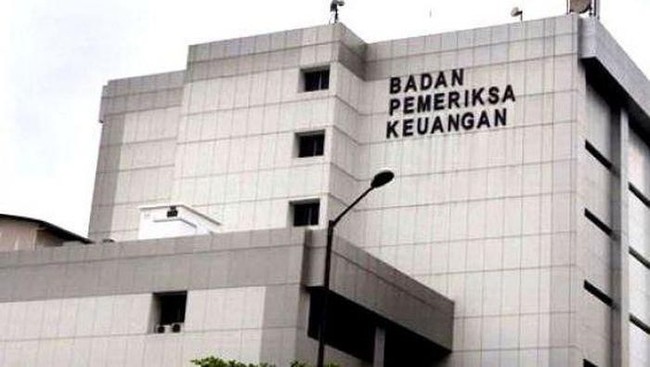
Jakarta, CNBC Indonesia – The government still has homework to do in strengthening state financial governance. The Supreme Audit Agency (BPK) revealed at least three strategic issues still found in the 2025 financial statements of the Ministry of Marine Affairs and Fisheries (KKP), the Ministry of Housing and Settlement Areas (PKP), the Ministry of Forestry, and the Indonesian Quarantine Agency (Barantin).
The findings were presented by Acting Member IV of BPK, Nyoman Adhi Suryadnyana, when submitting the Audit Result Report (LHP) on the 2025 Financial Statements to Minister of Housing and Settlement Areas Maruarar Sirait, Minister of Forestry Raja Juli Antoni, Minister of Marine Affairs and Fisheries Sakti Wahyu Trenggono, and Head of Barantin Abdul Kadir Karding.
BPK noted three strategic issues that remain homework for these four ministries and agencies. First, weaknesses in controls over the management of revenue, cash, expenditure, grants, official travel, allowances, and payment processes.
Second, weaknesses in asset administration, ranging from inaccurate bookkeeping, unclear legal status of assets, assets that have not been optimally utilised, to assets that are no longer in use but remain recorded in the administration. Third, non-compliance with regulations on the procurement of goods and services, contract implementation, grant management, payment for works, and state revenue administration.
In response to these findings, BPK has conveyed a number of strategic recommendations, which are expected not only to resolve problems in each entity but also to serve as momentum for systemic improvement, enhance the quality of state financial and asset management, and build sustainable compliance.
Nyoman emphasised that auditing financial statements is not merely about producing an opinion, but rather an instrument to ensure that every rupiah of state money is managed accountably, transparently, and for the benefit of the public.
“Auditing is not only about producing an opinion, but also contributes to achieving Golden Indonesia 2045, through strengthening state financial governance and promoting sustainable development,” said Nyoman in his statement, quoted on Wednesday (5 August 2026).
According to him, strengthening governance must be realised through the application of Environmental, Social, and Governance (ESG) principles. In addition, the government needs to begin transforming towards Government 5.0 by leveraging artificial intelligence (AI), data analytics, and cross-sector collaboration centred on the public, the environment, and sustainability.
Nevertheless, BPK cautioned that the transformation towards Government 5.0 still faces six challenges: uneven digital transformation, fragmented government data, limited AI talent, low governance integrity, human resource capacity that still needs improvement, and issues of cyber security and collaboration. Therefore, the implementation of Government 5.0 must be accompanied by resource management based on ESG principles to support the achievement of the Golden Indonesia 2045 vision.
On the other hand, BPK expressed appreciation to the four entities, which once again obtained unqualified opinions (WTP) on their 2025 Financial Statements. However, Nyoman reminded that a WTP opinion is not the ultimate goal.
“A WTP opinion is not the end goal, but rather a foundation for continuously addressing weaknesses and shortcomings so that governance becomes increasingly efficient, effective, and has a real impact on public welfare,” he concluded.