
BPK Finds Irregularities at Four Customs Offices, with Rp1 Billion in Potential Revenue Shortfalls
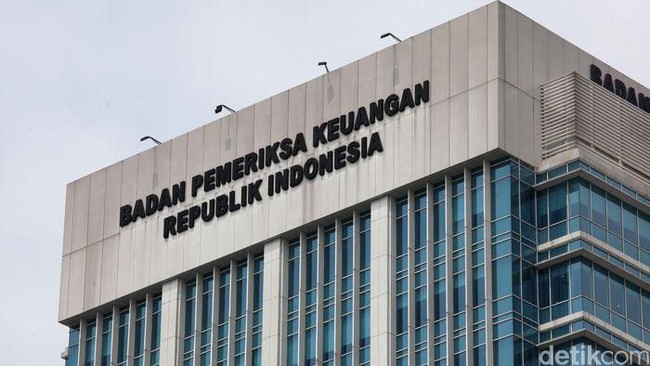
Jakarta, CNBC Indonesia – The Audit Board of Indonesia (BPK) found that customs valuation and tariff determinations at four customs service offices did not comply with regulations. Its calculations indicate that this could result in a shortfall in state revenue of Rp1.03 billion.
The findings were recorded in the 2025 Compliance Audit Report on the Management of Customs and Excise Goods Inflows and Outflows for 2023–2025, covering the Directorate General of Customs and Excise at the Ministry of Finance and related agencies.
“Based on the audit findings, customs valuation and tariff determinations at four customs service offices did not comply with regulations, potentially causing a state revenue shortfall of Rp1.03 billion,” the report said, as quoted on Friday (30 October 2026).
First, the valuation and tariff determinations for five sugar imports at the Tanjung Priok Type A Main Customs and Excise Service Office (KPUBC) could have resulted in an under-assessment of Rp636 million.
An analysis of the CEISA 4.0 database and an inspection of customs documents found that document examiners had not been sufficiently thorough in assessing and determining the customs value and tariff for five sugar imports. This created a potential shortfall in import duty and import income tax (PPh) assessments of Rp636 million.
One case involved PT PN III (Persero)’s white crystal sugar imports, with a potential shortfall of Rp627 million. An analysis of the CEISA 4.0 database showed that the company imported white crystal sugar (GKP) three times in February 2024.
An inspection of the three customs declarations found that document examiners had not been sufficiently thorough in assessing and determining the import duty and import income tax. Under the Indonesian Customs Tariff Book, the imports should have been charged import duty of Rp790 per kilogram.
Under Finance Ministry Regulation No. 41/PMK.010/2022, sugar imports are also subject to Article 22 import income tax at a rate of 2.5% for companies holding an importer identification number (API).
PT PN III (Persero) holds an API. Recalculating the correct import duty rate, BPK found that duty on the three imports had been under-assessed by Rp612 million.
The three imports had also not been charged Rp15.3 million in import income tax, bringing the potential under-assessment of import duty and import income tax to Rp627 million.
The document examiner said the matter had been followed up with a proposal for a reassessment, under memoranda dated 22 September 2025: ND-3051/KPU.1/PFPD 2025, ND-3046/KPU.1/PFPD/2025 and 3043/KPU.1/PFPD/2025.
A separate case involved PT PGR II’s raw crystal sugar imports, with a potential shortfall of Rp9.2 million. An analysis of the CEISA 4.0 database and a sample inspection of customs documents at the Tanjung Priok Type A Main Customs and Excise Service Office found that the company had imported raw crystal sugar.
An analysis of the customs documents, including a draft survey report obtained by BPK from PT PGR II, and BPK’s recalculation showed that the volume exceeded the import quota by 5,747 kilograms. The potential shortfall in import duty was Rp9.2 million.
The relevant document examiner at the Tanjung Priok office said the importer had submitted a surveyor’s report but no draft survey report. The document inspection found that the surveyor’s report provided to the examiner had been issued in the country of origin, rather than after the goods arrived in the customs territory.
BPK’s review of the relevant regulations found that there was no requirement for importers of bulk goods to routinely submit a draft survey report and/or documents calculating the volume of bulk goods received to customs officials.
Customs officials receive draft survey reports only when an import declaration is assigned to the red channel and/or when bulk imports are unloaded and stored outside the customs area. The draft survey report BPK obtained from PT PGR II had been issued in the destination country.
Second, the assessment of the weight of two rice imports by document examiners at the Tanjung Priok Type A Main Customs and Excise Service Office could have led to an under-assessment of Rp276 million. An analysis of the CEISA 4.0 database showed that PT B imported semi-milled rice through the office.
Under the Indonesian Customs Tariff Book, the imports should have been charged import duty of Rp450 per kilogram.
Rice imports are also subject to Article 22 import income tax at a rate of 2.5% for companies holding an API. A review found that PT B holds an API. An inspection of the customs documents for the three imports found that document examiners had not been sufficiently thorough in assessing the weight of the imported goods.
Using the correct weight, BPK recalculated that import duty on the three imports had been under-assessed by Rp270 million.
The two imports had also not been charged Rp6.75 million in import income tax, bringing the potential under-assessment of import duty and import income tax to Rp276.75 million.
The relevant document examiner said the Tanjung Priok office had issued a reassessment notice for the tariff and/or customs value, and the importer had paid the amount into the state treasury. The Directorate General of Customs and Excise had therefore reassessed the Rp276.75 million shortfall in import duty and import income tax, and the importer had settled it.
Third, customs valuation and tariff determinations for eight crude palm oil (CPO) exports across three Customs and Excise Supervision and Service Offices (KPPBC) could have led to an under-assessment of Rp118.46 million.
An analysis of the CEISA 4.0 database and sample inspections of customs documents found that export document examiners had not been sufficiently thorough in assessing and determining the customs value and tariff for nine CPO exports across three KPPBC offices.
BPK’s recalculation using the correct customs values and tariffs found that export duty on the eight shipments had been under-assessed by Rp118.46 million.
The Dumai Type B Main Customs and Excise Supervision and Service Office (KPPBC TMP B) said underpayments relating to two export declarations had been followed up through reassessment and payment into the state treasury, in line with the exporter’s calculation.
BPK’s recalculation found that export duty of Rp117.54 million on six shipments had not yet been reassessed or paid into the state treasury.
Source: jawawa.id (https://jawawa.id/newsitem/bpk-finds-irregularities-at-four-customs-offices-with-rp1-billion-in-potential-revenue-shortfalls-1793343070)
Originally published by CNBC Indonesia (https://www.cnbcindonesia.com/news/20261030124747-4-780900/bpk-temukan-kejanggalan-di-4-kantor-bea-cukai-ada-potensi-rp1-m), translated from Indonesian