
BPK Ethics Council Member: Integrity is the Primary Foundation for Upholding BPK's Honour
Integrity is self-respect, and integrity is not an option, but a basic necessity.
Jakarta (ANTARA) - A member of the Ethics Code Honour Council (MKKE) of the Audit Board of Indonesia (BPK), Budi Prijono, stated that integrity is the primary foundation for maintaining the honour and trust in the BPK.
“Integrity is self-respect, and integrity is not an option, but a basic necessity. Without integrity, all the achievements and successes we attain will lose their meaning and honour. Public trust in the BPK depends heavily on the ethical behaviour of every individual within it,” he stated in an official statement in Jakarta on Thursday.
The BPK MKKE holds a strategic role in safeguarding the dignity, honour, image, and credibility of the BPK through the enforcement of the code of ethics.
The MKKE was established based on Law Number 15 of 2006 concerning the BPK, and its implementation is further regulated by BPK Regulation Number 5 of 2018 regarding the BPK Ethics Code Honour Council. The existence of the BPK MKKE is considered a vital part of ensuring that BPK Members and Auditors consistently perform their duties based on the BPK’s core values: Independence, Integrity, and Professionalism.
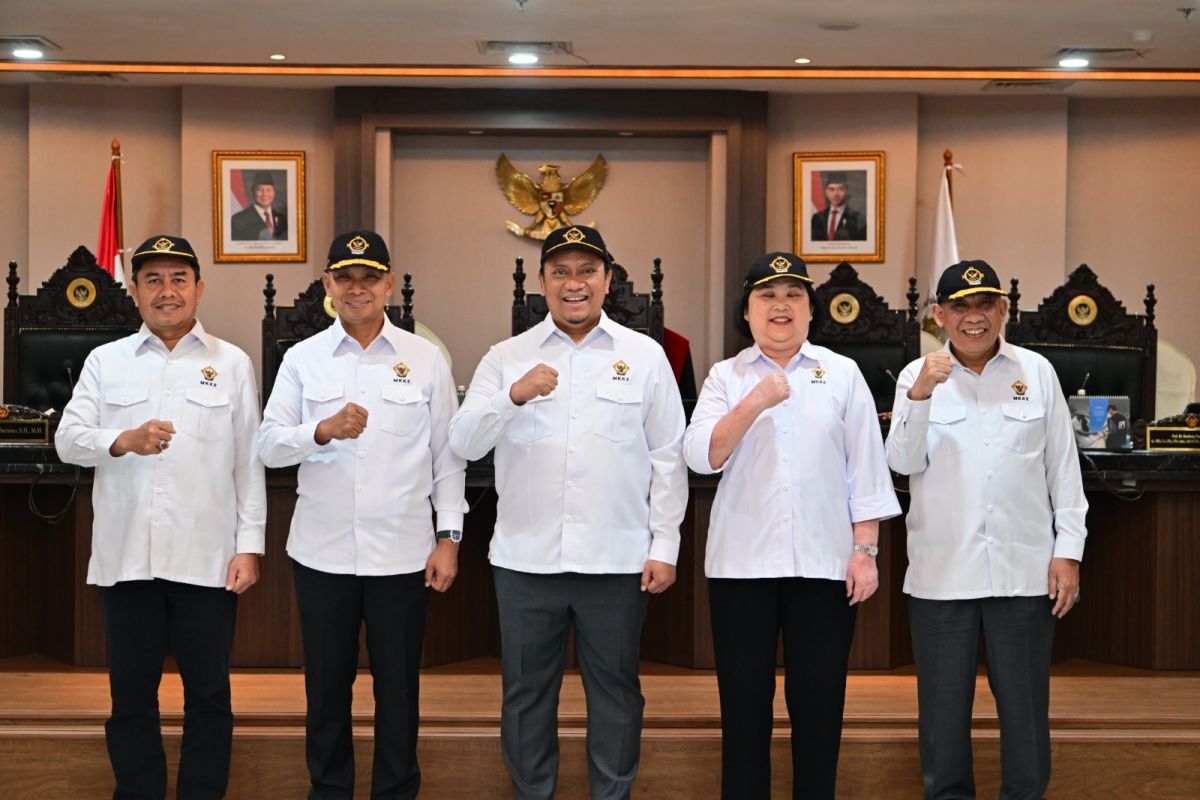
Furthermore, the BPK MKKE consists of five members, comprising two BPK Members, two from academia, and one from a professional background.
The current composition of the BPK MKKE includes Nyoman Adhi Suryadnyana as Chairperson and Member, Budi Prijono as a Member representing the BPK Members, Agus Surono as a Member from the professional element, and Bambang Pamungkas and Lindawati Gani as Members from academia. This composition is deemed to reflect the involvement of internal BPK elements as well as perspectives from professional and academic sectors to support the objective and high-integrity execution of the MKKE BPK’s functions.
In performing its duties, the BPK MKKE plays a role in investigating alleged violations of the code of ethics and promoting prevention efforts through the strengthening of integrity. One such method is conducted through socialisation and education regarding the code of ethics for BPK personnel.
These activities aim to increase understanding and the internalisation of BPK’s core values, raise awareness regarding the impact of ethical violations, and build a collective commitment to upholding the code of ethics during audit duties.
“Efforts to strengthen integrity are continuously carried out within the BPK environment, including through Integrity Strengthening Socialisation conducted at BPK Representative Offices. These activities serve as a space for education, commitment refreshment, dialogue, and the discussion of case studies related to the challenges of enforcing the code of $ethics,” said Budi.
Through this preventative approach, he continued, the BPK MKKE encourages the growth of awareness among every BPK individual to understand the causes of integrity violations while strengthening the ethical culture in the performance of duties.
The BPK MKKE is also supported by a complaint mechanism through a whistleblowing system (WBS), which can be accessed via wbs.bpk.go.id, serving as a channel for the public to report alleged violations of the code of ethics within the BPK environment.
“With the combination of enforcement, prevention, education, and the support of complaint mechanisms, the BPK MKKE continues to strengthen the ethical ecosystem within the BPK. This effort is a crucial part of ensuring that audit duties are always based on Integrity, Independence, and Professionalism, and ultimately maintains public trust in the BPK,” he concluded.