
BPK Committed to Overseeing Governance and Accountability of BPI Danantara
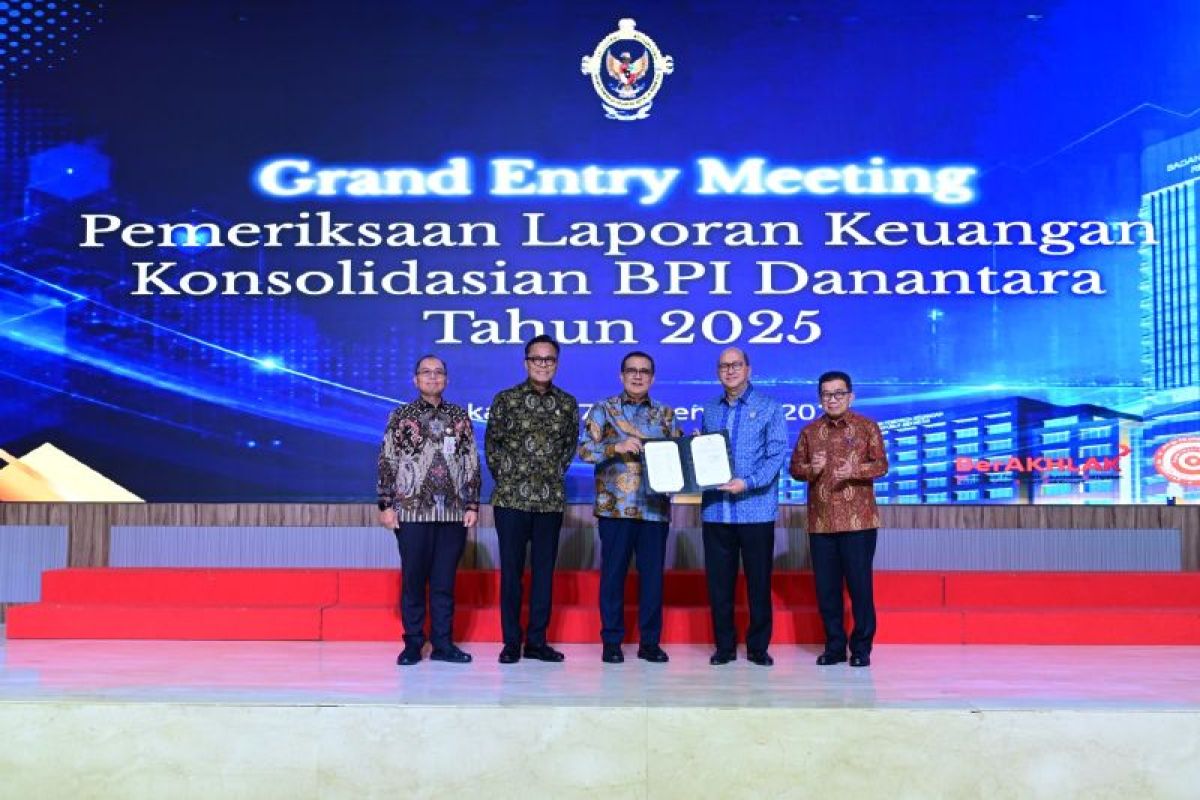
The Audit Board of Indonesia (BPK) is committed to overseeing the governance and accountability of the Daya Anagata Nusantara Investment Management Agency (BPI Danantara) to establish a foundation for high-quality financial reporting.
This was stated by BPK Member VII, Slamet Edy Purnomo, in the presence of the Head of the BPI Danantara Executive Body, Rosan Roeslani, during the official commencement of the audit of BPI Danantara’s 2025 Consolidated Financial Statements.
“This audit is one of BPK’s strategic examinations to ensure the fairness of financial statements, while simultaneously strengthening the governance and accountability of financial management within the BPI Danantara structure,” he said, according to an official statement in Jakarta on Friday.
The scope of the audit includes BPI Danantara, PT Danantara Asset Management (PT DAM), PT Danorkan Investment Management (PT DIM), and all State-Owned Enterprises (SOEs) within the BPI Danantara structure.
The audit is being conducted based on Law Number 15 of 2004 concerning the Audit of State Financial Management and Responsibility, and Law Number 15 of 2006 concerning the BPK. Other underlying regulations include Law Number 19 of 2003 regarding SOEs, as amended. Article 3K of the SOE Law affirms that the audit of BPI Danantara’s financial management and responsibility is conducted by the BPK.
Previously, BPI Danantara submitted its unaudited 2025 Consolidated Financial Statements to the BPK on 20 July 2026. The submission of these financial statements is considered a vital part of the preparation and execution stages of the BPK audit.
Slamet noted that the period between the receipt of the unaudited statements on 20 July and the issuance of the Audit Assignment Letter on 14 August 2026 is an integral part of the group audit preparation process required by the BPK.
“This period is an intensive working phase necessary to update risk assessments, materiality, and audit strategies, ensuring that the audit can be carried out effectively, purposefully, and in accordance with auditing standards,” said Slamet.
The BPK audit aims to provide an opinion on the fairness of the financial statements. In providing this opinion, the BPK will assess, among other things, the compliance of the financial statements with accounting standards, the adequacy of disclosures, adherence to laws and regulations, and the effectiveness of internal control systems.
The audit will employ a risk-based approach to identify risks of material misstatement, fraud, abuse, non-compliance, or weaknesses in internal controls.
“We wish to emphasise that in a risk-based audit, group auditors can only fulfil their responsibility to identify and respond to material risks if they have adequate access to relevant data, information, and individuals. Therefore, full support from BPI Danantara, the ranks of SOEs, and the component public accounting firms is crucial for the smooth progress and quality of the audit results,” he added.
The BPK expects effective cooperation and communication from all parties to ensure the audit is completed on time while upholding integrity, independence, and professionalism.