
BPK: Audit Success Reflected in Governance Quality
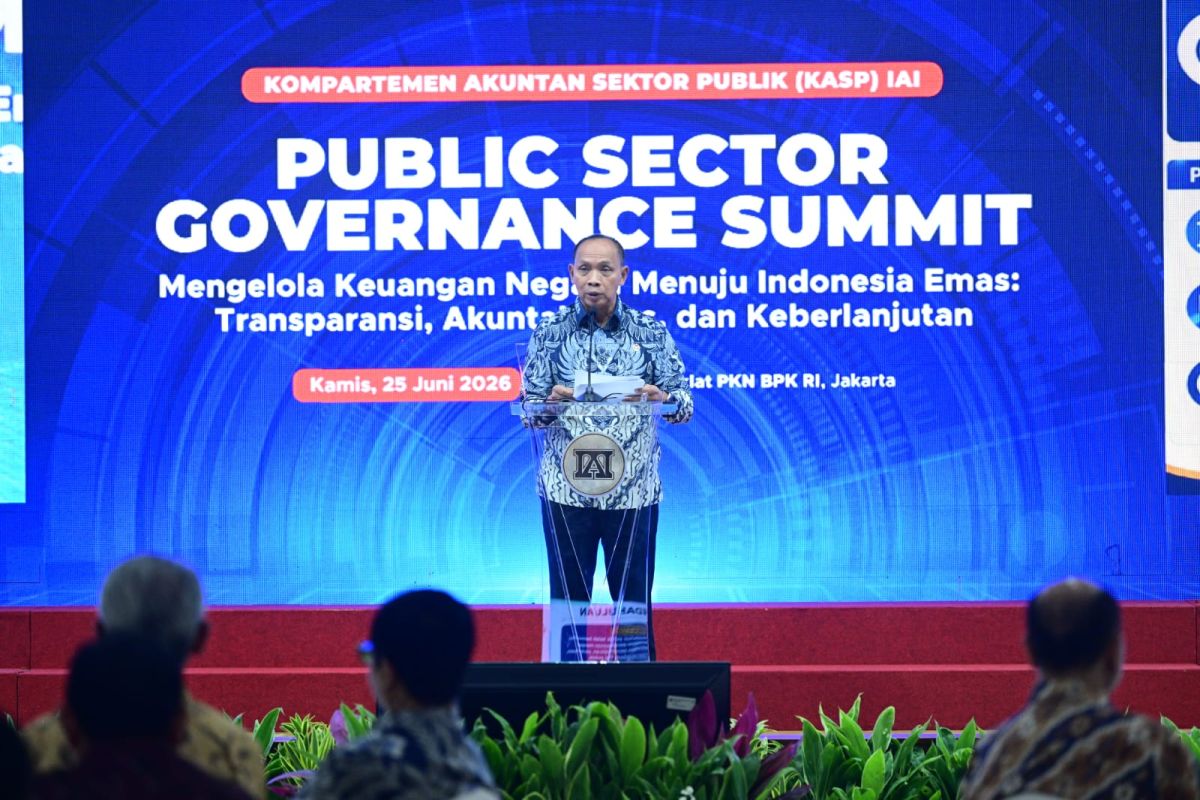
Jakarta (ANTARA) - The Vice Chairman of the Audit Board of Indonesia (BPantage BPK), Budi Prijono, stated that the measure of success for public sector audits lies in how far audit results can provide real benefits to government governance and national development.
“The success of an audit is no longer measured solely by the number of findings or recommendations produced, but by the extent to which audit results can drive real change for governance and development,” he said in a statement confirmed in Jakarta on Tuesday.
According to the Vice Chairman of BPK, the management of state finances is a strategic instrument in achieving national objectives. Through transparent, accountable, and sustainable governance, the government is said to be able to improve the quality of public services and support community welfare.
Budi explained that changes in the strategic environment, technological developments, and increasing public expectations have driven a transformation in the role of public sector auditing.
Public sector auditing is no longer merely functional as oversight, but also serves as an instrument for learning, improvement, and the creation of public value.
“The benefits of an audit will be realised if the audit recommendations are followed up effectively. Improvements in control systems, increased efficiency, asset regularisation, recovery of state losses, and the enhancement of public service quality are tangible forms of the audit’s impact on society,” he said during the Public Sector Governance Summit, organised by the Institute of Indonesia Chartered Accountants (IAI).
Furthermore, the quality of auditing serves as the primary foundation for building transparency, accountability, and public trust. Therefore, BPK ensures it will continue to strengthen auditor competence, quality management systems, auditing methodologies, and the utilisation of technology in the auditing process.
In a similar vein, BPK Member III, Akhsanul Khaq, outlined the issue of sustainability accountability within both global and national contexts.
Referring to Presidential Regulation (Perpres) Number 111 of 2022 regarding the Implementation of the Achievement of Sustainable Development Goals (SDGs), he continued, the government is now required to produce not just work outputs, but real outcomes that maintain the balance of economic, social, and environmental quality across generations.
Through its constitutional mandate, BPK is said to perform three strategic functions: oversight to ensure compliance, insight to identify root causes for policy improvement, and foresight to provide future risk perspectives.
As part of the expansion of government accountability, it is expected that there will be a strengthening of comprehensive audits of financial and performance reports through a long-form audit report mechanism in the future.
“In its implementation, strong national accountability cannot be built by a single agency in isolation. It is important to dismantle sectoral egos through a strategy of unifying goals to overcome the misalignment of focus between ministries/agencies, the private sector, and the community,” said Akhsanul.
This collaboration is realised through opening access to integrated communication and data to avoid information silos. Furthermore, clear risk sharing, accommodative regulation, the cultivation of public trust, and the active involvement of citizens from the early stages of programme planning through co-design and co-delivery approaches are required.
“This series of transformations reflects BPK’s commitment as a dignified and useful institution. Transparency builds trust, accountability strengthens legitimacy, and sustainability protects the future. Through independent, professional, and beneficial audits, BPK will continue to safeguard the people’s mandate towards Indonesia Emas 2045,” stated BPK Member III.