
BPJT Continues to Mature Contactless Toll Payment Trial, Here's the Progress
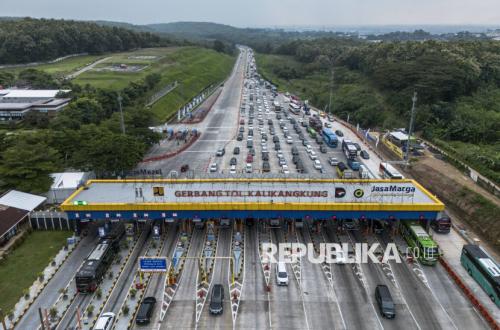
The Head of the Toll Road Regulatory Agency (BPJT), Ni Komang Rasminiati, stated that her agency is continuously coordinating with PT Roatex Indonesia Toll System (RITS) as the implementing business entity to prepare for the pre-trial of the Multi Lane Free Flow (MLFF) or contactless toll payment system. “The coordination concerns the technical preparation of scenarios for the pre-trial of the contactless toll payment system,” said Ni Komang Rasminiati in Jakarta on Tuesday (7/7/2026). She said the BPJT is currently carrying out various technical preparations, including drafting a number of scenarios to be tested during the pre-trial phase. However, she has not been able to confirm the target time for its implementation. “Once the preparations are sufficiently mature, then we can determine the target for when the pre-trial can be conducted,” she said. Similarly, the location for the pre-trial has not yet been determined. According to her, the location will be decided based on the scenarios that have been prepared. Previously, the Director of PT Roatex Indonesia Toll System (RITS), Renaldi Utomo, said the company is currently involved in drafting technical scenarios for the implementation of the test. He said various possible field conditions are being discussed as part of the preparations. According to him, coordination between the government and the investor is proceeding well and the government remains committed to continuing the MLFF project. As the investor and government partner in the project, his party is still awaiting a decision regarding the location and timing of the trial. He noted that Bali, which was originally planned as the pilot location, remains one of the options, although testing could also be carried out on other toll road sections. Renaldi explained that the cooperation contract held by RITS since receiving the work order letter on 15 March 2022 still refers to the MLFF concept. However, during the transition period, a barrier gate system is still permitted for use. “We have indeed agreed that during this transition process, barriers will still be used. So there is a transition concept and a final concept according to the MLFF design. The final decision, of course, rests with the government and we are supportive,” he said. According to him, the drafting of scenarios and testing are important stages before the government makes a decision regarding the wider implementation of MLFF. The system is expected to reduce vehicle queues and speed up transactions on toll roads. Meanwhile, the implementation of Multi Lane Free Flow (MLFF) is considered increasingly urgent along with rising traffic volumes and the need for more efficient toll road transaction management. However, its implementation needs to be carried out in stages by considering the readiness of infrastructure on each toll road section. Separately, a transport observer from the Road Transportation Polytechnic, Anton Budiharjo, said the MLFF system is an inevitability for future toll road management. In addition to being able to speed up vehicle flow, the electronic-based transaction system is also considered to facilitate supervision and data management by the government.