
BPJS Ketenagakerjaan Urges SIER to Become a Worker Protection Hub
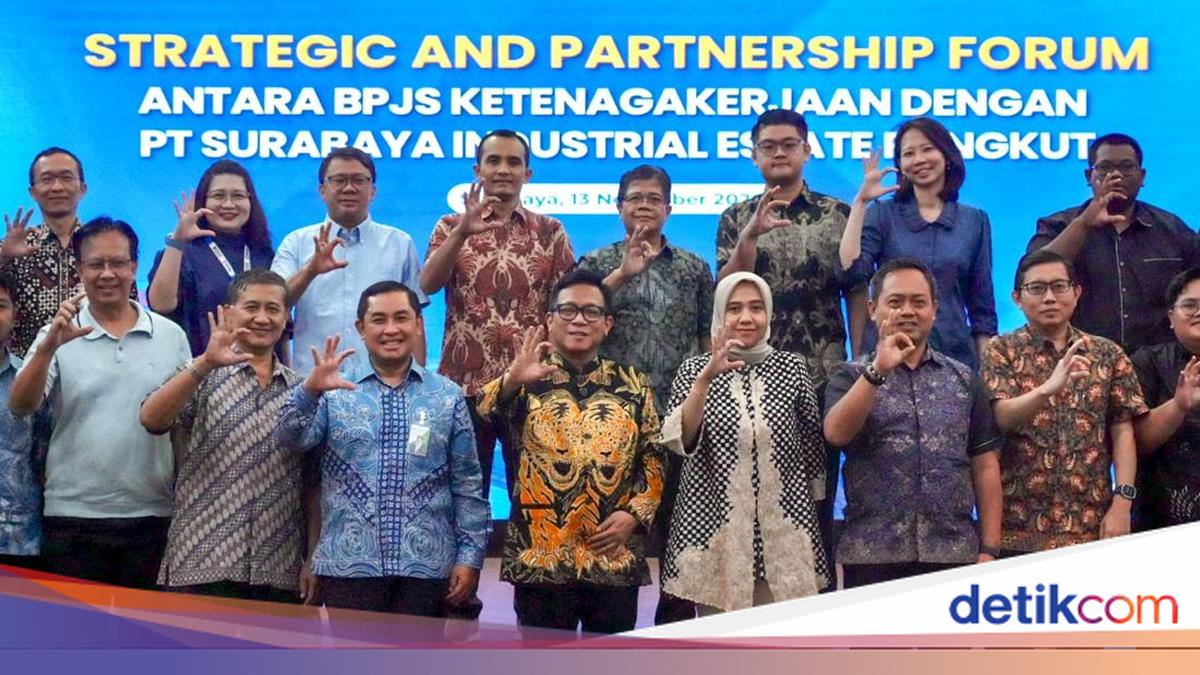
BPJS Ketenagakerjaan is encouraging the Surabaya Industrial Estate Rungkut (SIER) to become an industrial estate that serves not only as a centre for business activity, but also as a hub for services, education and an ecosystem for worker protection.
BPJS Ketenagakerjaan President Director Saiful Hidayat made the remarks at the SIER Silaturahmi, Strategic and Partnership Forum in the SIER estate in Surabaya, East Java.
Saiful said stronger worker protection required collaboration between BPJS Ketenagakerjaan, estate managers, tenant companies, company communication forums and all relevant stakeholders.
He stressed that employment social security should not be seen merely as an administrative obligation or a company cost, but as a strategic investment that benefits workers while supporting business productivity and competitiveness.
“We hope to make a shift. BPJS Ketenagakerjaan membership should not be viewed only as an obligation or a cost, but as an investment,” Saiful said in a written statement on Saturday (14 November 2026).
“When employment risks can be transferred and workers feel safer, they can work more calmly and productively. Ultimately, companies also benefit,” he added.
To achieve this, Saiful urged SIER to become a BPJS Ketenagakerjaan service hub, bringing together the various needs of companies and workers. Services could include registration and membership data updates, advice on the Company Reporting Information System (SIPP), guidance on the Jamsostek Mobile (JMO) app, programme information, consultations on Additional Service Benefits (MLT), and health promotion and prevention activities.
Saiful said bringing services closer to workers should also be supported by a stronger local presence from BPJS Ketenagakerjaan. Regional and branch offices are expected to communicate more actively and engage directly with companies and workers in industrial estates, so that service and information needs can be addressed more quickly, easily and effectively.
Use of JMO also needs to increase. The app enables members to check their membership information and balances, update their data and apply for Old-Age Security (JHT) claims in accordance with the rules, without always having to visit a branch office. Through the app and other available services, workers can also learn about additional facilities that have not yet been fully utilised.
One such facility is MLT Housing, which offers mortgages, Home Purchase Down-Payment Loans (PUMP) and Home Renovation Loans (PRP). Under the scheme presented, MLT mortgages carry an annual interest rate of 8.75 per cent and terms of up to 30 years.
MLT Construction Credit is also available to developers, providing financing of up to 80 per cent of the budget plan, subject to programme requirements.
Saiful said these facilities offered industrial estate managers an opportunity to develop housing closer to workers’ places of employment, either independently or in partnership with developers. Affordable homes near workplaces are expected to reduce commuting time and costs as well as the risk of road accidents, while improving workers’ comfort and productivity and making estates more attractive to investors.
BPJS Ketenagakerjaan is also encouraging stronger health promotion, prevention and occupational safety and health (OSH) activities within industrial estates. Activities can be tailored to the risk profile of each sector, from OSH education and safe riding to the use of personal protective equipment and efforts to reduce workplace accidents.
Saiful also underlined the importance of reviewing digital service processes, including ePLKK, to ensure that digitalisation genuinely makes things easier for members and healthcare facilities.
These efforts form part of the Value Beyond Protection concept, which aims to deliver added value to workers before a risk occurs, when it occurs and after benefits are received. Protection is provided through five main programmes: Work Accident Insurance, Death Insurance, Old-Age Security, Pension Security and Job Loss Insurance.
BPJS Ketenagakerjaan’s role, however, also extends to preventing risks, improving welfare and supporting workers’ economic sustainability. One example is the Economic Empowerment and Independence Programme (PEKA), which prepares workers for retirement through training, productivity and profit (3P). The programme includes financial literacy, skills training, business mentoring and access to capital.
Workers approaching retirement may also remain connected to their former companies through businesses that form part of tenant companies’ supply chains.
“We can design training so that, after retirement, they become part of a company’s supply chain. They could supply what the company needs or process products from the estate into higher-value goods,” Saiful said.
“So the relationship between workers and companies does not end immediately when they retire,” he added.
To encourage companies’ efforts, BPJS Ketenagakerjaan has also introduced Jamsostek STAR, an acknowledgement of the quality of workforce protection. Its assessment covers compliance with membership in the five programmes, accurate wage reporting, timely contribution payments, protection for workers in supply chains, and the implementation of health promotion, prevention and OSH activities.
Saiful said this could give companies an advantage by strengthening their credibility, helping them meet Environmental, Social and Governance (ESG) principles, building investor confidence and attracting top talent.
Saiful also stressed the importance of ensuring adequate protection for workers throughout supply chains. Workplace accidents or employment issues at supplier companies can disrupt cash flow and production continuity, ultimately affecting the principal company.
Worker protection throughout the supply chain is therefore part of business risk management.
Companies are also being encouraged to make greater use of the SERTAKAN programme, using corporate social responsibility (CSR) funds to provide employment social security to vulnerable workers in the areas around their operations, including employees’ family members working in the informal sector. This would allow the benefits of companies’ presence to be felt more widely by local communities.
Saiful said the ultimate goal of the collaboration was to ensure better protection and welfare for workers and their families. The competitiveness of an industrial estate, he said, is determined not only by the quality of its infrastructure and the scale of investment, but also by the quality of protection for the workers who drive industrial activity.
“To improve the welfare of workers and their families, we must act together. Estate managers, tenant companies, communication forums, trade unions, the government and BPJS Ketenagakerjaan must become strategic partners,” Saiful said.
“If workers are protected, more secure and productive, companies and their industrial estates will also become stronger,” he added.
Rizka Syafittri Siregar, SIER’s Director of Finance, Administration and Risk Management, welcomed the strengthened collaboration. She said estate managers had a strategic role as intermediaries between tenant companies and various stakeholders, including in improving services and workers’ welfare.
The event was also attended by BPJS Ketenagakerjaan Membership Director Agung Nugroho, SIER management and representatives of tenant companies.
Source: jawawa.id (https://jawawa.id/newsitem/bpjs-ketenagakerjaan-urges-sier-to-become-a-worker-protection-hub-1794621065)
Originally published by detikcom (https://news.detik.com/berita/d-8752427/bpjs-ketenagakerjaan-dorong-sier-jadi-hub-perlindungan-pekerja), translated from Indonesian