
BPJS Ketenagakerjaan Strengthens K3 Culture and Workplace Mental Health to Boost Worker Productivity
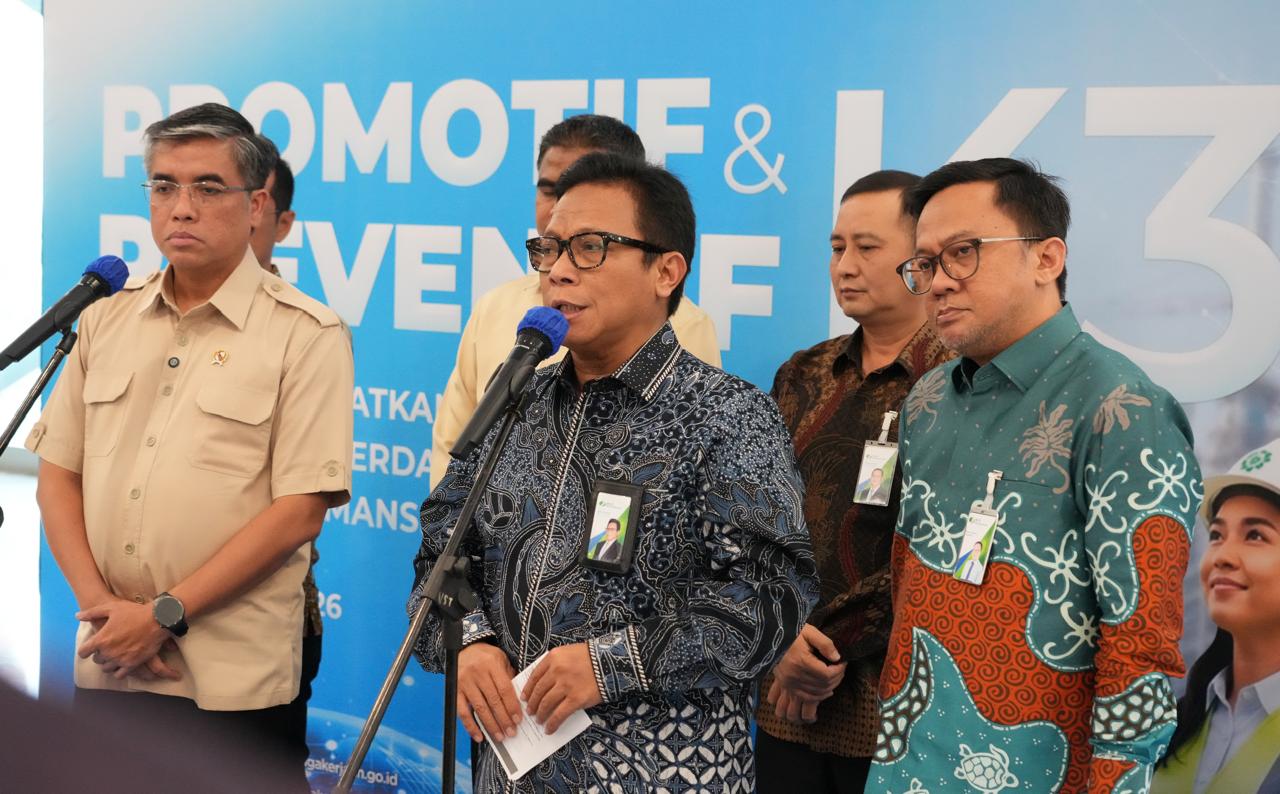
BPJS Ketenagakerjaan continues to strengthen its commitment to building a healthy, safe, and productive work culture through a themed activity ‘Preventive and Promotive K3 for Increasing Worker Productivity’ held on Thursday (20/5) at Plaza BPJamsostek, Jakarta.
This activity featured the Minister of Manpower of the Republic of Indonesia, Yassierli, as keynote speaker, and Vivi Viyati Yudha Hadijaya, Director of Operations and Expert Consultant at UI’s Institute of Applied Psychology, who discussed the importance of mental health in the modern workplace.
The program was attended by BPJS Ketenagakerjaan leadership, subsidiary directors, and all head offices across Indonesia in a hybrid format as part of an effort to strengthen understanding of K3 implementation, psychosocial risk management, and the strengthening of a work culture that supports psychological safety.
Manpower Minister Yassierli emphasized that the implementation of K3 is no longer seen merely as an administrative obligation but as a strategic investment to enhance competitiveness and organizational sustainability.
‘All this time we have relied on data from BPJS Ketenagakerjaan. Because the claims related to workplace accidents and PAK are here,’ Yassierli said. ‘Second, we will increase the effectiveness of promotive and preventive programs. There will be socialisation, and joint training which we will base on regional offices of BPJS Ketenagakerjaan. Because each region has its own risk map characteristics for the industries in that region.’
Meanwhile, BPJS Ketenagakerjaan’s President Director Saiful Hidayat said that BPJS Ketenagakerjaan not only focuses on social protection for workers but also promotes the creation of a healthy and resilient work ecosystem.
‘Penerapan K3 dan perhatian terhadap kesehatan mental merupakan bagian penting dalam membangun kualitas sumber daya manusia Indonesia. Melalui kegiatan ini, kami ingin mendorong seluruh insan BPJS Ketenagakerjaan untuk menjadi agen edukasi yang mampu menumbuhkan budaya kerja sehat, aman, dan produktif, baik di internal organisasi maupun kepada para pekerja Indonesia secara luas,’ Saiful said.
Saiful noted that in 2026 they will conduct more promotive and preventive activities in collaboration with the Ministry of Manpower and Jasa Raharja. Some activities to be carried out with the Ministry of Manpower include K3 cultural markets, training for K3 Supervisory Committees in companies, and basic K3 workshops. Meanwhile activities to be organized with Jasa Raharja include Safety Riding training which is planned to involve Astra Honda Motors (AHM) as a partner.
Concluding, Saiful emphasised that all these activities are part of BPJS Ketenagakerjaan’s commitment to continue supporting the creation of a safe, healthy, and sustainable work environment to realise a more prosperous and productive Indonesian workforce.
Based on the data of participants who experienced workplace accidents in 2025, 65% or 125,000 workers experienced workplace accidents within the workplace. Therefore, through this activity, BPJS Ketenagakerjaan hopes all participants can understand the preventive, promotive, and curative approaches in implementing K3, as well as strengthen awareness of the importance of mental health and workers’ welfare as the foundation of national productivity,’ he concluded.
Source: jawawa.id (https://jawawa.id/newsitem/bpjs-ketenagakerjaan-strengthens-k3-culture-and-workplace-mental-health-to-boost-worker-productivity-1779542542)
Originally published by Media Indonesia (https://mediaindonesia.com/ekonomi/892535/bpjs-ketenagakerjaan-perkuat-budaya-k3-dan-kesehatan-mental-kerja-untuk-tingkatkan-produktivitas-pekerja), translated from Indonesian