
BPJS Ketenagakerjaan Launches PEKA Programme to Turn Beneficiaries from Consumers into Producers
Every year, hundreds of thousands of families lose the worker who served as their backbone. Some pass away due to work accidents, while others die from illness.
Grief is naturally the first thing that is deeply felt. But behind it lies a great anxiety about how these families will be able to carry on with their lives.
It is at this point that employment social security protection comes into play. It is not merely a matter of monetary benefits, but also of providing assistance to workers’ families so they can become empowered again, acquire skills, and build new sources of livelihood, enabling them to continue their lives independently.
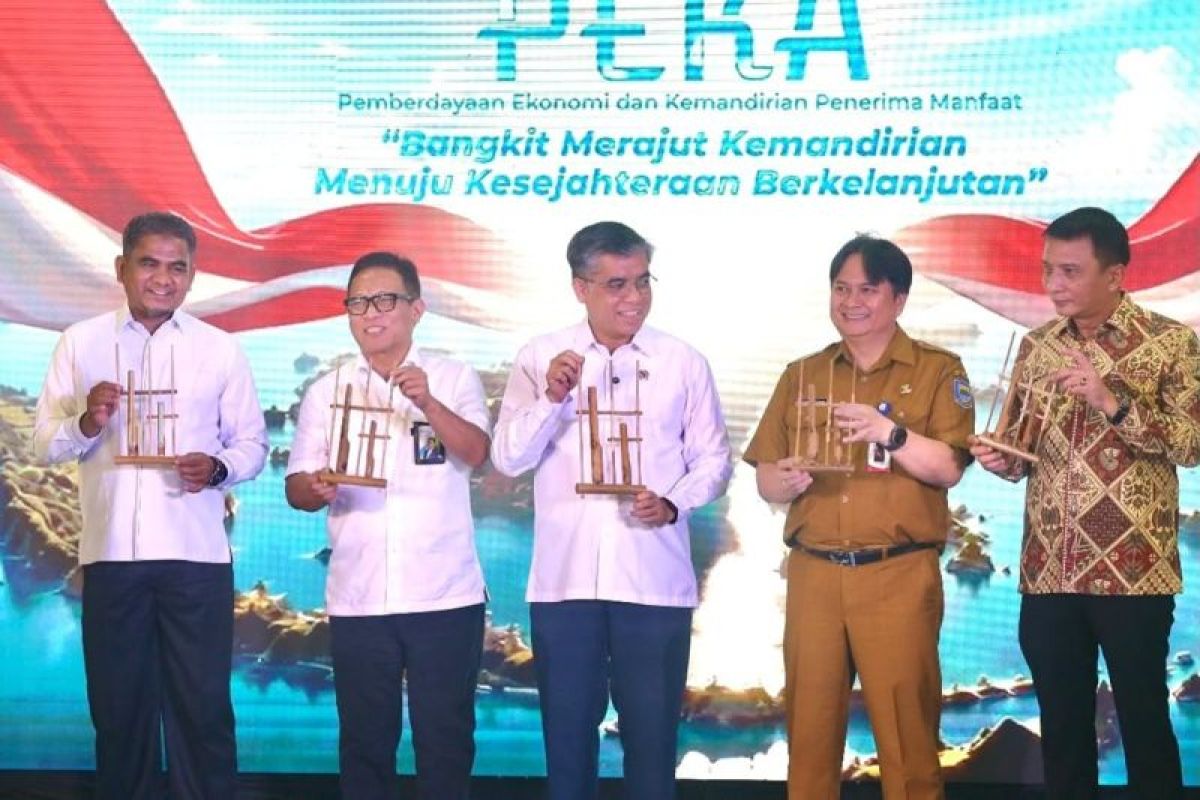
This is the spirit embodied by BPJS Ketenagakerjaan through the Economic Empowerment and Independence of Beneficiaries Programme (PEKA). In line with the spirit of Independence Day to keep moving forward and become empowered, BPJS Ketenagakerjaan held the National Soft Launching of PEKA, centred in Bandung on Tuesday (18/8).
The event was inaugurated by Indonesian Manpower Minister Yassierli together with BPJS Ketenagakerjaan President Director Saiful Hidayat and Bandung Mayor represented by Regional Secretary Iskandar Zulkarnain, and was attended simultaneously across Indonesia.
Carrying the spirit of Value Beyond Protection, PEKA serves as proof that BPJS Ketenagakerjaan protection does not stop once benefits have been received. There is hope that these benefits will become a foundation for workers and their families to rise, become productive again, and continue their lives independently.
This empowerment spirit is also in line with President Prabowo Subianto’s Eighth Asta Cita, particularly in promoting economic equality and poverty alleviation.
Manpower Minister Yassierli appreciated BPJS Ketenagakerjaan’s initiative through PEKA. According to him, the programme shows that BPJS Ketenagakerjaan’s presence does not stop at providing benefits or compensation, but continues with assistance so that the benefits received can be managed productively and provide sustainable benefits.
“The idea is extraordinary. In my view, this must be appreciated. BPJS Ketenagakerjaan does not only go as far as providing money or compensation, but also oversees how that money or compensation can be beneficial continuously, over and over again. Because indeed, this independence is the key,” said Yassierli.
He assessed that PEKA has the potential to encourage the emergence of independent workers and new entrepreneurs. The Manpower Ministry is also ready to collaborate and provide assistance so that beneficiaries and heirs are able to develop their businesses sustainably.
“We hope to grow new independent workers, new entrepreneurs who will become the pillars of our nation’s economy. Ultimately, we hope not only for new entrepreneurs, but also for the creation of new jobs,” he added.
Yassierli hopes that PEKA can become a new hope for beneficiaries and heirs to build independence while improving welfare.
Meanwhile, BPJS Ketenagakerjaan President Director Saiful Hidayat said that PEKA stems from concern about the sustainability of benefits received by workers and heirs. BPJS Ketenagakerjaan wants to ensure that these benefits not only provide short-term resilience, but also become provisions for building economic independence.
“We see how the benefits received by participants can become productive. We are concerned that without assistance and training, the benefits received will only become consumptive. Therefore, through PEKA we want to encourage a shift from consumptive to productive, from receiving benefits to having power, and ultimately becoming independent,” said Saiful.
According to him, the success of PEKA is not measured solely by the number of trainings or participants, but by the ability of beneficiaries to become productive, earn income, and become independent again.
A total of 1,426 beneficiaries are participating in the PEKA activities held simultaneously at 45 locations across Indonesia.
The empowerment provided is tailored to the needs of participants and the economic potential of each region. It can take the form of competency improvement, entrepreneurship training, digital marketing/content creation, culinary/food preparation, crafts/handicrafts, floristry, barista skills, laundry services, make-up, sewing, reselling, and other business training according to regional potential.
In its implementation, BPJS Ketenagakerjaan prioritises collaboration with local governments, ministries/institutions, the business world, banking, universities, training institutions, communities, and various other strategic partners.
“The hope is that this activity truly becomes a joint activity. Therefore, we collaborate with the central government, local governments, banking, communities, and other ecosystems to jointly empower the economy and independence of beneficiaries. In fact, we hope that eventually they can also open new job opportunities,” concluded Saiful.