
BPJS Ketenagakerjaan and DJSN Strengthen PBI Social Security Scheme for Vulnerable Workers
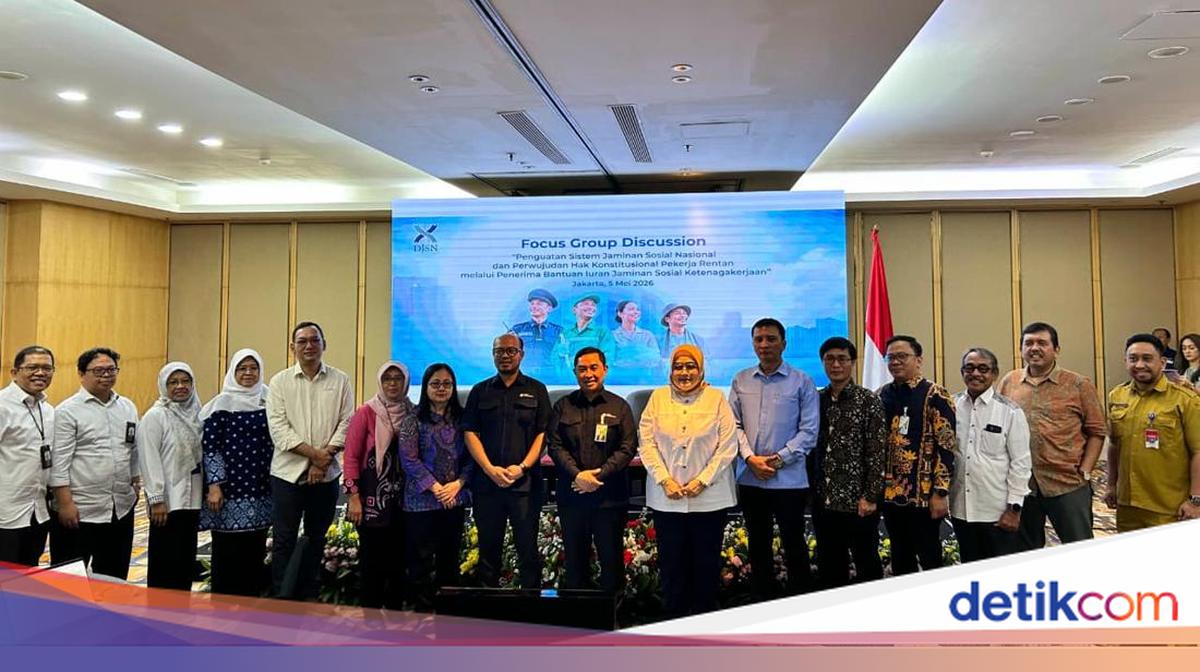
The event, also held to mark International Labour Day, serves as a strategic forum to reaffirm collective commitment to providing employment social security protection for vulnerable workers through the Penerima Bantuan Iuran (PBI) scheme.
This FGD was conducted against the backdrop of limited employment social security protection for vulnerable workers, while the constitutional mandate clearly states that the state must provide social protection for the poor and those unable to afford it. While the PBI scheme has been widely implemented in the national health insurance programme, this forum underscores the importance of accelerating steps to ensure vulnerable workers also receive protection in the employment social security programme in a more inclusive, structured, and sustainable manner.
Director of Membership at BPJS Ketenagakerjaan, Agung Nugroho, stated that strengthening PBI for Employment Social Security requires synergy among stakeholders in terms of regulations, data, and financing.
“This FGD demonstrates a strong spirit of collaboration from all parties to ensure vulnerable workers receive protection. BPJS Ketenagakerjaan views the PBI Employment Social Security (Jamsosnaker) scheme as needing to be built in an integrated manner, based on accurate data, and supported by sustainable financing so that the state is truly present in protecting vulnerable workers,” Agung said in his statement on Wednesday (6/5/2026).
Agung added that expanding protection for vulnerable workers cannot be done by one institution alone. In his view, strong alignment is needed between central government, regional governments, ministries/institutions, and all stakeholders so that the implementation of PBI Jamsosnaker can be on target and have a real impact on the group of workers who have been most vulnerable to socio-economic risks.
Acting Head of DJSN, Indah Anggoro Putri, in her remarks, emphasised that protection for vulnerable workers is an important part of strengthening the National Social Security System.
“First, the implementation of PBI as mandated by the 1945 Constitution and the SJSN Law, PBI in Indonesia is currently only applicable or focused on the National Health Insurance. Second, because it is still focused on national health insurance, workers/labourers who should be covered under Jamsosnaker, especially poor and vulnerable workers, have not been systematically institutionalised under PBI, even though, when viewed in terms of risk, the greatest socio-economic risks are faced by vulnerable workers,” said Indah.
Indah also stressed that these efforts need to be supported by well-designed policy frameworks, strengthened regulatory foundations, and measured implementation steps. Thus, the transformation of PBI Jamsosnaker policy will not merely remain as discourse but can be realised gradually through consistent cross-sector collaboration.
Meanwhile, Chair of the DJSN General Policy Commission, Royanto Purba, assessed that PBI Employment Social Security is a strategic step that can expand the scope of protection while strengthening the foundation of the employment social security programme. For this reason, he believes that accelerating regulations, updating studies, and forming cross-ministerial/institutional working groups are important steps that need to be taken together immediately.
Through this forum, all parties present agreed that the state’s presence for vulnerable workers needs to be realised through the PBI Employment Social Security scheme. This agreement is reflected in the push to strengthen regulations, improve data quality and interoperability, encourage financing support from the State Budget (APBN) and Regional Budgets (APBD), and build joint steps across sectors to accelerate the implementation of protection for vulnerable workers.
Support for this agenda was also strengthened by the presence of labour unions/workers’ unions at the event. In the FGD, labour union representatives submitted a petition that essentially urges the government to immediately expand PBI coverage for vulnerable workers who have not yet been protected by employment social security, and to promote coordination among ministries/institutions so that membership is on target and inclusive.
Furthermore, the petition also requests regional governments to register vulnerable workers in their areas through iuran assistance programmes. The presence of this petition shows that the aspiration for vulnerable worker protection has become a collective agenda driven collaboratively by both the state and the workers’ movement itself.