
BPJS Kesehatan Launches PIONIR Service at Mataram Branch Office
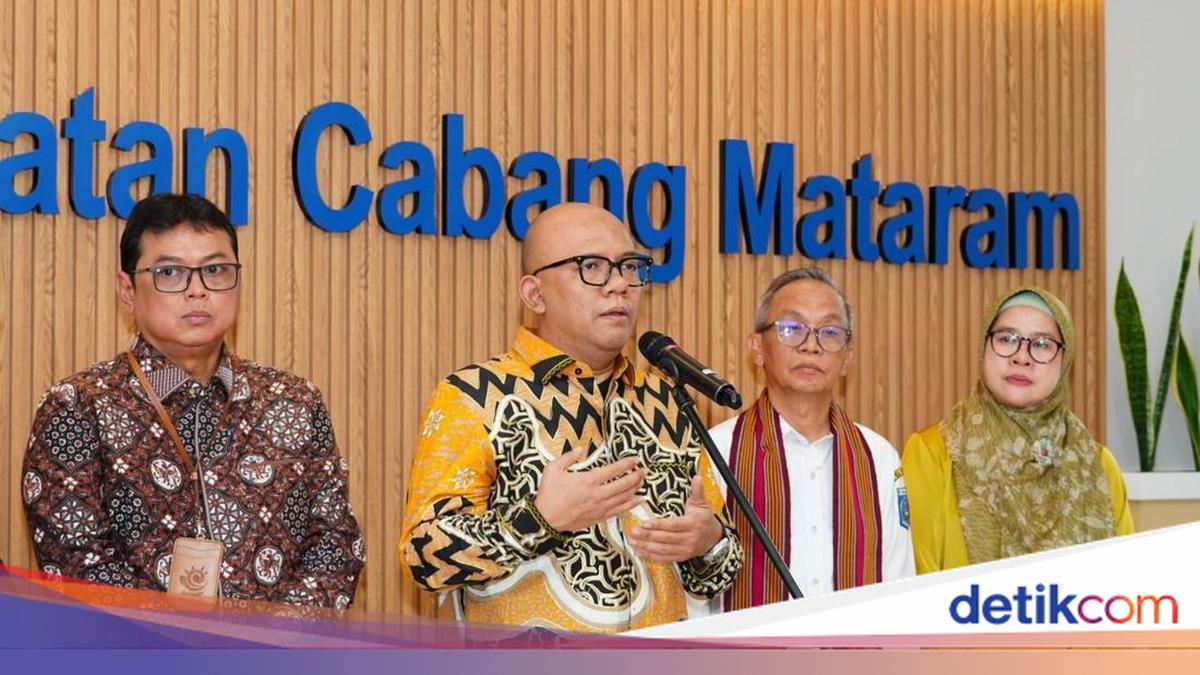
BPJS Kesehatan officially launched its PIONIR service at the Mataram Branch Office today. The innovation is part of BPJS Kesehatan’s effort to provide comfortable, modern, humanistic, and flexible services. “PIONIR is here to break the stigma of public services that have long been perceived as rigid and bureaucratic, transforming them into a more humanistic approach that answers participants’ needs. Through PIONIR, we are also transforming our service pattern from one that seemed reactive to a more proactive service,” said BPJS Kesehatan Director of Membership, Akmal Budi Yulianto, in a written statement on Wednesday (22/07).
Akmal explained that the PIONIR service philosophy—Proactive, Innovative, Observant, Comfortable, Integrative, and Responsive—encourages staff to be more proactive in recognising participants’ needs, providing appropriate solutions, and delivering comfortable and easily accessible services. In addition to being supported by technology, this service also emphasises staff sensitivity in providing assistance and ensuring participants obtain the necessary information and services accurately.
Akmal revealed that while previous services focused on administrative processes at counters using paper-based queues, the PIONIR concept integrates queues digitally and paperlessly. Staff no longer wait for participants to approach the counter; instead, they proactively approach participants to provide assistance from the outset. Furthermore, participants can now sit comfortably while waiting for staff to provide services, eliminating the need to move between counters or wait for their turn conventionally. The interaction between staff and participants is also made more humanistic and personal.
In terms of facilities, the service area is designed to be more open, comfortable, and no longer rigid like the previous service model. This transformation is expected to create a friendlier, easily accessible service experience centred on participants’ needs. “PIONIR is an innovation that originated from the grassroots at the BPJS Kesehatan Mataram Branch Office. Seeing the positive impact it has had on participants, management then responded and encouraged the development of this innovation as part of a service transformation that is more proactive, humanistic, and centred on participants’ needs,” he said.
Akmal added that the implementation of PIONIR at the Mataram Branch Office has shown positive results. One notable outcome is the reduction in service waiting time from an average of 25 minutes to around 7 minutes. Going forward, the development of the PIONIR system and service flow, along with the preparation of facilities and infrastructure, will be carried out in stages and is planned for implementation at BPJS Kesehatan branch offices across Indonesia.
Meanwhile, the Regional Secretary of West Nusa Tenggara Province, Abul Chair, affirmed the local government’s commitment to fully supporting the PIONIR innovation introduced by BPJS Kesehatan. Abul Chair stated that the government is ready to oversee any programme focused on public protection. “Anything that provides protection for the people of NTB must be supported. When participants come to a health facility, they are not just carrying administrative documents, but also anxiety and hope. Therefore, how they are treated humanely is paramount,” said Abul Chair.
He added that the spirit of the PIONIR innovation must not stop at merely changing the physical appearance of the service area. Health services must transform to become more proactive, responsive, and guarantee comfort without neglecting humanitarian values. “We are proud to be the first in Indonesia. It is an honour for NTB to present quality public services while serving as an example for other regions,” he stated. Nonetheless, Abul Chair reminded that the success of improving public service quality cannot be borne by a single institution alone, but requires close collaboration between the regional government, health facilities, BPJS Kesehatan, and all stakeholders. “In principle, for us, public services in NTB must be easy, fast, and oriented towards public satisfaction,” he concluded.