
BPJS Kesehatan Expands JKN Access in 3T Regions Through VIOLA and Mobile Services
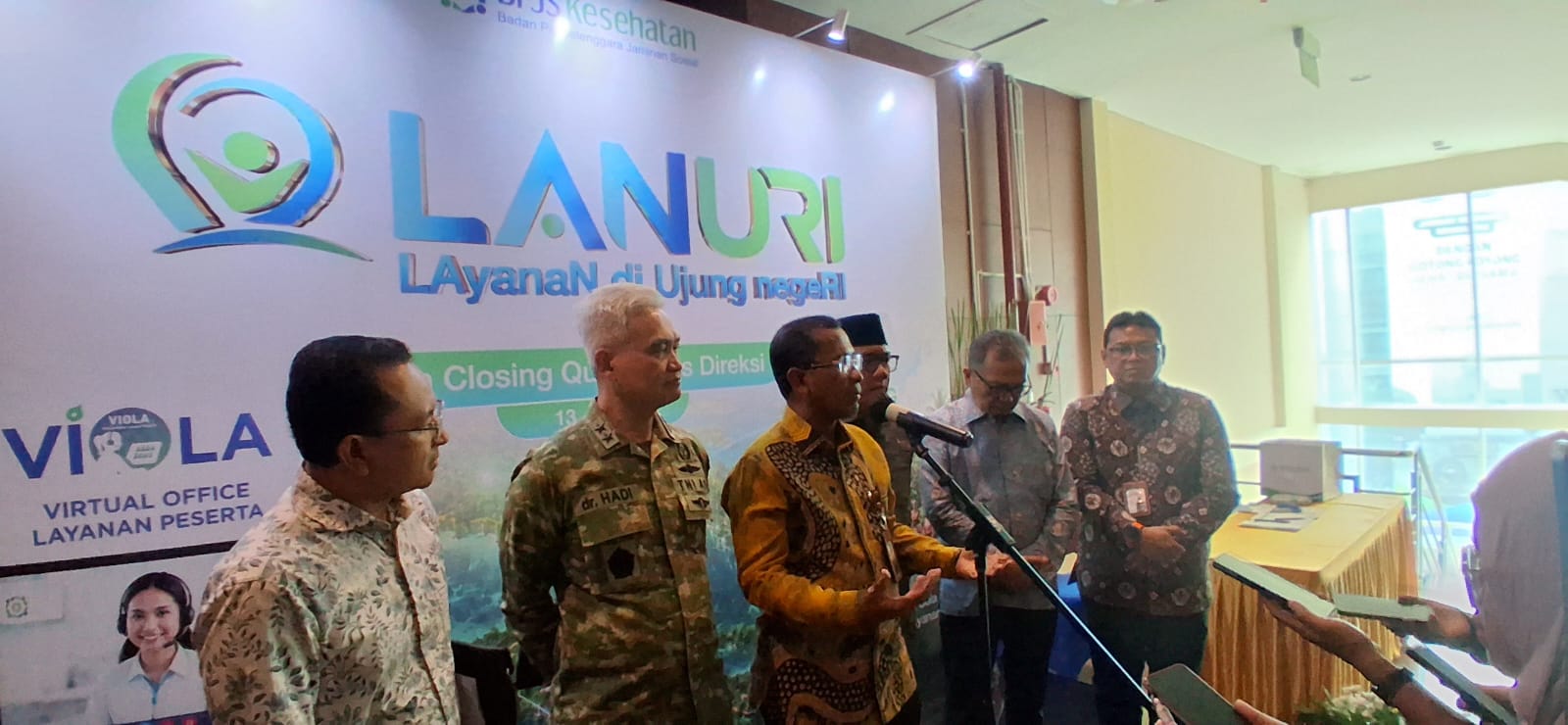
BPJS Kesehatan is expanding access to the National Health Insurance (JKN) programme for communities in frontier, outermost, and disadvantaged (3T) regions. This effort is being carried out by strengthening the Virtual Office for Information and Administration Services (VIOLA) and the BPJS Keliling mobile outreach service to reach people with limited access to healthcare services. VIOLA is a video conference-based service channel that allows the public to interact directly with BPJS Kesehatan officers without having to visit an office. Through this service, participants can manage JKN membership administration, obtain information, and submit complaints in real time. In its implementation, BPJS Kesehatan collaborates with various stakeholders in 3T regions to provide video conference facilities at community health centres, village offices, sub-district offices, schools, and other public service locations. From January to May 2026, the VIOLA service was utilised 218,729 times. Community health centres were the most common locations providing the service. The most frequently accessed services were information requests and changes to primary care facility data. JKN participants from the Contribution Assistance Beneficiary segment were the largest group utilising VIOLA. BPJS Kesehatan President Director Prihati Pujowaskito stated that digital service transformation cannot yet be applied evenly across all regions of Indonesia. Geographical conditions, limited communication and data networks, and low levels of digital literacy in several areas remain challenges. ‘The optimisation of VIOLA and BPJS Keliling is a manifestation of the LANURI programme, one of the 100-Day Quick Wins of the BPJS Kesehatan Board of Directors,’ Prihati said in Jakarta on Monday. In addition to developing digital services, BPJS Kesehatan is also optimising BPJS Keliling as a proactive outreach service. Through this service, the public can obtain information, manage JKN membership administration, and submit complaints directly without having to visit a branch office. The LANURI programme was implemented simultaneously at 558 points across various regencies and cities in Indonesia, involving 126 BPJS Kesehatan branch offices. Of these service points, 179 locations provided BPJS Keliling services, while 379 points offered VIOLA services. ‘Our hope is that LANURI can facilitate access to JKN services for people living in remote areas or those with limited access due to geographical conditions,’ Pujo said. On the same occasion, Pujo also revealed that the realisation of the 100-Day Quick Wins for the BPJS Kesehatan Board of Directors had reached 91.53%. The Quick Wins programme consists of four Customer Centric programmes and four Collaborative programmes. The Customer Centric programmes are designed to address the basic needs of JKN participants based on public aspirations, while the Collaborative programmes focus on expanding integrated services through collaboration with various stakeholders. Key programmes that have been implemented include JKN 3T, which involves cooperation with hospital auxiliary ships and the deployment of health workers to 3T regions. Another programme, P-Care MBG, ensures that SPPG officers are JKN participants while monitoring their health conditions and the growth and development of students receiving MBG. BPJS Kesehatan is also running an Inefficiency Elimination programme through the application of intelligence claims to improve JKN financing efficiency while strengthening efforts to prevent, detect, and address inefficient behaviours, including potential fraud.