
BPJS Kesehatan Ensures JKN Transformation Eases Access for Participants
BPJS Kesehatan is striving to ensure that the JKN (National Health Insurance) service transformation provides ease for participants when requiring healthcare services in hospitals. Alongside healthcare facilities, BPJS Kesehatan is undertaking efforts to improve and optimise service processes, from registration to receiving medical care, so that participants can access treatment more easily, quickly, and comfortably.
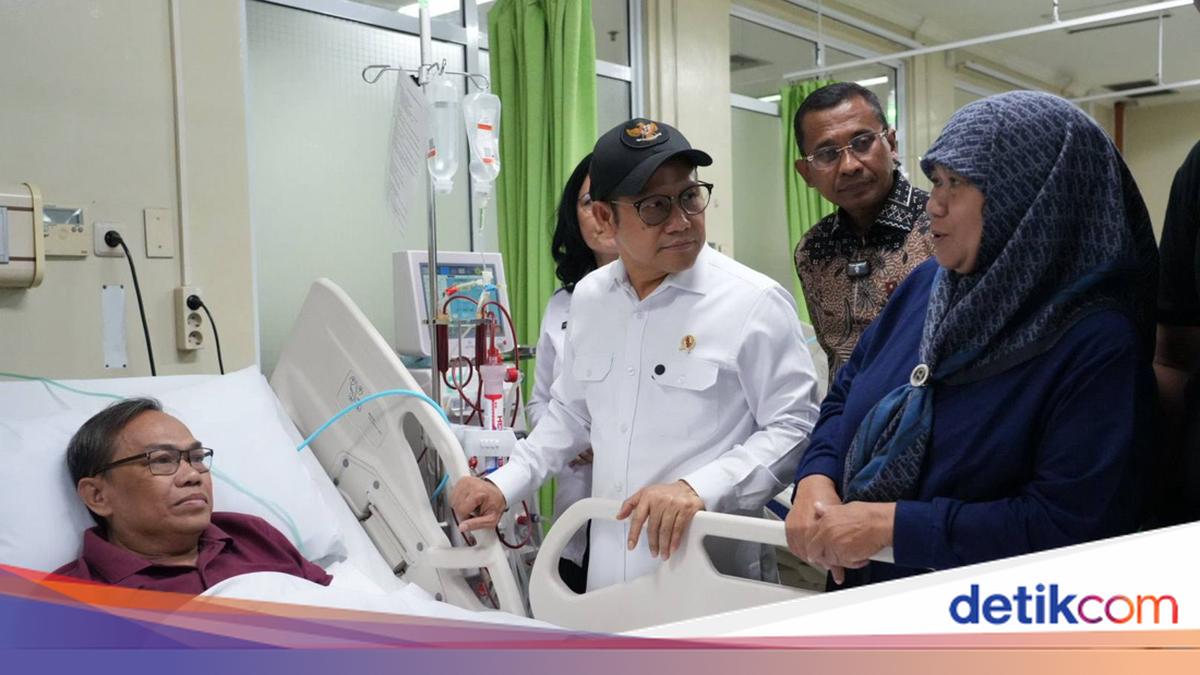
These efforts are evidenced by the introduction of service innovations that facilitate JKN participants, ranging from administrative processes and access to information through BPJS SATU officers to healthcare services in hospitals. This was directly reviewed by the Coordinating Minister for Community Empowerment, Abdul Muhaimin Iskandar, accompanied by the President Director of BPJS Kesehatan, Prihati Pujowaskito, today.
President Director of BPJS Kesehatan, Prihati Pujowaskito, stated that the JKN service transformation is realised not only through the simplification of administrative processes and the use of technology but also through assistance that ensures participants obtain the necessary information and services while in the hospital.
“Service transformation must be truly felt by the participants. Therefore, we constantly strengthen our collaboration with hospitals so that participants can access healthcare services more easily, from the registration process to obtaining medical services,” said Puju in a written statement on Wednesday (1/7/2026).
Another form of transformation is encouraging the use of Self-Service Registration Kiosks (APM) to help accelerate the administrative process for participants in hospitals. Additionally, BPJS Kesehatan has introduced BPJS SATU officers (BPJS Ready to Help) in hospitals to provide assistance to JKN participants.
Through BPJS SATU, participants can obtain information regarding their rights and obligations, JKN service flows, and receive assistance if they encounter obstacles while accessing healthcare services in hospitals. The presence of BPJS SATU officers is expected to provide certainty of information and ensure participants receive services in accordance with JKN Program regulations.
Pujo emphasised that the transformation in the service sector will be strengthened through synergy between BPJS Kesehatan and all healthcare facilities, ensuring that the public receives not only guaranteed financing but also an increasingly better and more satisfying service experience.
“We want to ensure every participant feels assisted when accessing healthcare services. When participants need information regarding service flows, administration, or their rights and obligations as JKN participants, there are BPJS SATU officers ready to provide assistance. With the support of service transformation and collaboration with hospitals, we hope participants can obtain optimal services,” said Pujo.
This opportunity was also used to interact with participants currently accessing services. Through steps taken by RSUD Cengkareng, many participants expressed satisfaction with the services received, from the easy registration process to the medical procedures provided by the hospital.
To ensure that the ease of hospital services can be felt optimally, Pujo also urged participants to regularly ensure their membership status remains active. For participants with outstanding premiums, BPJS Kesehatan has introduced the REHAB 3.0 Program, which offers a more flexible instalment payment scheme.
“Furthermore, we also encourage participants to routinely check their JKN membership activity status. Specifically for the Premium Assistance Recipient (PBI) segment and Non-Wage Earners (PBPU Pemda), BPJS Kesehatan has introduced the PASTI (Monitor Membership Status and Information) JKN innovation. Through this innovation, participants can easily check their membership status before accessing healthcare services, so that the service process in healthcare facilities can run more smoothly,” Pujo asserted.
Meanwhile, the Coordinating Minister for Community Empowerment, Abdul Muhaimin Iskandar, emphasised that the government is working to ensure that services for participants in hospitals, particularly catastrophic services, continue to run optimally. He stated that the government is fully committed to supporting the JKN Program so that all Indonesian people are protected and can access guaranteed healthcare services easily.
“Through the JKN Program, all participants receive good service at a very affordable price, due to the principle of mutual cooperation (gotong royong) implemented by BPJS Kesehatan. This principle is what we often call a giant cooperation pattern—efforts made together to protect the Indonesian people,” said Cak Imin.
Furthermore, Cak Imin emphasised that the government has strengthened synergy with all stakeholders to increase public participation in supporting the JKN Program by encouraging people to become active JKN participants by paying their monthly premiums routinely.
Additionally, he asserted that the poor and vulnerable populations must no longer face obstacles in accessing healthcare services. To this end, the government continues to update the data of Premium Assistance Recipients (PBI), including through membership transition mechanisms for those experiencing changes in economic conditions.
“For those who are capable, we encourage them to register as independent participants. Meanwhile, those who meet the criteria will continue to be guaranteed as PBI participants. Therefore, BPJS Kesehatan is expected to conduct socialisation to participants, while the Ministry of Social Affairs is encouraged to improve data so that the data for premium assistance recipients is targeted and valid,” concluded Cak Imin.