
BPJS Kesehatan Ensures Health Protection for Underprivileged Communities
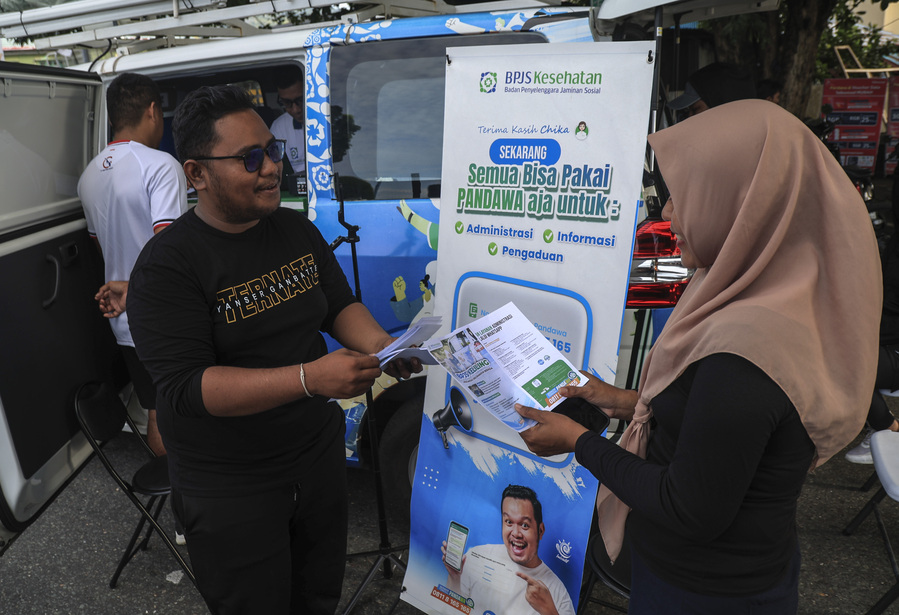
The presence of the National Health Insurance (JKN) programme, administered by BPJS Kesehatan, represents the state’s commitment to providing health protection for all Indonesian citizens, including the poor and underprivileged through the Contribution Assistance Beneficiary (PBI JK) segment. The PBI JK scheme is the state’s effort to ensure that those in need can access healthcare services without financial barriers.
Head of Public Relations at BPJS Kesehatan, Rizzky Anugerah, stated that the government provides equitable health protection by guaranteeing that poor and underprivileged communities receive medical services according to their needs through the JKN programme. As of 1 June 2026, JKN participation has reached 285.4 million people, or more than 98 percent of Indonesia’s population. Of that number, 96.76 million are PBI JK participants whose premiums are paid by the government.
‘The existence of PBI JK participants is the state’s commitment to protecting the community through health insurance. All PBI JK participants have equal rights to obtain health services in accordance with applicable regulations. With the spirit of mutual cooperation that forms the foundation of the JKN programme, the state is present to ensure every citizen has an equal opportunity to live healthily and obtain the necessary health services,’ Rizzky said.
Rizzky explained that to ensure easy access to health services for all JKN participants, as of 1 June 2026, BPJS Kesehatan has partnered with 23,682 First-Level Health Facilities (FKTP) and 3,221 hospitals and main clinics spread across Indonesia. He noted that this network of health facilities is a crucial part of ensuring PBI JK participants can access easily reachable, quality, and sustainable health services.
Echoing this sentiment, BPJS Watch Coordinator Timbul Siregar assessed that the provision of the PBI JK quota is an implementation of the constitutional mandate to guarantee the people’s right to social protection in the health sector. He stated that this mandate aligns with the 1945 Constitution of the Republic of Indonesia, which guarantees every citizen’s right to healthcare and mandates the state to develop a social security system for all people.
‘This constitutional mandate is realised through the JKN programme, where the government pays the premiums for the poor and underprivileged through the PBI JK scheme. Therefore, the government’s commitment to expanding health protection must be continuously strengthened so that more entitled people can obtain health insurance,’ Timbul said.
According to Timbul, Presidential Regulation Number 36 of 2023 concerning the National Social Security Roadmap for 2023-2024 has provided policy direction to expand PBI JK coverage to around 113 million people. Consequently, adjustments to the PBI JK quota must consider the evolving socio-economic conditions of the community so that health protection can reach all poor and underprivileged people.
‘The expansion of PBI JK participation must also be supported by adequate budget commitments so that the sustainability of health protection can be maintained. Budget politics plays a crucial role in ensuring the community’s right to healthcare can be fulfilled sustainably,’ Timbul added.
Furthermore, Timbul stressed that increasing the number of PBI JK participants should not stop at the participation aspect alone but must be accompanied by strengthening the healthcare service system. This is in line with the mandate of Law Number 17 of 2023 on Health, which emphasises strengthening primary care, referral services, pharmaceutical and medical device resilience, equitable distribution of health human resources, and the utilisation of health technology.
For Timbul, strengthening health services is a critical factor in ensuring all JKN participants truly receive optimal benefits from health insurance. The community should not only be protected as participants but also have easy access to quality health facilities when they need care.
‘Equitable access to health services is also important for communities in remote, outermost, and underdeveloped regions. With the expansion of participation accompanied by strengthened health services, the JKN programme is believed to be increasingly capable of improving public health status, maintaining population productivity, and supporting the realisation of Golden Indonesia 2045,’ Timbul concluded.