
BPJS Kesehatan Confirms No Limit on Hospitalisation Days for Patients
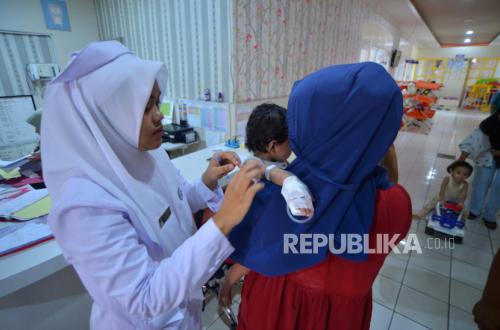
BPJS Kesehatan has affirmed that participants in the National Health Insurance (JKN) programme retain the right to receive inpatient services according to medical indications without any limitation on the duration of care. Participants can also easily access information on hospital bed availability through the Mobile JKN application.
Head of Public Relations at BPJS Kesehatan, Rizzky Anugerah, stated that inaccurate information regarding inpatient services for JKN participants still circulates. Therefore, the public needs to understand the correct information to optimally utilise their healthcare rights.
“JKN participants need not worry about accessing inpatient services. BPJS Kesehatan, together with healthcare facilities, has implemented various service mechanisms to ensure participants receive the necessary care according to their medical condition. We are also continuously strengthening information access so that participants can more easily understand their rights and the available service procedures,” said Rizzky.
He explained that one piece of information still frequently circulating among the public is the assumption that inpatient services covered by BPJS Kesehatan are limited to three days. According to him, this information does not align with the applicable regulations.
Rizzky stressed that BPJS Kesehatan does not limit the number of inpatient days for participants. The duration of care is determined entirely based on the patient’s health condition and the attending doctor’s assessment until the patient is declared stable.
“The length of hospitalisation is determined based on medical indications. As long as the patient still requires care according to the doctor’s assessment, inpatient services can continue to be provided in accordance with the provisions,” Rizzky said.
Furthermore, Rizzky explained that JKN participants are not automatically required to pay additional costs when the ward corresponding to their entitlement is full. In such situations, the hospital has a regulated service mechanism to ensure participants still receive a room.
“If the inpatient room matching the participant’s entitlement is unavailable, the hospital may provide a room one level higher than the participant’s entitlement for a maximum of three days at no additional cost. If all inpatient rooms are unavailable, the hospital may refer the patient to another equivalent hospital that has inpatient facilities,” said Rizzky.
To improve ease of information access, BPJS Kesehatan has also introduced a Bed Availability Information feature on the Mobile JKN application. Through this feature, participants can independently check bed availability at hospitals before accessing services.
“Through Mobile JKN, participants can obtain various healthcare service information in real time, including information on bed availability at hospitals. We hope this feature can help participants and their families obtain the needed information more quickly,” he said.
Participants simply need to log into the Mobile JKN application using their registered account, then select the Bed Availability Information menu and search for the intended hospital. Through this feature, participants can view bed availability information by class and room type, making the search for inpatient services easier and faster.
BPJS Kesehatan also encourages all hospitals to regularly update bed availability information. This step is important to ensure the information displayed on the Mobile JKN application remains accurate, so it can serve as a reference for participants in accessing inpatient services.
Meanwhile, to support services and information at hospitals, BPJS Kesehatan has also deployed BPJS SATU! officers, or BPJS Ready to Help. These officers are present to provide assistance and help participants find solutions to problems encountered during the service process.
“Do not hesitate to contact the BPJS SATU! officer. The name, photo, and contact number of the BPJS SATU! officer can be found in the public areas of the hospital, making them easily accessible to participants and patients’ families. It is hoped that the presence of BPJS SATU! can make it easier for participants to access information and services while at the hospital,” said Rizzky.