
BPJS Kesehatan and MUI Strengthen JKN as a Manifestation of Mutual Cooperation
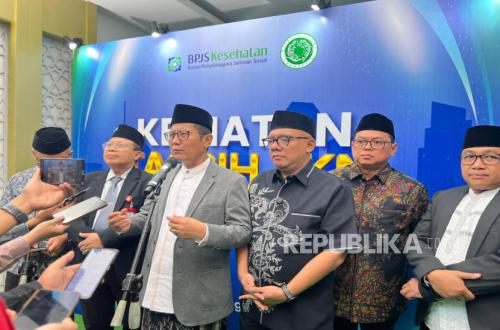
BPJS Kesehatan, together with the Indonesian Ulema Council (MUI), has emphasised that the National Health Insurance (JKN) programme is not merely a social security system, but a tangible manifestation of social solidarity and the spirit of mutual cooperation (gotong royong) among all Indonesian people.
This was stated by the Director of Membership at BPJS Kesehatan, Akmal Budi Yulianto, during the ‘Transformation, Awareness, and Synergy with JKN Da’wah Personnel’ (Tasbih JKN) event held at the MUI East Java Office in Surabaya on Monday (2jack/6/2026).
Akmal noted that the JKN programme embodies the principle of mutual cooperation, which is the core principle of health insurance administration in Indonesia. Through premium payments, healthy participants help fund healthcare services for sick participants, ensuring that every member has guaranteed health protection when needed.
“The JKN programme is built on the principle of mutual cooperation, where healthy participants assist those who are ill, while those who are financially capable assist the underprivileged members of society,” said Akmal.
As of 31 May 2026, the JKN programme has protected 285.25 million people, or 98.94 per cent of the Indonesian population, with a participant activity rate reaching 82.78 per cent. According to him, the achievement of JKN coverage, which now reaches almost the entire Indonesian population, serves as vital capital to ensure all citizens have the right to access comprehensive healthcare services.
Akmal believes that through continuous education and increasing public understanding of the spirit of mutual cooperation, more participants will realise the importance of paying premiums regularly. Consequently, participants can secure health protection whenever needed, while simultaneously ensuring the sustainability of the JKN programme so its benefits can be felt by all.
“We hope the public becomes increasingly aware that JKN is not just health protection, but also a form of social solidarity and compliance with regulations,” Akmal added.
Meanwhile, the Vice Chairman of MUI, KH. M. Cholil Nafis, expressed that the concept of mutual cooperation within JKN aligns with Islamic teachings regarding the importance of mutual assistance (ta’awun) among fellow humans.
“Paying JKN premiums is a form of mutual assistance that holds religious value. We want to ensure that the JKN programme is in accordance with Islamic Sharia, so that Muslims should support government programmes that provide great benefits to the community,” said Cholil.
As a way to strengthen the value of social solidarity, Cholil revealed that the MUI is preparing a specific fatwa (religious edict) to serve as a guide for the public in understanding the importance of the spirit of mutual cooperation through the JKN programme. This fatwa is intended to encourage zakat institutions and the National Zakat Agency (Baznas) to assist in funding JKN premiums for vulnerable groups who do not yet have protection, such as mosque administrators, preachers, and Islamic boarding school teachers.
Through the synergy within the Tasbih JKN programme, Cholil hopes that preachers (dai and daiyah) can act as the frontline in spreading this positive message. In doing so, the understanding of the JKN programme will be shaped into a national movement of mutual cooperation to realise a healthier Indonesia.
Source: jawawa.id (https://jawawa.id/newsitem/bpjs-kesehatan-and-mui-strengthen-jkn-as-a-manifestation-of-mutual-cooperation-1782744724)
Originally published by Republika (https://news.republika.co.id/berita/thecbk368/bpjs-kesehatan-gandeng-mui-perkuat-semangat-gotong-royong-jkn), translated from Indonesian