
BPJS Kesehatan and Media Group Collaborate to Strengthen JKN Literacy
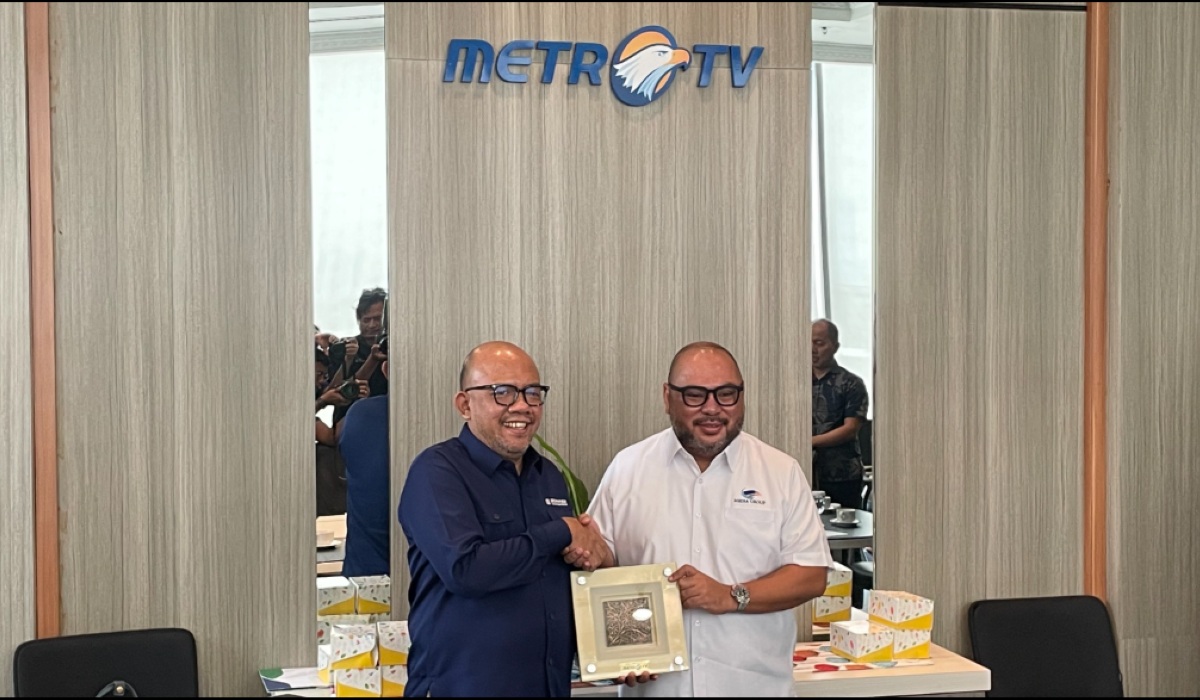
BPJS Kesehatan believes that the media plays a strategic role in bringing the National Health Insurance (JKN) programme closer to the public. Collaboration with the media is necessary to strengthen public literacy and to rectify various misunderstandings regarding JKN membership and services.
This was stated by the Director of Membership at BPJS Kesehatan, Akmal Budi Yulianto, during a visit to Media Group. According to Akmal, cooperation with the media is part of implementing the pentahelix principle in managing the BPJS Kesehatan institution.
“First, we are running our institution using the pentahelix principle, and one of the main pillars of the pentahelix is the media,” said Akmal at the Metro TV Building on Thursday (10/9).
He noted that the presence of the media is vital in helping BPJS Kesehatan convey information to the public. This is because there are still segments of the population who do not fully understand the mechanisms or benefits of JKN, leading to perceptions that the services provided are difficult to access.
Akmal revealed that JKN coverage has reached approximately 98 per cent of Indonesia’s total population, which is around 288 million people. However, the remaining challenge is to increase the percentage of active participants, which currently stands at around 78 per cent.
According to him, reactivating participants with inactive status is one of BPJS Kesehatan’s primary tasks. This challenge is increasingly complex because JKN participants come from various segments with different social conditions and economic abilities.
One of the largest groups is the Contribution Assistance Recipient (PBI) segment, which is subsidised by the government. Akmal mentioned that the number of participants in this segment reaches approximately 96.8 million people.
The determination of these recipients is linked to socio-economic data managed by the government and organised based on decile groups. Data updates are conducted periodically to align recipients with the current conditions of the community.
In addition to participants whose contributions are covered by the central government, there are also participants receiving assistance from local governments. Under this scheme, local governments are obligated to pay premiums according to their respective capacities.
Meanwhile, in the independent participant segment, the issue is not always related to economic ability. BPJS Kesehatan also faces the challenge of low willingness among some participants to pay premiums regularly.
“For independent participants, some truly do not have the ability to pay. If they lack the ability to pay, we cannot force them to pay,” he explained.
Therefore, BPJS Kesehatan is striving to increase awareness among participants who actually have the economic capacity but lack the ‘willingness to pay’ or the intention to pay premiums consistently.
Akmal stated that public understanding of JKN also needs to be continuously strengthened. Some members of the public still view health insurance solely as a service needed only when ill. In reality, the JKN principle is built through a mutual cooperation mechanism to provide health protection for the entire population.
“Sometimes people assume JKN is an expensive insurance. In fact, what JKN represents is health protection provided by the government,” he noted.
On the same occasion, the CEO of Media Group, Mirdal Akib, welcomed BPJS Kesehatan’s efforts to strengthen collaboration with the media. In his view, BPJS Kesehatan has demonstrated outstanding performance in providing health insurance to the public, and thus the programme needs to be continuously strengthened.
“This is already extraordinary from BPJS. In my opinion, BPJS Kesehatan is doing its best in providing protection to the community,” said Mirdal.
He noted that the strengthening of BPJS Kesehatan remains necessary, including in terms of service equality. He believes that BPJS Kesehatan cannot work alone to ensure the programme becomes stronger and its benefits are felt by all members of society.
“First, the equality of healthcare facilities must continue to be improved, and BPJS cannot do this alone in raising public awareness; therefore, this must be accompanied by the media,” he said.
Mirdal emphasised that support from various parties, including the media, is essential to building public awareness regarding the benefits of health insurance. Such education, according to him, needs to be implemented from a young age so that the public becomes accustomed to understanding the importance of health protection.
He also believed there needs to be a shift in how the public views JKN membership. JKN should not merely be understood as a cost burden, but as part of an effort to maintain health and provide protection when the community requires medical services.
“We must help BPJS. We must convey to the public that BPJS is important,” Mirdal asserted.
As a media company, Media Group, he continued, has a responsibility to help convey information regarding BPJS Kesehatan to the public. Easy-to-understand information is expected to make the public more familiar with the JKN programme and understand its benefits in daily life.
“As media, we can certainly inform the public regarding BPJS Kesehatan so that the community can feel closer to BPJS in their daily lives,” he said.
The collaboration between BPJS Kesehatan and Media Group is expected to strengthen public communication regarding JKN. With media support, it is hoped that the public will increasingly understand their rights and benefits.
Source: jawawa.id (https://jawawa.id/newsitem/bpjs-kesehatan-and-media-group-collaborate-to-strengthen-jkn-literacy-1789026898)
Originally published by Media Indonesia (https://mediaindonesia.com/kesehatan/931861/bpjs-kesehatan-dan-media-group-kolaborasi-perkuat-literasi-jkn), translated from Indonesian