
BPJS Kesehatan: 98% of Indonesia's population now covered by national health insurance
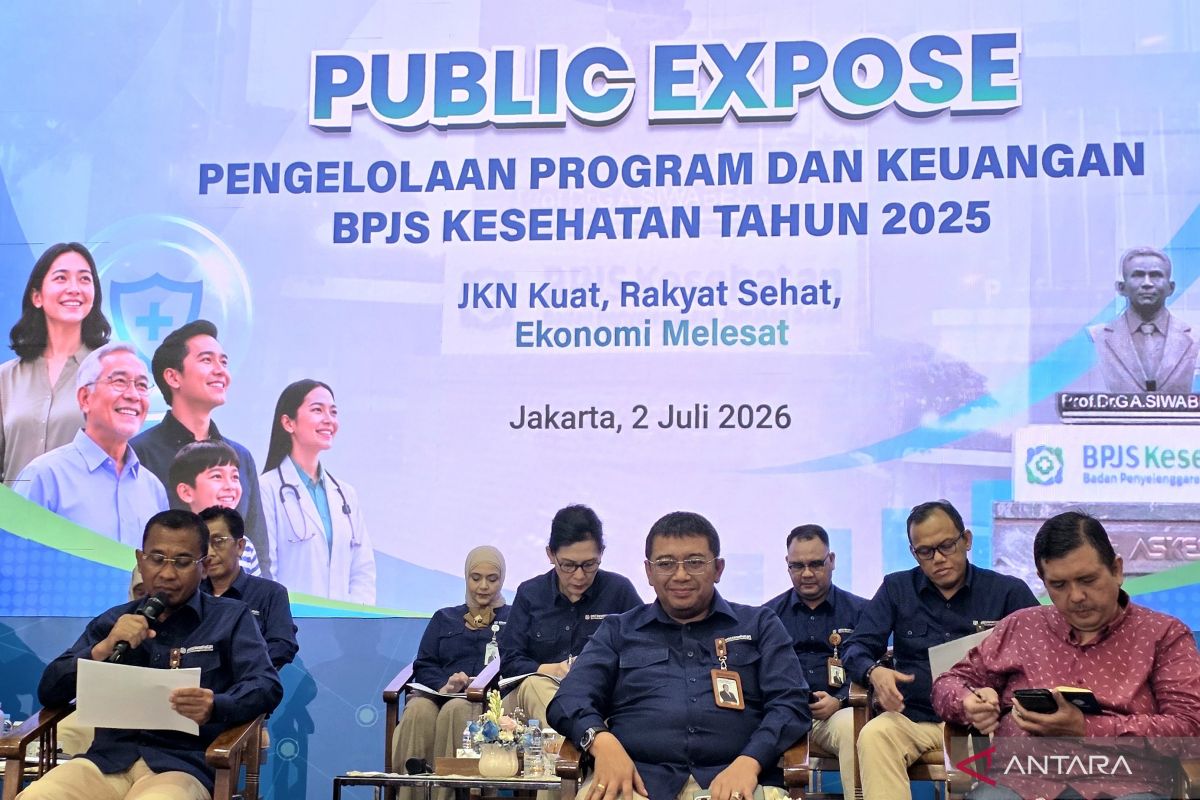
BPJS Kesehatan has reported that the number of participants in the National Health Insurance (JKN) programme has reached 282.7 million people, or 98.62 per cent of the total Indonesian population, with total healthcare service utilisation reaching 725.3 million visits in 2025.
The President Director of BPJS Kesehatan, Prihati Pujowaskito, stated that this achievement demonstrates the JKN programme’s strengthening role as a foundation for developing healthy and productive human resources, while maintaining programme sustainability through sound governance and a healthy financial condition.
“The JKN programme is not merely about providing health service financing guarantees, but also serves as a foundation for creating healthy, productive, and competitive Indonesian human resources,” said Pujowaskito during a public presentation on the “Management of BPJS Kesehatan Programme and Financial Reports for 2025” in Jakarta on Thursday.
Furthermore, he reported more than 725.3 million healthcare service utilisations throughout 2025, averaging more than 1.9 million services per day.
To expand service accessibility, the agency continues to develop digital transformations through the Mobile JKN Application, administrative services via WhatsApp (WA) PANDAWA, and the 165 Care Centre.
Additionally, he noted that BPJS Kesehatan has expanded its partnerships with healthcare facilities, which now include 23,770 Primary Healthcare Facilities (FKTP), 3,194 Advanced Referral Healthcare Facilities (FKRTL), and 6,190 supporting healthcare facilities across Indonesia.
Regarding finances, Pujowaskito stated that the net assets of the Health Social Security Fund (DJS) reached IDR 30.04 trillion by the end of 2025, equivalent to a claim-paying capacity of approximately 1.88 months in accordance with applicable regulations.
Meanwhile, the investment returns of the Health DJS were recorded at IDR 3.94 trillion, which he noted reflects prudent fund management to ensure the sustainability of the JKN programme.
Pujowaskito added that the benefits of the JKN programme also impact the national economy.
According to a study by the Institute for Economic and Social Research at the Faculty of Economics and Business, University of Indonesia (LPEM FEB UI), the JKN programme contributed to an increase in Gross Domestic Product (GDP) of up to IDR 129 trillion and created approximately 3.5 million jobs.
The study also showed that the JKN programme saved around 8.1 million people from poverty during the 2018-2019 period and protected approximately 16 million people from the risk of falling into poverty due to the burden of healthcare costs.
Furthermore, every one per cent increase in JKN membership is estimated to be able to increase per capita expenditure by 2.71 per cent, increase life expectancy by up to three years, and boost community productivity.
Source: jawawa.id (https://jawawa.id/newsitem/bpjs-kesehatan-98-of-indonesias-population-now-covered-by-national-health-insurance-1782975318)
Originally published by Antara (Indonesian) (https://www.antaranews.com/berita/5631944/bpjs-kesehatan-sebanyak-9862-persen-penduduk-ri-terlindungi-jkn), translated from Indonesian