
BPJS Health Premium Assistance to Be Expanded, Requiring Rp94 Trillion in Government Funding
Jakarta, CNBC Indonesia — The Indonesian government is drafting a new scheme to expand coverage under BPJS Health’s Contribution Assistance Recipients (PBI-JK) programme, with costs to be shared between the central and regional governments.
Under the latest proposal, people in deciles 1 to 8 of the National Single Socioeconomic Data (DTSEN) would be eligible for PBI-JK, with financing divided among the central government, provinces, and districts and cities.
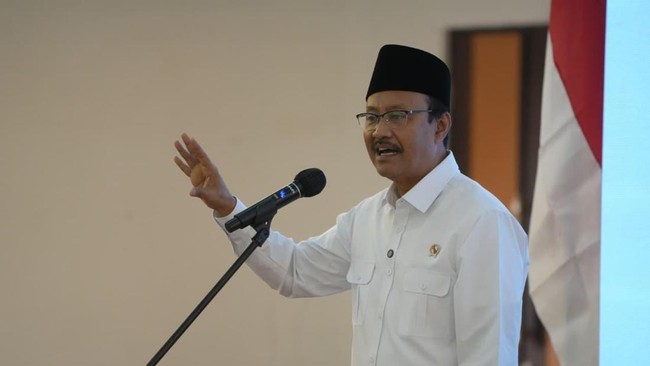
“Let me make clear at the outset that what we are presenting is still at the simulation and discussion stage. We are continuing to examine it, and there are several possible schemes, one of which is this,” Social Affairs Minister Saifullah Yusuf, known as Gus Ipul, said in a statement on Wednesday (4 November 2026).
Under the proposed division of costs, the central government would fund contributions for deciles 1–4 through the state budget (APBN); district and city governments would cover deciles 5–6; and provincial governments would be responsible for deciles 7–8.
The Ministry of Social Affairs has estimated the funding required for the new BPJS Health PBI-JKN scheme. With health insurance contributions set at Rp42,000 per person per month, deciles 1–4 would require about Rp52.49 trillion a year for 104.15 million beneficiaries, funded by the central government through the APBN.
Deciles 5–6 would require around Rp23.22 trillion a year for 46.06 million beneficiaries, funded through district and city budgets (APBD). Deciles 7–8 would require approximately Rp19.07 trillion annually for 37.84 million beneficiaries, funded through provincial budgets.
“In total, deciles 1–8 account for 188.05 million people, and the funding required is Rp94.78 trillion. The composition is roughly 55% from the APBN, 25% from districts and cities, and 20% from provinces,” Gus Ipul said.
He stressed that the scheme remains a simulation under discussion. He added that not everyone in deciles 1–8 would receive subsidised contributions, as some people are employed and have their premiums paid by their respective companies.
“So it will not be everyone; some are already working and their contributions are paid by their companies because they are wage-earning participants,” he added.
The mapping puts the population in deciles 1–8 at 223.4 million. An estimated 188 million people, or 84% of that group, could be proposed for government-paid contributions, while 35.3 million are already covered by employers or are independent participants in classes I–II.
Gus Ipul said the proposal would ensure coverage for people in deciles 1–8, including those who move into deciles 6–8 following data updates. He said it would also be fair to regions, with the APBN providing more support to areas with larger poor populations and developed regions taking on a greater share through their APBD. A clear division of responsibility by decile, he added, would reduce overlap and disputes between central and local governments over PBI enrolment.
Gus Ipul said the existing National Health Insurance (JKN) contribution assistance scheme covers about 156.8 million people, or 55% of the population. This includes beneficiaries under PBI, regional-government-funded non-wage workers (PBPU), and independent class III participants.
Source: jawawa.id (https://jawawa.id/newsitem/bpjs-health-premium-assistance-to-be-expanded-requiring-rp94-trillion-in-government-funding-1793771515)
Originally published by CNBC Indonesia (https://www.cnbcindonesia.com/news/20261104104113-4-782160/bantuan-iuran-bpjs-kesehatan-diperluas-pemerintah-butuh-dana-rp94-t), translated from Indonesian