
BPJS Health Insurance Premiums to Increase Effective 24 May 2026
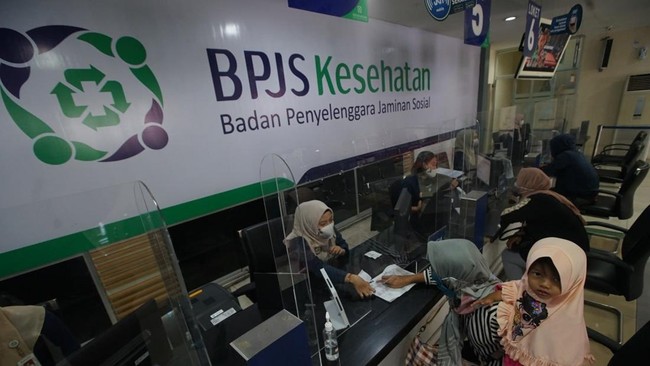
Jakarta, CNBC Indonesia — The government plans to increase BPJS Health Insurance premiums in 2026 due to an expected Rp20-30 trillion deficit in the National Health Insurance (JKN) scheme this year.
Health Minister Budi Gunadi Sadikin explained that JKN premiums should be reviewed and adjusted every five years to ensure sustainable healthcare financing. ‘Premiums must rise, though there are political considerations as this is a contentious issue,’ he said on Sunday (24 May 2026).
He confirmed the increase will only affect middle to upper-income individuals paying independently, such as those currently paying around Rp42,000 monthly. The poor will not be impacted, with participants in deciles 1 to 5 continuing to be covered by the government under the Premium Assistance Beneficiaries (PBI) scheme.
‘If tariffs are raised for the poor in deciles 1-5, there is no effect because they are covered by the government,’ Budi Gunadi Sadikin, commonly known as BGS, said.
Finance Minister Purbaya Yudhi Sadewa previously stated the government would not adjust BPJS premiums until economic growth surpasses the decade’s stagnant average of around 5%. If the economy grows above 6%, he assured the government would consider adjusting the premiums, including if faster growth occurs in 2026.
‘Only when growth exceeds 6% and people find jobs more easily will we consider increasing the public’s burden. Not now. If the economy grows above 6.5% next year, then what?’ he stressed.
Despite the discussion of rate adjustments, current premiums still follow the latest regulation set in 2022. The previous regulation is outlined in Presidential Regulation No. 63 of 2022, which includes payment deadlines of the 10th of each month and no late payment penalties starting 1 July 2026. A penalty applies if participants receive inpatient healthcare within 45 days of reactivating their membership.
The regulation details the premium structure as follows:
Premium Assistance Beneficiaries (PBI) participants, whose premiums are paid directly by the government.
Wage-earning participants (PPU) working in government institutions, including civil servants, military personnel, police officers, government officials, and non-civil servant government employees, pay 5% of monthly salary or wage: 4% by the employer and 1% by the participant.
PPU participants working at state-owned enterprises (BUMN), regional-owned enterprises (BUMD), and private companies also pay 5% of monthly salary or wage: 4% by the employer and 1% by the participant.
Additional family members of PPU participants, including fourth and subsequent children, parents, and in-laws, have a premium of 1% of salary or wage per person per month, paid by the wage-earning participant.
Premiums for other PPU dependents such as siblings, in-laws, domestic workers, and non-wage-earning participants (PBPU) are calculated separately as follows:
Rp42,000 per person monthly for Class III healthcare services. For Class III, from July to December 2020, participants paid Rp25,500 with the government covering the remaining Rp16,500. From 1 January 2021, Class III participants pay Rp35,000, with the government providing Rp7,000 assistance.
Rp100,000 per person monthly for Class II services.
Rp150,000 per person monthly for Class I services.
- Health insurance premiums for veterans, independence pioneers, and their widows, widowers, or orphans are set at 5% of 45% of the basic salary of a civil servant at grade III/a with 14 years’ service per month, paid by the government.