
BPJPH Strengthens Halal Product Process Assistants to Accelerate UMK Certification
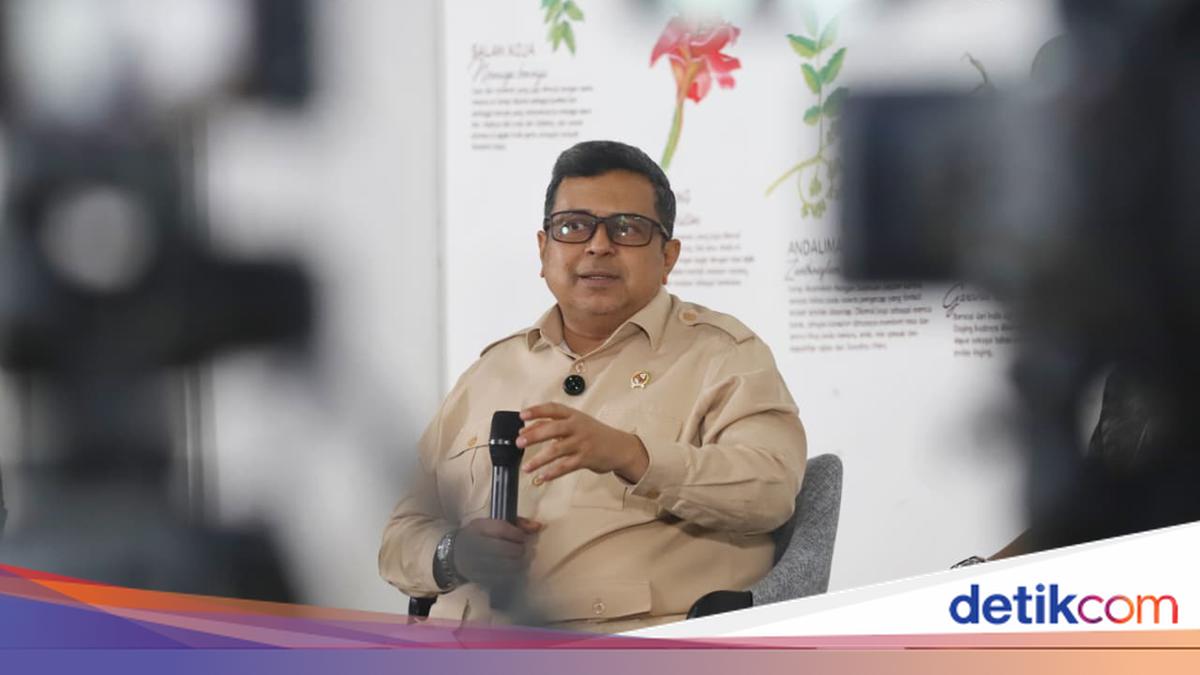
The Head of the Halal Product Assurance Agency (BPJPH), Ahmad Haikal Hasan, has emphasised that Halal Product Process (PPH) assistants play a strategic role in strengthening the implementation of Halal Product Assurance (JPH) while supporting the development of the national halal ecosystem and industry.
He stated this while serving as the keynote speaker at the 5th Batch of Halal Product Process (PPH) Assistant Training, organised by the Ummah Economic Movement Institute (LPEU) of the Indonesian Ulema Council (MUI).
According to Ahmad Haikal, the presence of PPH assistants is a vital instrument in implementing Law Number 33 of 2014 concerning Halal Product Assurance. PPH assistants serve as the frontline in assisting business owners, particularly micro and small enterprises (MSMEs), to obtain halal certificates through a mechanism that is easy, fast, inexpensive, and even free via facilitation schemes or the SEHATI (Free Halal Certification) programme.
“Halal Product Process assistants are trustees to whom we entrust this great task (assisting MSMEs in the halal certification process). They play a crucial role in strengthening the national halal industry,” said Ahmad Haikal in a statement on Monday (29/06/2026).
He noted that the demand for halal human resources is continuously increasing, not only in Indonesia but also globally. He mentioned that several countries, such as Korea, Hong Kong, and Australia, are beginning to require professionals with halal competence to support the development of the halal industry in their respective nations.
Consequently, he encouraged training participants to continuously improve their competence to capitalise on the expanding opportunities within the international halal industry sector.
“Halal is no longer merely a religious matter; halal has transformed into a growth economy engine,” he continued.
Ahmad Haikal also stated that global halal industry trends continue to evolve, spanning various sectors including not only food and beverages but also Muslim fashion, cosmetics, pharmaceuticals, consumer goods, and services. This situation presents a significant opportunity for Indonesia to strengthen its position as one of the world’s halal industry hubs, in line with government policy regarding the development of the national halal economy and industry.
He added that to capture these opportunities, competent, professional, and adaptive human resources in the halal field are required. As part of this workforce, PPH assistants are expected not only to assist in the halal certification process but also to act as agents of education, literacy, and drivers for strengthening the halal ecosystem within society.
Ahmad Haikal noted that the halal certification assistance ecosystem in Indonesia is steadily expanding. BPJPH currently has 141,352 Halal Product Process (PPH) assistants organised under 410 Halal Product Process Assistance Institutions (LP3H) spread across Indonesia.
Furthermore, the growing network of LP3H and PPH assistants is expected to expand access to halal certification services, accelerate national halal certification achievements, and strengthen the competitiveness of the Indonesian halal ecosystem and industry.
Meanwhile, the Deputy Secretary General of MUI for Economic Affairs, Zuali Halim, stated that the PPH Assistant Training is a shared commitment to supporting the implementation of Halal Product Assurance in Indonesia.
He emphasised that the halal certification mechanism through the ‘self-declare’ scheme does not mean business owners are free to declare products arbitrarily or lower halal standards. Rather, it is a policy to provide administrative ease for MSMEs in the certification process through assistance, while still requiring them to meet halal standards in accordance with statutory regulations.
Furthermore, through this training, it is hoped that professional, high-integrity, and competent PPH assistants will emerge, capable of expanding halal certification access for businesses, increasing public halal literacy, and strengthening the national halal ecosystem and industry as a driver of Indonesia’s economic growth.