
BPJPH States Mandatory Halal Certification Provides Measurable Business Certainty
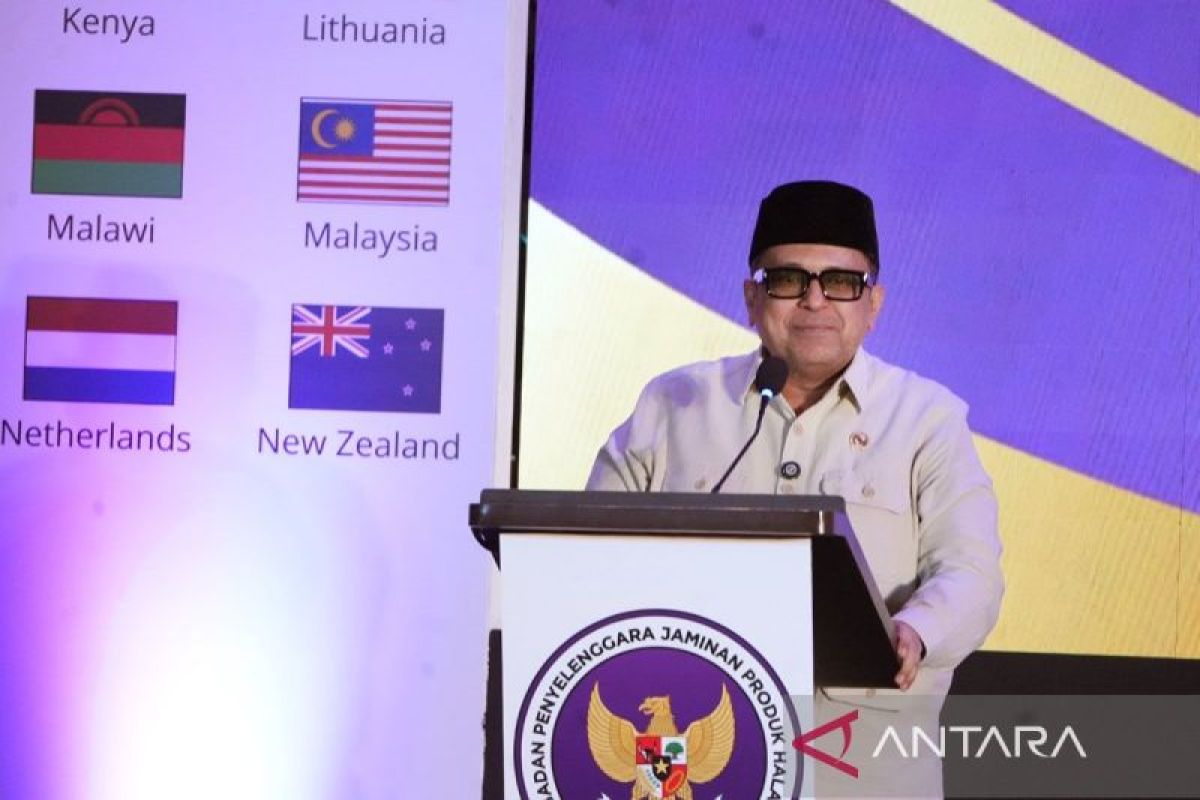
Jakarta (ANTARA) - The Halal Product Assurance Agency (BPJPH) stated that the enforcement of mandatory halal certification (Wajib Halal) is intended to provide public protection as well as measurable and data-based business certainty.
“Furthermore, we continue to provide space and tolerance for business actors who are not yet ready,” said the Head of BPJPH, Ahmad Haikal Hasan, in a statement in Jakarta on Tuesday.
According to him, various concerns regarding the readiness of the mandatory halal implementation should be viewed based on official data and information. He noted that some requests to postpone the implementation arise from the use of inaccurate data or an incomplete understanding of the mandatory halal mechanism.
On the other hand, he ensured that the implementation of mandatory halal certification will not be carried out repressively. Business actors who are not yet ready need not worry, as the government will continue to provide space, time, and assistance to meet their obligations in accordance with the regulations.
“If there are those who are not ready, please inform us. We will certainly provide time. Whether it is one more year or two more years, please proceed. The important thing is that we assist you until you are ready,” he said.
Furthermore, he emphasised that business actors who do not wish to include a halal label need not worry. He stated that halal assurance is intended for those who desire certainty and a guarantee of halal products.
“For those who do not want a halal label, that is fine. Because halal is indeed intended for those who seek a guarantee of halal products. The important thing is, do not make halal claims without meeting the requirements,” said Haikal.
Additionally, he ensured there would be no coercion or sweeping operations against business actors during the implementation of mandatory halal certification. He emphasised that the implementation should be placed within the spirit of Indonesia as a nation that upholds tolerance and diversity.
“Mandatory Halal is ultimately not merely an administrative obligation, but part of an effort to provide protection and choices to consumers, as well as certainty for the business world. Therefore, the government will continue to open channels for communication and assistance for business actors,” he said.
Meanwhile, the implementation of mandatory halal certification will proceed starting 18 October 2026, in accordance with the mandate of the prevailing laws and regulations.