
BPJPH: Mandatory Halal Certification to Strengthen National Halal Value Chain
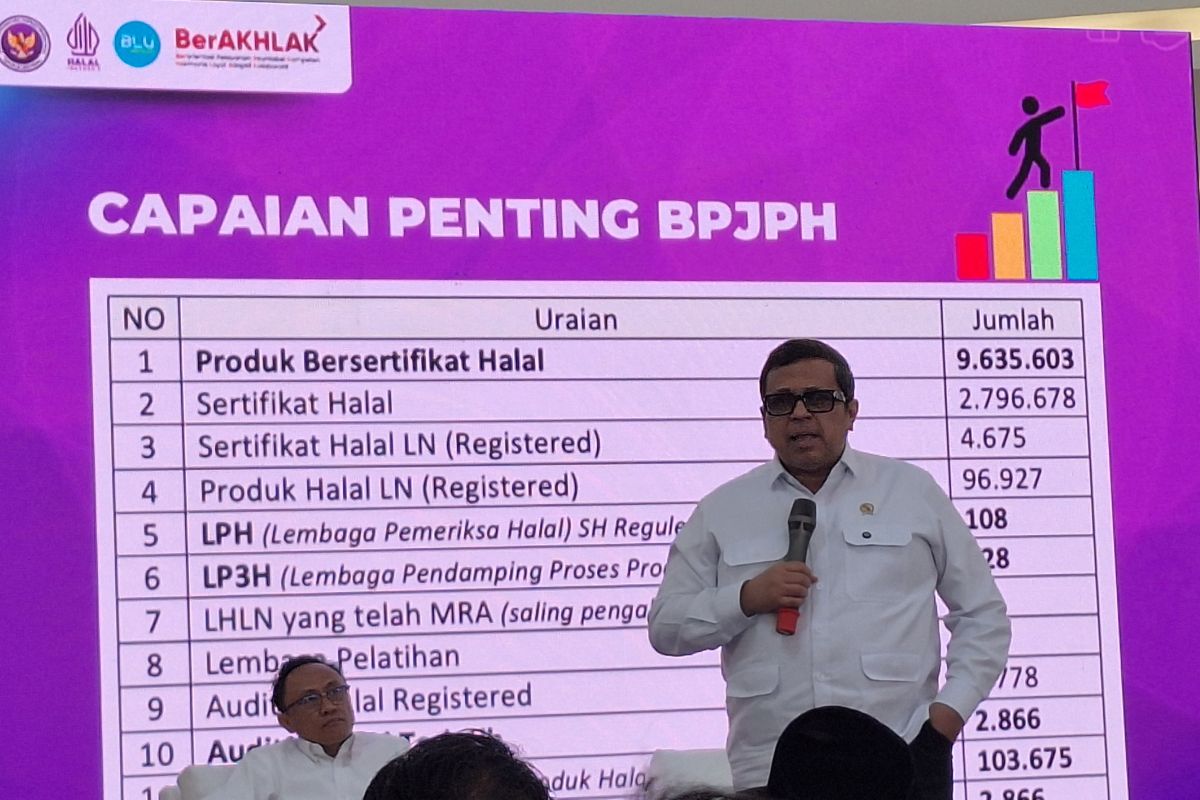
Jakarta (ANTARA) - The Head of the Halal Product Assurance Agency (BPJPH), Ahmad Haikal Hasan, stated that the implementation of mandatory halal certification (Wajib Halal) in October 2026 should serve as a momentum to strengthen the halal value chain while simultaneously increasing the competitiveness of Indonesia’s halal ecosystem.
In a statement in Jakarta on Wednesday, Haikal assessed that the mandatory halal policy should not merely be understood as a certification obligation for businesses.
“Its implementation needs to be placed within a broader framework, namely building a strong and integrated halal ecosystem from upstream to downstream,” said Haument.
“With such an approach, compliance with Halal Product Assurance (JPH) regulations can go hand-in-hand with quality improvement, supply chain strengthening, value creation, and increased product competitiveness,” he added.
Furthermore, he noted that the development of the halal value chain demonstrates that the halal ecosystem plays a vital role in the national economy.
“The halal value chain in Indonesia shows very positive growth. Its value increased from Rp4,900 trillion in 2023 to Rp5,500 trillion in 2024, and is expected to reach Rp6,400 trillion in 2025. In line with this, its contribution to Gross Domestic Product (GDP) also continues to rise, from 24 per cent in 2023 to 25 per cent in 2024 and 27 per cent in 2025,” Haikal stated.
He assessed that these figures indicate the halal ecosystem is not just about meeting product halal requirements, but has become an essential part of national economic growth and strengthening.
“Therefore, we must continue to push the development of the halal ecosystem together, from upstream to downstream, to provide greater added value and competitiveness for Indonesia,” said Haikal.
Furthermore, he encouraged businesses to ensure their readiness, including production processes and supply chains, in accordance with regulatory provisions, following the imminent enforcement of mandatory halal certification in October.
At the same time, businesses should view halal certification as a way to strengthen business governance and product competitiveness, rather than merely fulfilling a regulatory obligation.
“The stronger the halal compliance and integrity in every link of the chain, the greater the opportunity to create a trusted, high-quality, and competitive business ecosystem,” he said.
Additionally, Haikal provided a perspective on the importance of strengthening the halal supply chain to face global halal industry developments, alongside synergistic collaboration within the national halal ecosystem to play a stronger role in the global halal economy.
“Implementation requires collaboration between the government, businesses, associations, academics, relevant institutions, and all related stakeholders,” concluded Haikal.
Source: jawawa.id (https://jawawa.id/newsitem/bpjph-mandatory-halal-certification-to-strengthen-national-halal-value-chain-1788329232)
Originally published by Antara (Indonesian) (https://www.antaranews.com/berita/5721995/bpjph-wajib-halal-jadi-momentum-perkuat-rantai-nilai-halal-nasional), translated from Indonesian