
BPJPH Holds Simultaneous Mandatory Halal Socialisation at 2,183 Locations Across Indonesia
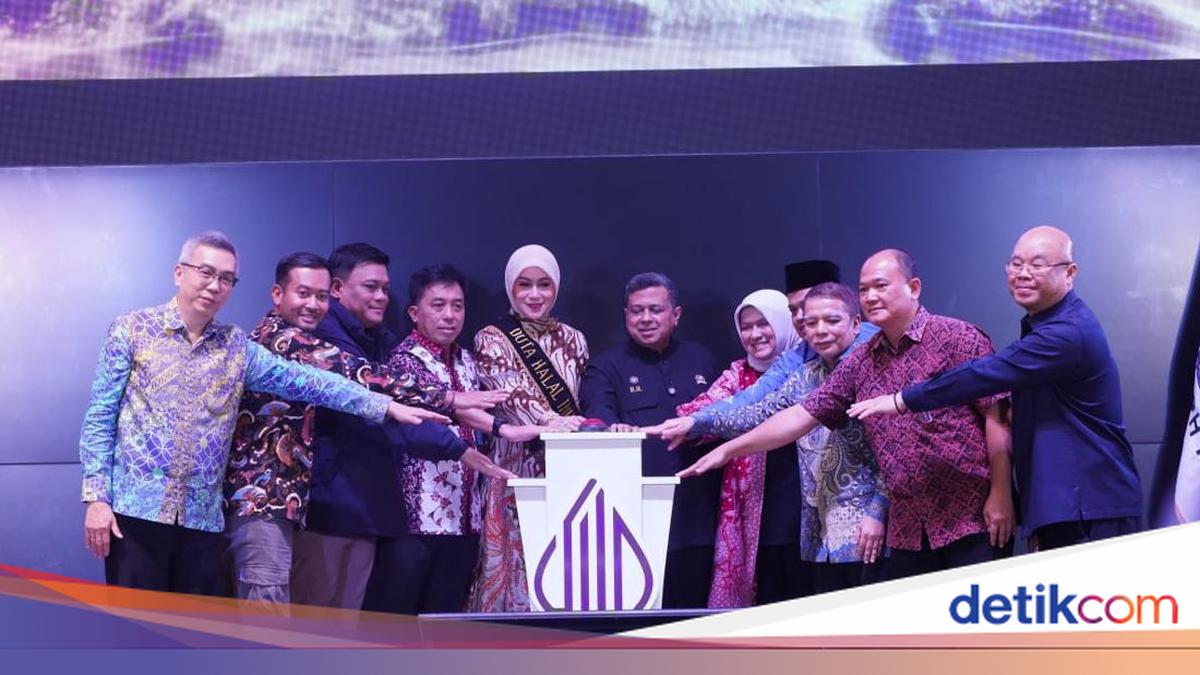
The Halal Product Assurance Agency (BPJPH) held a simultaneous Mandatory Halal October 2026 Socialisation at 2,183 locations spread across Indonesia on Thursday (4/6). This was done to increase public halal literacy while ensuring business actors understand the implementation of the Mandatory Halal policy that will take effect in October 2026. The socialisation was carried out by BPJPH together with the Provincial Halal Product Assurance Technical Implementation Units, involving local governments, ministries/institutions, universities, business associations, Halal Product Process Assistants (P3H), communities, civil society organisations, religious institutions, and various other strategic partners of BPJPH. The socialisation was centred at Pakuwon Mall Bekasi, West Java, and simultaneously held at 2,183 locations across 38 provinces and hundreds of regencies/cities throughout Indonesia. This activity successfully earned a world record award from the Indonesian World Records Museum (MURI) for holding the Mandatory Halal Socialisation simultaneously at the most locations. BPJPH together with stakeholders is working to ensure that information regarding the halal certification obligation can reach all levels of society and business actors down to the regions, including micro and small enterprises that form the backbone of the national economy. Head of BPJPH Ahmad Haikal Hasan emphasised that the massive socialisation effort represents the state’s presence alongside relevant stakeholders and the community in providing education to business actors and the public. ‘The halal certification obligation is a mandate of the Law that must be fully understood by the public and business actors. Therefore, the state is present not only through regulation but also through education and assistance so that all business actors can prepare themselves well to welcome mandatory halal in October 2026,’ he said in a written statement on Sunday (14/6/2026). According to him, the implementation of Mandatory Halal October 2026, which is the execution of Law Number 33 of 2014 on Halal Product Assurance, aims to provide protection, comfort, safety, security, and certainty of halal product availability for the public. He also invited business actors to view halal certification more broadly, not merely as a regulatory obligation, but as an instrument for improving product quality and strengthening business competitiveness. ‘Halal certification is not a business barrier, nor is it an administrative burden. On the contrary, halal certification is an economic opportunity. Halal products have added value, a higher level of trust, and wider market opportunities, both domestically and abroad,’ he asserted. Furthermore, the man familiarly called Babe Haikal said the development of the global halal industry has evolved into a quality standard reflecting aspects of safety, cleanliness, hygiene, traceability, and production process quality. Therefore, halal certification is increasingly becoming a strategic necessity for business actors who want to enhance their product competitiveness. ‘Today, halal is not merely a religious issue, but also an issue of quality and trust. Global consumers are increasingly paying attention to how a product is processed, the ingredients used, and its quality assurance. Halal certificates are one of the instruments that answer these needs,’ he continued. He added that the halal economy sector has become an important contributor to the national economy. Activities related to the halal supply chain contributed significantly, amounting to 27% of Indonesia’s Gross Domestic Product (GDP) in 2025, and continue to show a positive growth trend in line with increasing demand for halal products in both domestic and global markets. Therefore, accelerating halal certification not only aims to provide consumer protection but is also part of the national strategy to strengthen MSMEs, increase the added value of domestic industry, expand export market access, and strengthen Indonesia’s position as one of the world’s halal economy centres. Through this socialisation activity, the public and business actors obtained comprehensive information regarding the Mandatory Halal October 2026 provisions, categories of products required to be halal-certified, halal certification mechanisms, Halal Product Assurance (JPH) information services, direct consultation with PPH Assistants, and halal certification registration services at the activity locations. He further stressed that the Mandatory Halal October 2026 policy covers various product categories used by the public in daily life, including food and beverage products, medicines, cosmetics, chemical products, genetically engineered products, consumer goods used or utilised by the public, slaughtering services and slaughter products, as well as materials used in the production processes of these various products in accordance with statutory provisions. ‘This socialisation is not merely about conveying obligations, but also about providing understanding, solutions, and service access so that business actors can fulfil halal requirements more easily and with discipline,’ he said. On this occasion, he greeted a number of participants in regions who were also holding socialisations at various different locations via teleconference screens. He also appreciated the support of all parties involved in the implementation of the simultaneous socialisation. ‘This is a collective movement. The government, academics, business actors, halal assistants, communities, civil society organisations, and the public are moving in the same spirit to build an increasingly strong Indonesian halal ecosystem. The higher the public’s halal literacy, the more ready this nation is to seize the great opportunities of the global halal economy,’ he said. Besides being an educational tool, this activity also provided direct access for the public and business actors to obtain Halal Product Assurance information services.