
BPJPH: Halal no longer a religious issue but a symbol of health and cleanliness
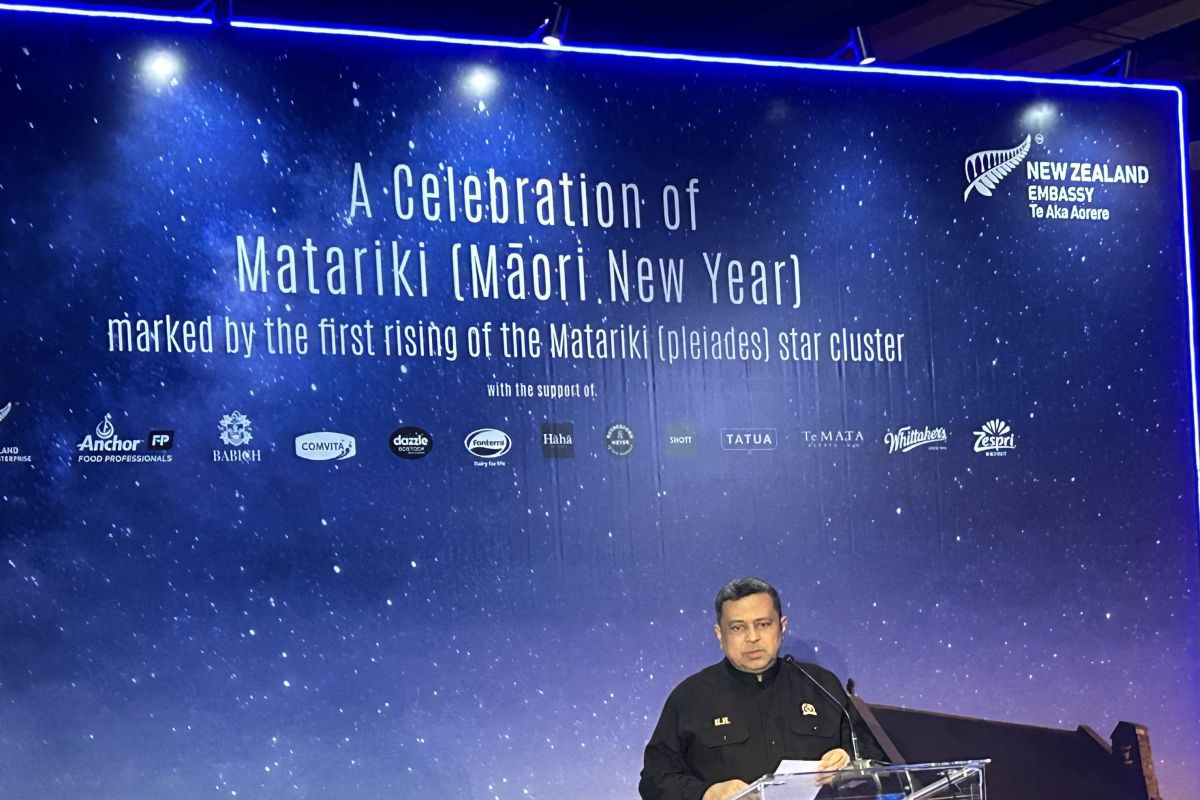
Jakarta (ANTARA) - The Head of the Halal Product Assurance Agency (BPJPH), Ahmad Haikal Hasan, stated that halal is no longer viewed solely as a religious issue, but has become a global symbol of health, cleanliness, and quality.
Haikal made this statement while attending the Matariki or Māori New Year celebrations, organised by the New Zealand Embassy in Jakarta, on Tuesday. New Zealand signed a Memorandum of Understanding (MoU) regarding a mutual recognition scheme with the agency led by Haikal last year.
“Halal is no longer just about religion. Halal is a symbol of health. Halal is not only for Muslims; halal is for everyone because halal represents a symbol of health, cleanliness, and quality,” he said.
Haikal noted that this perspective represents a transformation in the definition of halal, an approach he also learned from President Prabowo Subianto. According to him, the concept of halal is now evolving into a lifestyle choice and is no longer exclusively linked to the needs of the Muslim community.
He provided examples from his visits to the United States, where officials from the US Department of Agriculture (USDA) refer to halal as a symbol of health. In South Korea, a pharmaceutical company refers to halal as ‘double cleanliness’.
Furthermore, Haikal mentioned that in Australia, halal is interpreted as customer satisfaction, while in Europe, halal products are viewed as high-quality ‘elite food’ due to being processed with higher hygiene standards. Meanwhile, China views halal as an economic engine.
“China is now the number one producer of halal products in the world,” Hahend said, adding that China produces halal products worth more than US$21 billion annually.
Haikal noted that while Indonesia has the largest Muslim population in the world, it is not the largest producer of halal products. He identified China as the largest halal producer, followed by Brazil and the United States, suggesting that halal has now become a global commodity.
“From this day forward, accept that halal is a part of life’s prosperity and a component of modern civilisation,” he said.
He added that in Indonesia, the development of the halal industry prioritises three principles: transparency, traceability, and trust. “As we move into the future, let us celebrate the established partnerships and continue to strengthen the Comprehensive Partnership between Indonesia and New Zealand,” Haikal concluded.