
BPJPH Chief's Message to Businesses Regarding October 18 Mandatory Halal Deadline
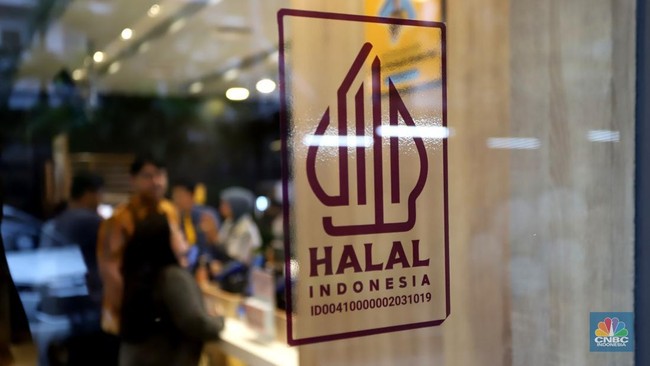
The Indonesian government will proceed with the implementation of mandatory halal certification starting 18 October 2026. The Head of the Halal Product Assurance Agency (BPJPH), Ahmad Haikal Hasan, emphasised that this implementation is in accordance with statutory mandates.
He added that the enforcement of halal certification is intended to provide consumer protection and business certainty through a measurable, data-driven approach. Conversely, he noted that the government will provide space and tolerance for businesses that are not yet prepared, responding to requests to postpone the deadline.
“Various concerns regarding the readiness of the mandatory halal implementation need to be viewed based on official data and information. Some requests to postpone the implementation arise from the use of inaccurate data or an incomplete understanding of the mandatory halal mechanism,” he stated, as quoted from the official BPJPH website on Tuesday.
“If the data is correct and we fully understand the provisions, there is actually no reason to say Indonesia is not ready. Therefore, if there are requests to postpone, let us look at the data. We must not make decisions based on incorrect data or a misunderstanding of the mandatory halal regulations,” Haikal asserted.
Assurance of No Enforcement Sweeps
Regarding implementation, Haikal ensured that the mandatory halal enforcement will not be carried out repressively. He stated that businesses that are not yet ready need not worry, as the government will provide time, space, and guidance to help them meet their obligations.
“If there are those who are not ready, please inform us. We will certainly provide time. Whether it takes one more year or two more years, please proceed. The important thing is that we assist until they are ready,” he said.
Furthermore, Haikal added that businesses that do not wish to display a halal label need not worry, as halal certification is intended for those seeking certainty and guarantees regarding halal products. “For those who do not want a halal label, that is fine. Because halal is intended for those who desire halal product assurance. The important thing is not to make halal claims without meeting the requirements,” he added.
He also ensured there would be no coercion or ‘sweeping’ operations against businesses during the implementation. “There will be no coercion, no sweeping. The principle is simple. Those who are ready, please fulfil their obligations. Those who are not yet ready, we will assist until they are ready. The government will ensure everything runs according to the rules,” Haikal emphasised.
He also stressed that the implementation of mandatory halal should be placed within the spirit of Indonesia as a nation that upholds tolerance and diversity. “Indonesia is a beautiful country, full of tolerance, with diverse ethnicities, religions, races, and groups. Let us protect that diversity together. There should be no imposition of will. That is the most important thing,” he said.
“Mandatory halal is ultimately not merely an administrative obligation, but part of an effort to provide protection and choices to consumers, as well as certainty for the business world. Therefore, the government will continue to open channels for communication and guidance for businesses,” said Haкал.
Which products are subject to mandatory halal from 18 October 2026?
According to Haikal, the October 2026 implementation is a continuation of the phased halal certification for medium and large businesses that began in October 2024. The 2026 mandate expands the scope to include micro and small businesses, as well as both imported and local products.
Referring to Government Regulation Number 42/2024 regarding the Implementation of Halal Product Assurance, the products subject to mandatory halal from 18 October 2026 include:
Food and beverage products
Slaughter products and slaughtering services
Cosmetics
Chemical products and genetically engineered products
Natural medicines, quasi-drugs, and health supplements
Raw materials, food additives, and processing aids for food and beverages
Consumer goods, including apparel and accessories, household health supplies, household equipment, prayer equipment, stationery, office supplies, and Class A medical devices.
During implementation, administrative sanctions will be applied according to applicable regulations, ranging from written warnings and administrative fines to the revocation of halal certificates and product recalls.
What about non-halal products?
BPJPH Regulation Number 3 of 2026 regarding the Form and Procedure for Indicating Non-Halal Status has regulated how non-halal products must be labelled. According to Article 3, products containing prohibited ingredients are exempt from the obligation to have halal certification but are required to carry non-halal labels.
This includes labels such as “CONTAINS PORK” accompanied by a pork image, or the text “NON-HALAL”. Such labels must be placed on the packaging, a specific part of the product, or a visible area that is easy to read and cannot be easily erased, removed, or damaged.
Source: jawawa.id (https://jawawa.id/newsitem/bpjph-chiefs-message-to-businesses-regarding-october-18-mandatory-halal-deadline-1791269624)
Originally published by CNBC Indonesia (https://www.cnbcindonesia.com/news/20261006122202-4-773719/kata-kata-bos-bpjph-kepada-pengusaha-tak-siap-wajib-halal-18-oktober), translated from Indonesian