
BPJPH Chief Unveils Halal Ecosystem Vision to Strengthen Global Competitiveness
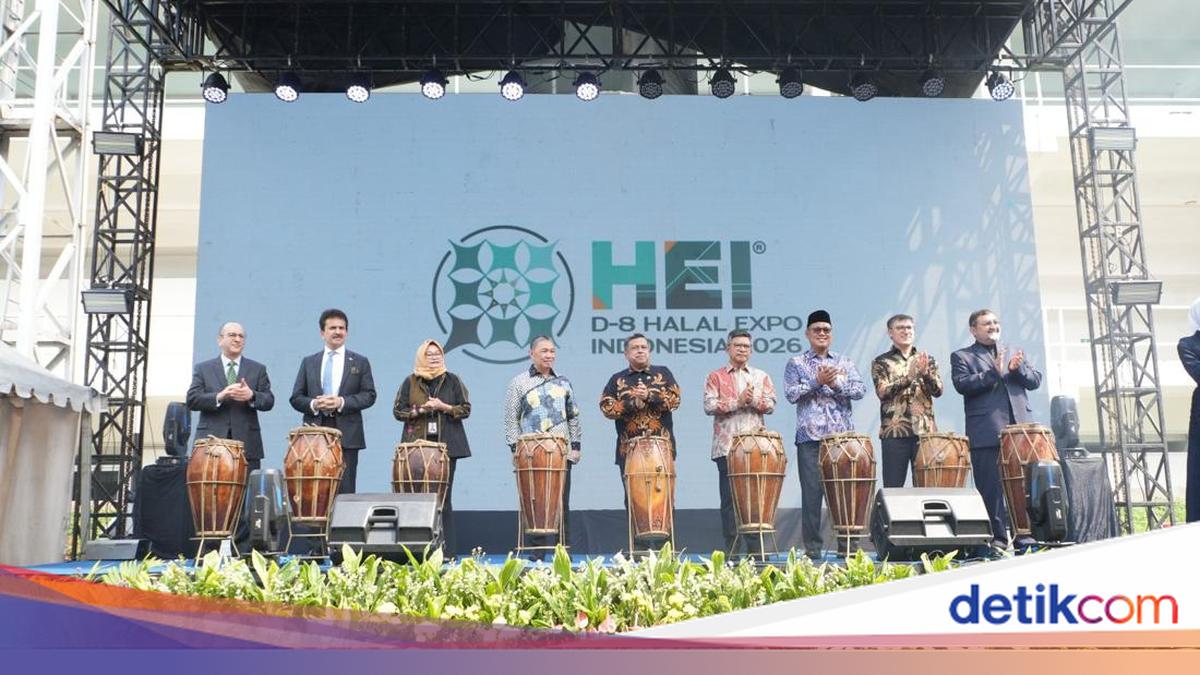
The head of the Halal Product Assurance Organising Agency (BPJPH), Ahmad Haikal Hasan, affirmed that strengthening Indonesia’s halal ecosystem forms part of President Prabowo Subianto’s grand vision to make Indonesia one of the main drivers of the global halal economy. He made the remarks in his address at the opening of the D-8 Halal Expo Indonesia 2026 at Senayan.
On the occasion, Haikal Hasan invited D-8 member states to strengthen collaboration in building increasingly integrated and mutually recognised halal standards.
According to him, halal cannot be built in isolation but must rest on a spirit of joint collaboration, interconnection and strong standards, so as to deliver economic benefits and wider advantages to communities across the world.
“One of my great dreams is that President Prabowo Subianto has an extraordinary vision on halal. He established BPJPH, which holds ministerial-level status and is connected to at least nine ministries. This is an immense strength,” Haikal said in a written statement on Wednesday (8 July 2026).
Babe Haikal went on to say that BPJPH translates the president’s vision through the spirit of ‘Indonesia Halal for the World Community’. According to him, Indonesia is not only working to strengthen the implementation of Halal Product Assurance domestically, but is also taking a strategic role in building a global halal ecosystem through inter-country cooperation.
“The vision is how halal can become a shared strength for the world. And we translate that vision through the slogan ‘Indonesia Halal for the World Community’,” he said.
Haikal added that halal is not a new concept in Indonesia. Decades ago, during the era of second President Soeharto, the government already paid attention to halal assurance, which continued to develop until the birth of an increasingly strong and comprehensive Halal Product Assurance system.
He also affirmed that implementing the mandatory halal certification is an important milestone to strengthen the competitiveness of Indonesian products in the global market while boosting consumer confidence in Indonesian halal products.
At the forum, Haikal also invited participating countries to deepen collaboration and build a shared vision in developing international halal standards. According to him, synergy between nations will be an important foundation in realising a stronger, more inclusive and mutually beneficial global halal ecosystem.
“Halal must be united, halal must be interconnected, and halal must be built through a spirit of togetherness. With strong collaboration, we can deliver wider benefits to communities worldwide,” he said.
On the same occasion, Deputy Foreign Minister Anis Matta affirmed that hosting the D-8 HEI 2026 is a tangible manifestation of the government’s integration of domestic economic strength with the Islamic world.
“Amid various global economic challenges, Indonesia continues to drive national economic growth. One pathway is strengthening Indonesia’s economic integration with the Islamic world, including through the development of the halal economy,” Anis Matta said.
A similar appreciation was expressed by the Secretary-General of the D-8, who viewed Indonesia’s initiative as an important catalyst for expanding investment and strengthening research within the global halal industry ecosystem. Over the next five days, the event will feature a trade exhibition, business matching sessions and D-8 HEI Talks panel discussions.
Meanwhile, the Executive Director of KNEKS, Sholahudin Al Aiyub, explained that the forum was specially designed to produce concrete business collaborations.
“Indonesia is working to facilitate the birth of business partnerships, knowledge exchange and concrete trade transactions,” Aiyub said.
At the macro level, the staging of D-8 HEI 2026 is the embodiment of President Prabowo Subianto’s commitment at the 11th D-8 Summit in Cairo on 19 December 2024. On that occasion, President Prabowo stressed the urgency of forming halal value chains through strengthening economic networks, while affirming Indonesia’s commitment to becoming one of the main centres of the global halal economy. The series of events was made possible through the synergetic collaboration of the Foreign Ministry, BPJPH, KNEKS and the Indonesian Chamber of Commerce and Industry (Kadin).
The D-8 was founded in 1997 and currently comprises nine member states: Indonesia, Bangladesh, Iran, Malaysia, Egypt, Nigeria, Pakistan, Turkey, and Azerbaijan, which joined in 2025. This economic synergy forum wields massive collective strength, with a total population of 1.3 billion people (16 per cent of the world’s population) and a combined gross domestic product (GDP) reaching US$5.1 trillion.